Best Utility ATVs for Farm Work: A Practical Shortlist
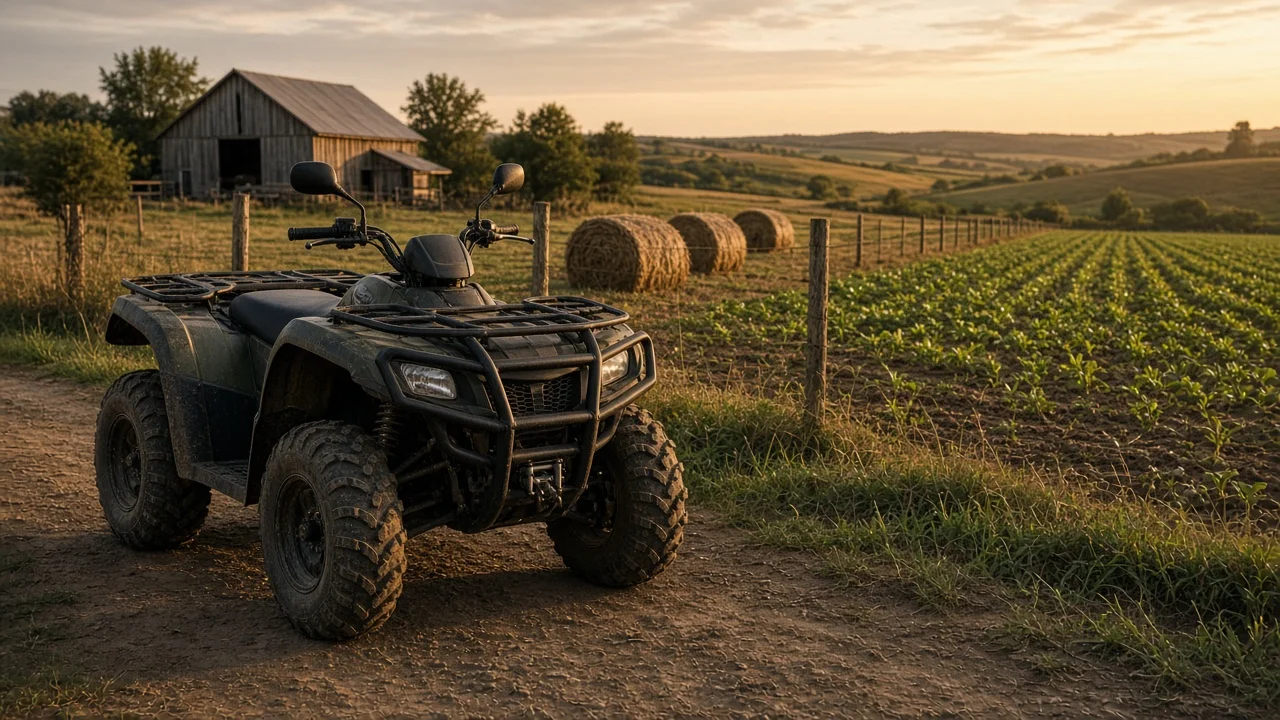
A farm ATV earns its place by hauling feed, towing small implements, checking fences and crossing mud, slopes and rough pasture day after day. This guide is a shortlist of long-running utility ATV model lines from major manufacturers sold in the US market, not a complete inventory of every farm-capable quad. It also explains the features that separate a good work machine from a recreational one, so you can judge any model against your own chores.
How this list was put together
An entry qualifies if it is an established utility-oriented ATV family from a mainstream manufacturer, intended for work as well as trail use, and broadly available through US dealer networks. Sport ATVs, youth models and side-by-sides are excluded.
The entries are listed alphabetically by manufacturer and are not ranked. A fair ranking would require comparable, current data for each model, such as towing and rack ratings, measured reliability, prices and dealer support, and that evidence was not available for this guide. Treat the list as a starting point for comparison, not a verdict.
ATV versus UTV: make sure you are shopping for the right machine
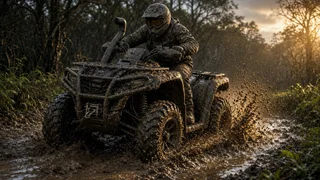
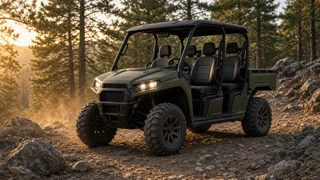
An ATV (all-terrain vehicle, often called a quad or four-wheeler) is a straddle-seat vehicle steered with handlebars. Most are designed for a single rider, and the rider shifts their body weight to help control it. A UTV (utility task vehicle, also called a side-by-side) has a steering wheel, bench or bucket seats, usually a cargo bed, and typically a rollover protective structure. The two terms are not interchangeable.
An ATV is generally narrower and more maneuverable in tight spaces such as barns, gates and wooded paths. A UTV generally carries more cargo and passengers in a bed and cab. If you regularly need to carry a second person or bulky loads, compare side-by-sides before committing to an ATV. Carry a passenger on an ATV only if the manufacturer designs and labels that model for two riders.
Utility ATV model lines worth considering for farm work
Each family below spans several engine sizes, trims and model years, and the features differ between them. Confirm the exact specifications of the specific model and model year you are considering with the manufacturer or a dealer.
Can-Am Outlander
The Outlander is Can-Am's core utility and recreation ATV line, powered by Rotax engines. It is offered in multiple engine sizes and trims, including work-oriented versions. For farm buyers it is worth shortlisting if you want a wide range of power options within one family. Check which trims include a winch, power steering and differential lock, because equipment varies across the range.
CFMOTO CForce
The CForce line is CFMOTO's utility ATV range. The brand is generally positioned on value relative to longer-established manufacturers. For farm use, the main question is local support: before buying, confirm how close the nearest dealer is, how quickly parts arrive and what the warranty terms are.
Honda FourTrax (Rancher, Foreman and Rubicon)
Honda's FourTrax utility family includes the Rancher, Foreman and Rubicon. These models have a long history as working ATVs on farms and ranches. Depending on model, trim and year, they have been offered with different transmission types, including manual and automatic options. Compare the transmissions directly, because they suit different riders and tasks.
Kawasaki Brute Force
The Brute Force is Kawasaki's main utility ATV line, available in more than one engine size. It suits farm owners who want a full-size quad for towing and hauling. Kawasaki has also offered smaller utility ATVs, so match the model to the work rather than defaulting to the largest engine.
Polaris Sportsman
The Sportsman is one of the broadest utility ATV lineups, covering several engine sizes, work-focused trims and a six-wheel version. The six-wheel variant is relevant for operations that need extra load-carrying traction. Polaris dealer networks are widespread in the US, which matters for farms that cannot afford long downtime. Check the accessory system and hitch options for the specific model year.
Suzuki KingQuad
The KingQuad is Suzuki's utility ATV family, offered in several engine sizes. It is a reasonable candidate for general farm duties. As with any brand, confirm current model availability and local dealer support in your area before you shortlist it.
Yamaha Grizzly and Kodiak
Yamaha splits its utility ATVs into two lines. The Grizzly is generally the more premium, feature-rich line. The Kodiak is generally the simpler, work-focused line. Both use Yamaha's automatic transmission, marketed as Ultramatic. For many farm buyers the choice between them comes down to whether extra features such as power steering are worth the added cost for their daily tasks.
Features that matter most for farm work
Use the points below to compare any entry above, or any model not listed. These explanations are general. How each feature is implemented varies by manufacturer and model.
Four-wheel drive (4WD/AWD): sends power to all four wheels for traction in mud, snow, wet grass and on slopes. Most utility ATVs let the rider switch between two-wheel and four-wheel drive. Two-wheel drive turns more easily and causes less turf damage on firm ground. Differential lock: forces the wheels on an axle to turn together, which helps when one wheel is spinning in mud. Leave it off on firm ground, because it makes steering heavier. Transmission type: many utility ATVs use a CVT (continuously variable transmission), an automatic with no gear steps. Some use other automatic or manual designs. A low range (low gear) is valuable for towing and slow, controlled work. Engine braking: the engine slows the vehicle when you release the throttle. This feature provides control when descending hills with a load. Power steering: often called EPS (electronic power steering). It reduces arm fatigue during long days, at low speeds and when the front wheels are loaded. It is usually limited to certain trims. Rack and towing ratings: the front and rear racks and the hitch each have a manufacturer weight limit. Compare these published figures directly and never exceed them. Overloading affects braking and stability. Ground clearance and suspension: these determine how well the machine handles ruts, rocks and crop rows. Independent rear suspension generally rides more smoothly. A solid rear axle is simpler. Winch and accessory mounting: a winch is useful for recovery and for pulling posts or debris. Check whether one comes standard and how easily implements such as sprayers, plows or spreaders attach. Dealer and parts support: for a working farm machine, a nearby dealer with parts in stock can matter as much as any specification.
Matching the machine to your farm
Light chores on small acreage, such as fence checks, light hauling and moving between buildings: a mid-size utility ATV is often sufficient, cheaper to run and easier to maneuver. Regular towing, spraying or plowing: favor larger engines, a low range, strong published towing and rack ratings, and ideally power steering. Steep or very wet ground: prioritize reliable 4WD, a differential lock, engine braking and adequate ground clearance. Rider training matters as much as the machine. Operations that carry passengers or bulky loads: compare UTVs alongside ATVs.
Safety points before you buy
ATVs can roll over, especially on slopes, under heavy or poorly balanced loads, or while towing. Riders should wear a helmet and protective gear and should complete rider training where it is available. Follow the manufacturer's age rating: adult-size utility ATVs are not designed for young riders. Read the owner's manual for load limits and towing guidance specific to your model.
What this guide could not confirm
No verified, comparable data on prices, engine outputs, towing or rack capacities, reliability or current-year lineups was available for this guide. For that reason, no model is ranked above another and no specific figures are given. Before you buy, compare the published specifications for the exact model, trim and model year you are considering. Ask local dealers about parts availability and warranty. Test-ride on terrain similar to your own if possible.