ATV Safety Inspection Requirements and Checklist
The Short Answer
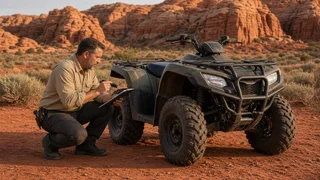
In most of the US, an all-terrain vehicle used off-road is not put through the kind of periodic, state-mandated safety inspection that many states require for passenger cars. ATV rules are set state by state, and sometimes by local governments or land managers. They more often focus on registration, titling, operator age and training, helmets, and where the machine may be ridden. A checklist is still essential, but for most owners it serves as a pre-ride inspection the rider performs, not an official roadworthiness certificate.
One qualification can change this. Some states let ATVs be registered for limited public-road use, and some public riding areas set equipment requirements. In those cases, specific equipment or an inspection step may be required. No state-by-state requirements were available for this article, so check the rules with your state's motor vehicle agency, its natural resources or parks department, or the manager of the land where you plan to ride.
What Requirements May Apply Instead of a Formal Inspection
Registration or an off-highway vehicle permit or decal, which some states require for riding on public land or trails. Titling, which applies in some states and is usually tied to ownership rather than mechanical condition. Equipment rules for particular riding areas. A common example is a spark arrestor, a screen or device in the exhaust that traps hot particles to reduce wildfire risk. Many public lands require one. Noise limits set by some jurisdictions or riding areas, which can affect aftermarket exhausts. Lighting and other equipment needed if a state allows any on-road operation. These requirements vary widely and should be confirmed locally. Operator rules such as minimum ages, safety-course requirements for younger riders, and helmet laws. These govern the rider rather than the vehicle but are often enforced alongside equipment checks.
ATV Pre-Ride Safety Inspection Checklist
Rider-training programs commonly teach the pre-ride check with the mnemonic T-CLOC: Tires and wheels, Controls and cables, Lights and electrics, Oil and fuel, and Chassis. The checklist below follows that order. For specific values such as tire pressure, fluid types, torque figures and service intervals, use the owner's manual for your model and model year, because these differ between machines and none were supplied here.
Tires and Wheels
Check tire pressure with a low-pressure gauge against the manufacturer's specification. ATV tires run at low pressures, and a small difference can noticeably change handling. Look for cuts, punctures, bulges and missing or worn tread. Check that wheel nuts are present and tight. Grab each wheel and rock it to feel for looseness in the wheel bearings or steering and suspension joints.
Controls and Cables
Confirm the throttle moves smoothly and snaps back to idle when released, with the handlebars turned fully left, centered and fully right. Test the front and rear brakes, including the parking brake, for firm feel and correct adjustment. Inspect the brake lines and control cables for fraying, kinks or binding. Test the clutch and shifter operation, if your model has them. Check that the engine stop switch works.
Lights and Electrics
Test the headlight on both high and low beam, and the taillight and brake light, if equipped. Check the ignition switch and any indicator lights. Look for loose, chafed or corroded wiring and secure battery connections.
Oil and Fuel
Check the engine oil level with the vehicle on level ground, following the manual's procedure. Check the coolant level on liquid-cooled models, and brake fluid where hydraulic brakes are fitted. Inspect the engine, fuel lines, tank and the ground underneath for leaks. Confirm you have enough fuel for the planned ride, including the return trip.
Chassis
Inspect the frame, suspension and steering components for cracks, bends or loose fasteners. Check the drive chain for correct slack and lubrication, or look over the driveshaft boots for tears on shaft-drive models. Make sure the air filter is clean and properly seated, especially before dusty rides. Confirm that racks, cargo and any accessories are secure and within the manufacturer's load limits. Check that the spark arrestor and exhaust are intact where required. Confirm the registration or permit decal is displayed if your state or riding area requires one.
Rider Gear Check
Rider gear is not part of the vehicle, but a complete pre-ride check usually covers it. Typical items are a properly fitted helmet, eye protection, gloves, over-the-ankle boots, long sleeves and long pants. Helmet laws for ATV riders differ by state, but safety organizations recommend a helmet whether or not the law requires one.
When to Stop and Get a Professional Inspection
Do not ride until the problem is fixed if the pre-ride check finds any of the following: a throttle that sticks, brakes that feel soft or pull to one side, steering play, a fuel leak, or structural damage. Have a qualified technician inspect the ATV in these situations as well: after a rollover or collision, before using a used machine you have just bought, or before preparing an ATV for any on-road registration your state permits.
Gaps in This Guide
No confirmed state-specific requirements, inspection fees, equipment standards or manufacturer specifications were available for this article. It therefore does not state which states, if any, require a formal ATV inspection, what such an inspection would cost, or the exact measurements your machine should meet. Confirm those details with your state agencies, the land manager for your riding area, and your owner's manual.