Asymmetric tire tread: what it is
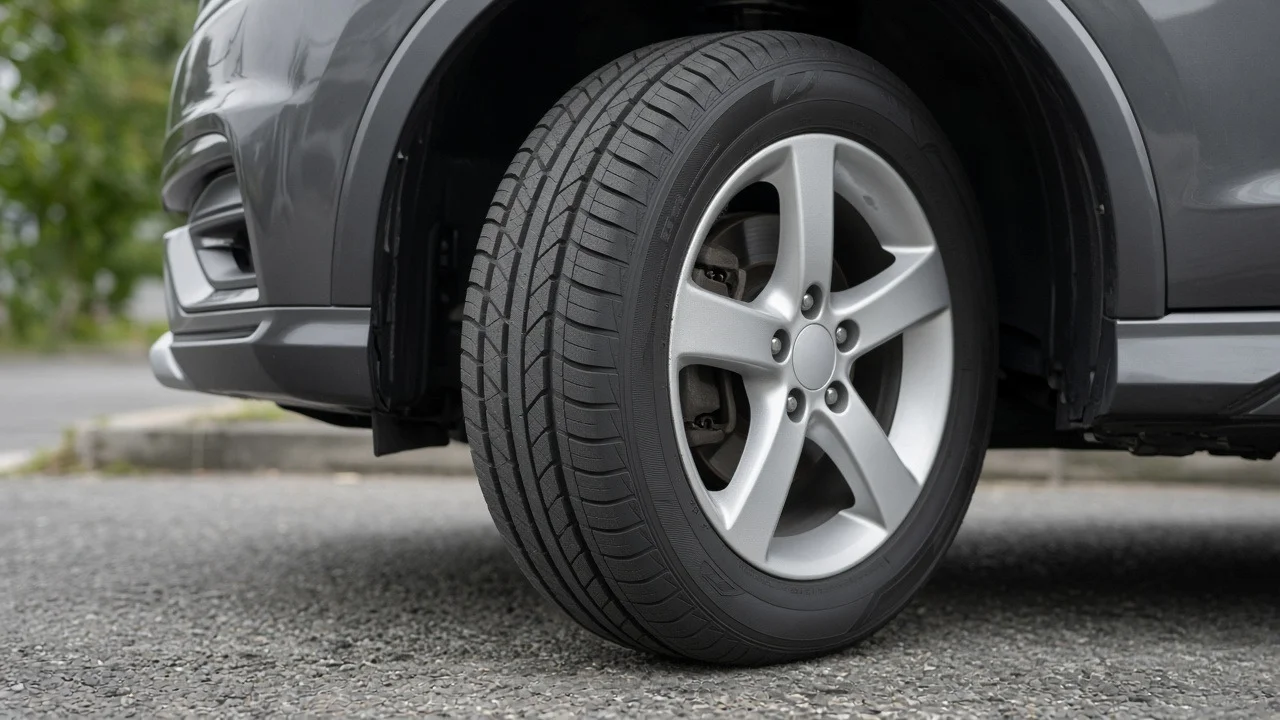
An asymmetric tire tread uses a single tread pattern that changes from one side of the contact patch to the other instead of repeating evenly across the full width. Drivers shopping by tire size often encounter this design on performance and touring rubber, where the inner and outer portions carry different duties. The asymmetric layout is a deliberate compromise between wet evacuation, dry cornering grip, and quiet highway behavior. Understanding the markings and design helps an owner match the tire to inflation pressure, load index, speed rating, and the intended driving conditions without misreading the tread as directional.
Essential answer
An asymmetric tire tread is a tread pattern whose inner and outer sections are intentionally different. One shoulder is typically shaped with larger, more open blocks or grooves for water clearance, while the opposite shoulder often uses a more continuous rib or solid block structure for cornering support. The result is one tire that addresses conflicting demands: wet-road stability on one side and precise dry-road response on the other.
This design is distinct from a directional tire, which must rotate only one way, and from a symmetric tire, which is the same across its face. Tread depth, tire size, load index, and speed rating still determine the tire's overall service limits. The asymmetric pattern simply changes where the work is concentrated, so mounting orientation on the wheel matters even though the tire can rotate in either direction.
How it works
The outer shoulder works hardest during cornering because the tire leans and load shifts toward the outside of the turn. A more continuous or heavily siped outer section resists squirm and keeps a stable contact patch, which supports steering precision. Meanwhile, the inner and middle portions manage water by allowing channels to gather and move moisture away as the tire rolls.
By dividing those jobs, an asymmetric tread reduces two common compromises. A tire tuned only for dry grip can struggle with hydroplaning resistance, while a heavily grooved wet tire can feel vague in hard cornering. The asymmetric arrangement balances those needs on one carcass that still follows the vehicle placard for inflation pressure and must match the drivetrain compatibility of the axle where it is installed.
Strengths, limitations and suitability
The main strength of an asymmetric tire is balanced all-season or summer performance. It can offer strong wet evacuation without making the outer edge too soft, so turn-in remains direct. Drivers who commute in mixed weather but occasionally push a vehicle along winding roads may notice better composure than with a symmetric touring tread, especially when the correct tire size and inflation pressure are maintained.
A limitation is that the two sides age and wear differently, which can complicate rotation patterns if a shop tries to treat every tire as fully interchangeable. The design still allows repositioning across the vehicle, but mounting the outside shoulder inward changes the intended behavior. An owner evaluating a replacement should also confirm the tire's load index and speed rating meet or exceed the original equipment requirements rather than selecting only by appearance.
Procedure
Inspection starts with a clean tire and the vehicle parked on a flat surface. Measure tread depth across several grooves, comparing the inner, center, and outer areas. Uneven wear is not proof the design has failed; it often indicates inflation pressure, alignment, or service need. The sidewall marking identifying an asymmetric tire may include terms such as outside or a directional-style arrow for mounting orientation, so confirm each tire is positioned with the designated shoulder facing out.
Replacement should follow the vehicle placard for the specified tire size, load index, and speed rating. The new tire must also suit the owner's drivetrain compatibility needs, especially if only one pair is being replaced on an axle-oriented layout. After mounting, recheck inflation pressure and listen for unusual noise during a brief drive. A change in tread pattern can alter sound character without indicating a defect, but any persistent vibration or pull warrants immediate inspection.
Diagnosing a problem
If an asymmetric tire shows pronounced wear on one shoulder, route and pressure issues are worth checking before condemning the tire. A worn outer edge can point toward aggressive cornering or camber-related wear, while an inner edge may indicate alignment or underinflation concerns depending on the suspension design. A tire's visible pattern is evidence about how it was worked, not a standalone diagnosis of a failed component.
If the vehicle pulls, first confirm that the tire marked for the outside is not mounted with the outer shoulder inward on one side. Mixing new and heavily worn asymmetric tires can also produce a steering lead even when sizes match. Persistent hydroplaning or loss of grip in conditions that used to be manageable may simply reflect reduced tread depth, a pressure deviation from the vehicle placard, or replacement rubber with a lower speed rating or load index than required.