What Are Asymmetric Tires?
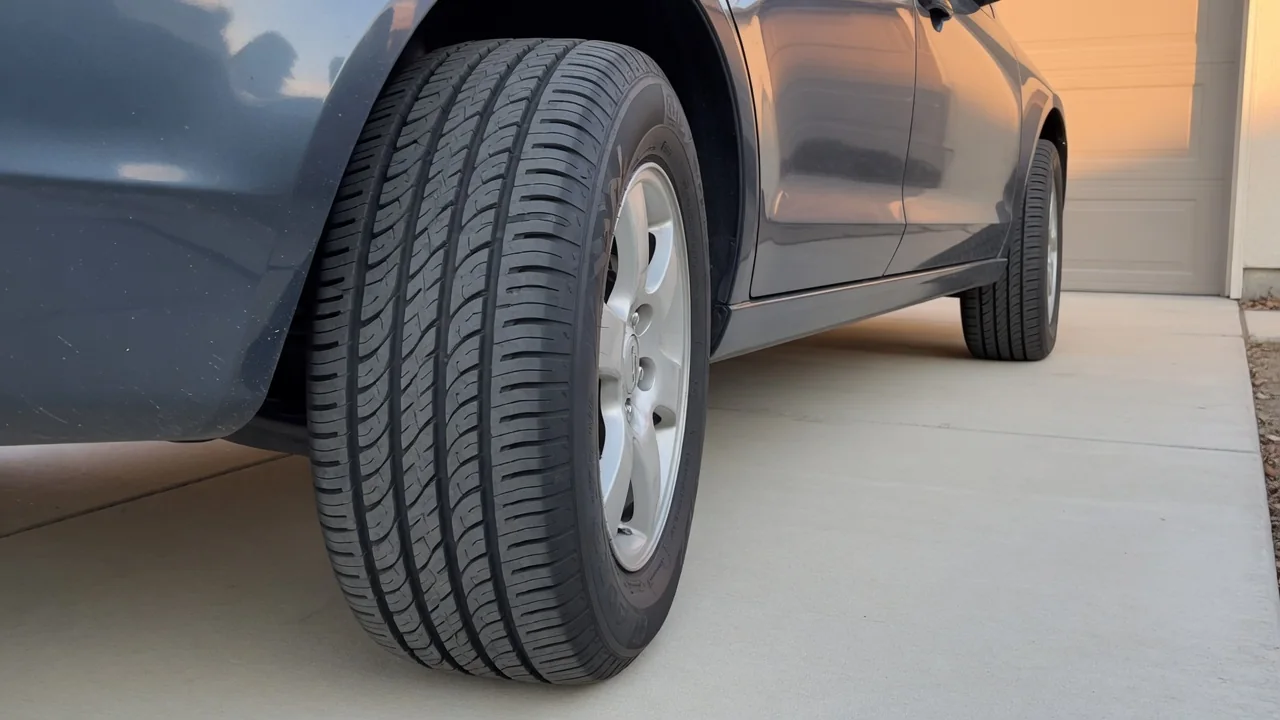
What are asymmetric tires? They are tires whose tread pattern differs from one side of the tread face to the other, with an inner half and an outer half shaped for different jobs. Because each side has a purpose, the tire must be mounted on the wheel with a specific sidewall facing away from the vehicle. The markings molded into the rubber show which side is which.
Read sidewall
The quickest way to identify an asymmetric tire is to read the sidewall rather than study the tread. Manufacturers mold words such as Outside, Outer, or Side Facing Outwards into the sidewall that should be visible once the wheel is on the car, and Inside or Side Facing Inwards into the opposite sidewall. The wording differs between brands, and the lettering can be small, so it helps to wipe away road grime and look near the bead area or beside the size markings.
These orientation marks are different from the rotation arrow found on directional tires. An asymmetric tire with only inside and outside marks can generally be fitted at any corner of the vehicle, as long as the outside sidewall faces outward. A smaller number of designs are both asymmetric and directional, carrying a rotation arrow as well, which makes them specific to the left or right side. Checking for both kinds of marking tells a reader which type they are looking at before any rotation is planned.
Tread zones
Looking across the tread face from one shoulder to the other, the two halves visibly differ. The outer shoulder typically has larger, stiffer tread blocks with fewer grooves, because that edge carries heavy load when the vehicle leans in a corner. Big blocks resist squirming and keep more rubber on the pavement, which supports steering response and dry grip. On many designs the outboard ribs also look more continuous, giving the tire a solid, almost slick-looking band near the outside edge.
The inner zone usually carries more grooves, smaller blocks, and extra sipes, the thin slits cut into the rubber. That open pattern channels water away from the contact patch to resist hydroplaning and adds biting edges for wet or lightly snowy roads. Between the two, a center rib or set of ribs helps straight-line stability and steady braking. The exact balance varies by tire category: a summer performance tire leans toward large outer blocks, while an all-season touring design spreads siping more evenly across the face.
Service checks
During tire service, the first check is simply that every tire has its outside marking facing outward. A tire mounted backward on the rim puts the water-clearing zone where the cornering blocks belong, which can dull wet-road behavior and handling even though the tire still holds air and rolls normally. The check takes moments: walk around the vehicle and confirm that the word Outside, or the brand's equivalent, can be read on each visible sidewall. If Inside is showing, the tire needs to be remounted by a shop.
Rotation is the other service point. Since a non-directional asymmetric tire works at any corner, it can usually follow front-to-rear or cross patterns, but the right pattern depends on the vehicle. Cars with different tire sizes front and rear, or with directional asymmetric tires, have fewer options, and the owner's manual or tire maker's guidance should set the pattern and timing. Technicians also compare tread depth on the inner and outer zones, since the differing block shapes can make uneven wear harder to spot at a glance.
Everyday Use and Observations
In daily driving, an asymmetric pattern is designed to be a compromise that does not feel like one. Drivers may notice steady behavior in sweeping highway ramps, where the outer shoulder is doing most of the work, and confident tracking through standing water, where the inner grooves take over. Many of these tires are also tuned for low road noise, since varying the block sizes across the tread breaks up the repetitive hum that uniform patterns can create. Results differ by tire model and vehicle.
Wear patterns are worth watching over time. Because the two halves are built differently, a small visual difference between inner and outer edges is normal when the tire is new, but one side wearing noticeably faster is not a feature of the design. Faster inner-edge wear often points toward alignment settings, particularly camber or toe, while worn outer shoulders can reflect hard cornering or low inflation pressure. Suspension geometry varies between vehicles, so the same tire can wear differently on a sport sedan than on a family crossover.
Limits and Next Steps
An asymmetric tread is not automatically the best choice for every vehicle. It balances dry handling and wet traction, but it does not replace a dedicated winter tire in severe cold and deep snow, and a directional pattern may clear heavy water more aggressively. The design also says nothing by itself about load capacity, speed rating, or size, which still have to match the vehicle's requirements listed on the door-jamb placard and in the owner's manual. Tread layout is one factor among several.
For anyone unsure about their own tires, the practical next step is to read both sidewalls, note any inside, outside, or rotation markings, and compare all four tires for consistency. Mixing tread types across an axle can change how the car responds, so replacements are best matched in pairs or sets according to the vehicle maker's guidance. If a tire appears to be mounted the wrong way around, or the wear looks uneven, a tire shop can confirm the orientation, check alignment, and remount the tire with proper equipment.