Tire Tread Wear Bars: How to Check Tread Depth
When a tire’s grooves become shallow, wet-road traction and hydroplaning resistance drop quickly. The molded rubber bars sitting across the main grooves, often called tire tread wear bars or tire tread wear indicator bars, are a simple built-in gauge for that decline. Checking tread depth lets an owner judge remaining service life before the casing, load index, speed rating, or inflation pressure can no longer do their job safely. This article explains what those bars show and how to inspect them without guesswork.
Direct answer
Tire tread wear bars are small raised strips of rubber molded across the longitudinal grooves of a tire at several points around its circumference. They stand approximately 2/32 of an inch above the base of the groove, which is the point where tread depth is generally considered worn out for safe street use. When the surrounding tread face wears down until it is flush with these bars, the tire has reached its minimum serviceable depth and should be replaced promptly rather than pushed through another season of rain or light snow.
The purpose of the bars is to make tread depth checks repeatable and visual, without needing a specialty gauge every time. Because the bars are located inside the main water-evacuation channels, they are easy to feel with a fingertip and to see from the side of the tread. If the rubber across the bars appears continuous with the ribs or blocks around it, the grooves are too shallow to disperse water effectively, which increases stopping distances and reduces steering response on wet pavement.
How to proceed
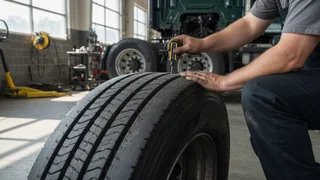
Begin by parking on a level surface with the steering wheel straight ahead so the front tread face is visible, and set the parking brake. Look across the width of each tire for the small bars that bridge the main grooves. On many tires they run from the outboard shoulder to the inboard shoulder, but their exact spacing depends on the tire size and tread pattern. Running a finger along a groove will also reveal the raised bar before it becomes clearly visible from the side.
Inspect every groove on all four tires, including the inner shoulder where uneven wear often appears first. If any bar is level with the adjacent tread, that tire has worn to the wear indicator and needs replacement. A coin or a dedicated tread depth gauge can confirm the reading, but the bars themselves are the built-in reference. Also check for uneven contact across the face, which can point to an inflation pressure or alignment issue rather than simple mileage wear. If the bars show only on one edge while the rest of the tread is deeper, have the vehicle inspected before rotating or replacing tires so the underlying cause is not carried into the next set.