Annual Car Maintenance Budget: Planning Routine Service Costs
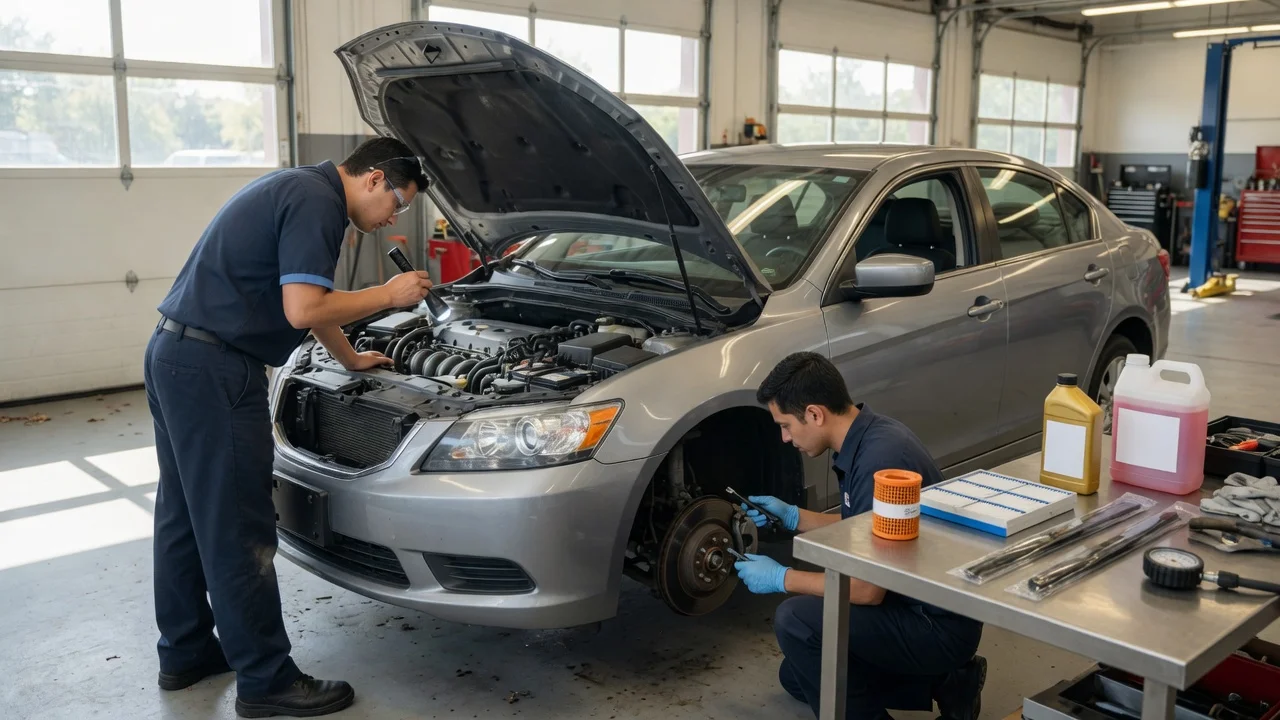
What an annual car maintenance budget actually covers
An annual car maintenance budget is a planned amount set aside for routine service, scheduled component replacement, wear items and minor repairs. It is best understood as a running reserve rather than a single yearly bill. The useful planning range varies materially by vehicle age, mileage, powertrain, market parts pricing and whether servicing is performed at a dealership or an independent workshop. A low-mileage economy car and a high-mileage luxury or performance vehicle can require very different reserves even when both are in good condition.
Routine car service usually includes oil and filter changes, air and cabin filter replacement, tire rotation or replacement, brake inspection and wear replacement, coolant, transmission and brake fluid service, wiper blades, battery replacement, bulbs, belts, hoses and scheduled spark plug or timing-related service where applicable. The annual budget should separate predictable maintenance from unexpected repair risk. Maintenance is planned through the service schedule; repairs cover failures that occur outside that schedule.
Base service costs and the role of mileage
Many owner surveys and maintenance studies place a broadly reasonable planning range near several hundred to more than a thousand dollars per year for typical private vehicles, but exact figures depend on the inputs above. Because no universal official annual cost applies to every car, a defensible approach is to build the budget from the vehicle's explicit maintenance schedule instead of relying on a single national average.
Higher annual mileage generally accelerates fluid, filter, tire and brake wear. A driver covering 5,000 miles per year may need fewer oil services than one covering 15,000 miles, so the same model can produce different routine costs in different use patterns. Severe service conditions, including frequent short trips, dusty roads, towing and sustained hot or cold operation, can also shorten recommended intervals and increase annual expense.
Building the annual plan from the service schedule
Start with the owner's manual service schedule for the exact model year, generation, engine and transmission in question. Identify all items due within the next 12 months or expected mileage. Then assign a local cost estimate to each item. Multiply each scheduled replacement by its frequency over a multi-year cycle so that expensive but infrequent work, such as timing belt replacement or major fluid service, is spread into an annual reserve rather than absorbed as a sudden expense.
• Oil and filter change: recurring interval based on oil type and driving conditions\n• Engine air filter and cabin filter: typically periodic replacement\n• Tire rotation and replacement: interval and wear dependent\n• Brake pads, rotors and fluid: inspected regularly; replacement varies with use\n• Coolant, transmission and differential fluids: long intervals that still require annual allocation\n• Spark plugs, belts, hoses, wiper blades and battery: condition and schedule dependent
Treat labor and parts separately where local pricing is known. Dealership labor rates are usually higher than independent shop rates, while original equipment parts can differ in price from quality aftermarket alternatives. A missing local price should be recorded as a planning gap rather than replaced with a confident guess.
Where the largest annual costs usually appear
Tires and brakes commonly dominate the long-term maintenance picture even though they may not occur every year. Replacing four tires can be a substantial expense, and brake rotor replacement adds cost beyond pads. Timing belts or chains, clutch replacement on manual transmissions, suspension wear components and air conditioning service can also create large occasional charges that should be amortized across the ownership period.
Vehicle class and powertrain complexity affect routine service cost. Models with specialized fluids, larger wheel and tire packages, performance brake components, turbocharger or supercharger equipment, or all-wheel-drive systems may require additional service items. A hybrid or plug-in vehicle still has conventional maintenance items such as tires, brakes and cabin filtration, while battery cooling system service may add model-specific requirements.
Maintenance versus repair reserve
A complete annual car maintenance budget should not treat all vehicle spending as one pool. Routine service is reasonably predictable because the schedule defines the work. A separate repair reserve is appropriate for unplanned failures. If only one annual figure is used, a modest contingency can be added after the scheduled items are calculated, but the basis for that contingency should remain explicit and conservative.
Vehicle age and prior service history also matter. An older vehicle with incomplete records may have deferred maintenance that makes the first year more expensive than the nominal interval cost. In that case, the useful next action is an inspection to identify due or overdue items before finalizing the annual figure.
A practical budget format
Item Est. cost Frequency over 5 years Annual share\nOil and filter 120 10 240\nEngine air filter 35 3 21\nCabin filter 40 5 40\nTire rotation 0-100 10 0-200\nTire set 700 1.5 210\nFront brake pads 250 1 50\nBrake rotors 400 0.8 64\nCoolant service 180 1 36\nTransmission fluid 250 1 50\nSpark plugs 220 1 44\nBattery 180 1 36\nWipers 50 2 20\nBelts and hoses 300 0.5 30
The table is a calculation format, not a universal price list. Actual costs should be replaced with local quotes or documented owner records. The annual share shows how a multi-year interval is converted into a stable yearly reserve, which is the core purpose of an annual maintenance budget.
Review the plan whenever mileage, driving conditions, service location or vehicle ownership changes. A budget built from real schedule intervals and local pricing remains more useful than a single general figure because it can be defended and updated when a component cost or service interval changes.