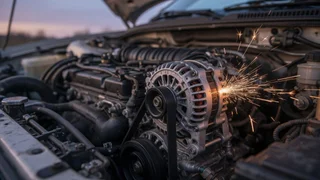
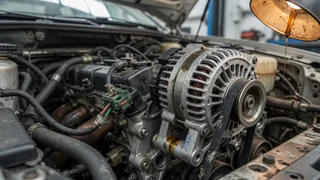
Alternator throwing sparks
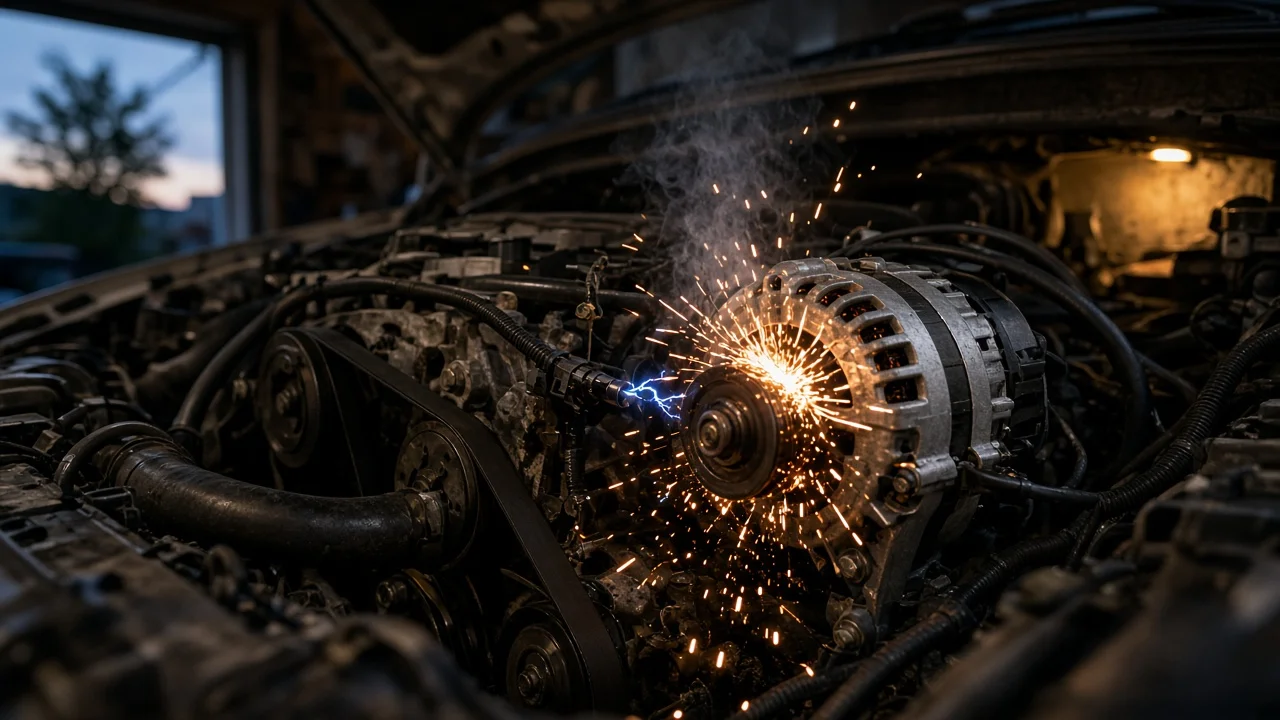
Seeing an alternator throwing sparks usually means a small but serious electrical fault is occurring right at the charging system. The shower of hot metal may appear only under load, at idle, or when the engine bay is wet, and each condition changes how the failure should be interpreted. Sparks can come from a loose battery terminal connection, chafed output wiring, worn brush contacts inside the rotor assembly, or a short between the case and a mounting point. Because the alternator produces charging output while the engine runs, any arc near it also introduces system voltage instability that can confuse sensors and drain the battery.
Essential answer
An alternator throwing sparks should be treated as an active electrical short or a failing mechanical contact, not as a normal discharge. The visible arc may be external, such as a loose cable at the battery terminals vibrating against the threaded post, or internal, where worn brushes skip across the slip rings. In either case the event releases conductive debris and heat while altering system voltage. The alternator is still rotating, but its charging output is no longer being delivered cleanly, and the battery may be absorbing the fluctuation instead of receiving stable current.
A voltage drop across a dirty or melted connection can create enough resistance to arc under the hood. If the spark follows a wiring diagram path through a high-current lead, the fuse rating of that circuit may be exceeded without blowing immediately, because an intermittent arc does not always pull a steady overload. A parasitic draw can also keep the circuit energized after shutdown and make a small gap spark when the key is off, so the location and timing of the flash are the most useful clues for narrowing the cause.