Alternator Throwing Sparks: What It Means and What to Do
The short answer
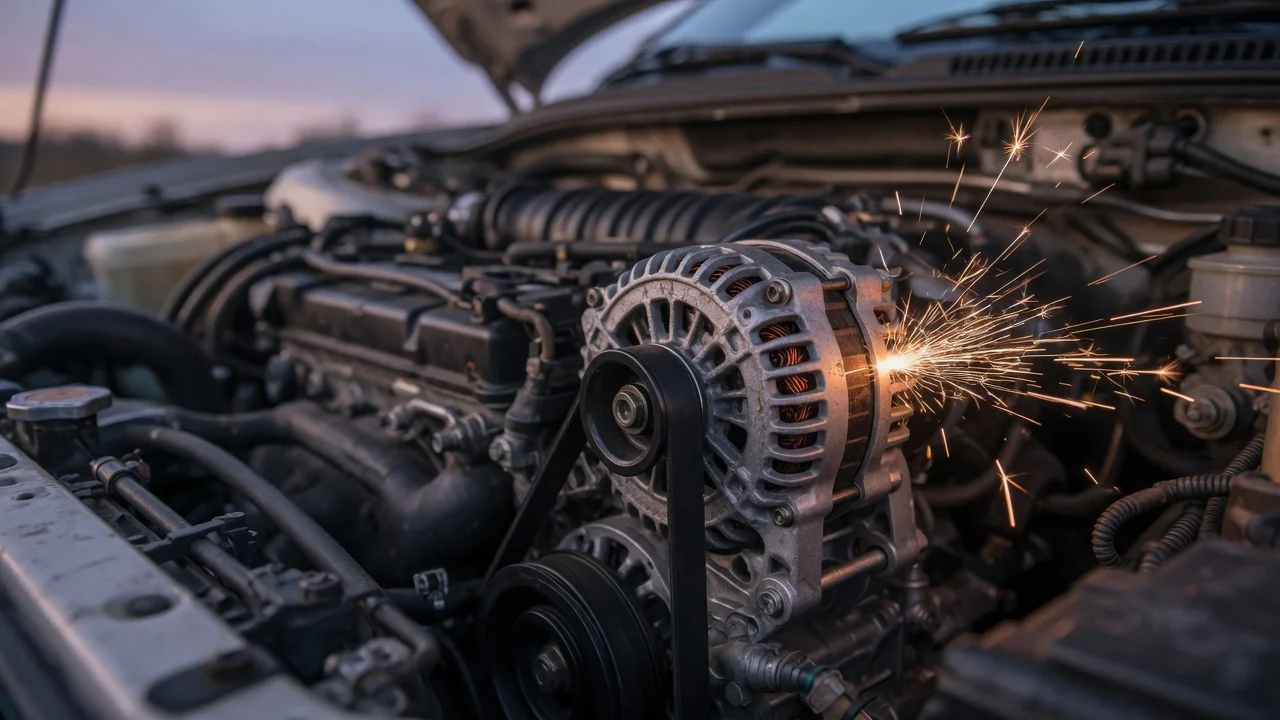
An alternator that is visibly throwing sparks should be treated as faulty and as a possible fire risk. Inside a working alternator, carbon brushes ride on spinning slip rings, and this contact can produce slight arcing. That arcing is normally small, contained and hard to see. Sparks you can clearly see from the engine bay, especially repeated sparks, crackling, a burning smell or smoke, are not normal operation. The vehicle should not be driven until the cause is found.
This guidance applies to typical belt-driven alternators used on conventional gasoline and diesel vehicles. Hybrids and electric vehicles use different charging systems, often with high-voltage parts, and should be checked by a qualified technician instead of being inspected by the owner. Alternator design, terminal layout and fusing vary by manufacturer, model and model year, so check the service information for the specific vehicle before doing any hands-on work.
Common causes of sparking at the alternator
Loose or corroded output terminal: The main output stud, often labeled B+, carries the alternator's full charging current. A loose nut or a corroded ring terminal can arc at the connection. Chafed or damaged output cable: If the cable's insulation wears through against a bracket, the engine block or another metal part, it can short to ground and spark. Some vehicles protect this circuit only with a high-current fuse or fusible link, so a short here can heat up quickly. Worn brushes or slip rings: As brushes wear down, or slip rings become scored or contaminated, the arcing inside the alternator can grow beyond its normal low level and become visible through the cooling vents. Failing bearings: Worn bearings can let the rotor wobble or rub against the stator. This can cause sparking, grinding noises and quick internal damage. Internal electrical failure: Faults in the rectifier diodes, the voltage regulator or the windings can cause overheating and arcing inside the unit. Incorrect battery connection: Connecting a battery or jump leads with reversed polarity can damage the alternator's diodes and cause sparking at or near the alternator.
Sparks that seem to come from the alternator may actually come from a nearby part, such as the starter cable, a ground strap or a damaged wiring harness running close by. Pinpointing the source is part of the diagnosis. It is not safe to assume the alternator itself is at fault.
What to do right away
Stop the vehicle somewhere safe and switch off the engine. Do not touch the alternator or its wiring while the engine is running, or while the parts are hot. If you see flames or heavy smoke, move away from the vehicle and call emergency services. Once everything has cooled and it is safe, disconnecting the battery's negative terminal removes power from the circuit. Check the vehicle's manual first, because some vehicles have specific procedures or electronics that are affected by battery disconnection. Do not keep driving to see whether the problem goes away. A short in the charging circuit can damage wiring, drain or overcharge the battery, or start a fire.
Inspection and repair
With the battery disconnected, a visual check can sometimes show an obvious cause. Look for a loose or burned output terminal, melted or chafed insulation on the output cable, or a cracked alternator housing. Tightening a loose terminal or repairing damaged cable insulation may fix the problem if the wiring is otherwise sound. Sparking that comes from inside the alternator, through the vents or around the rotor, usually means it needs to be rebuilt or replaced. Replacement is the more common route for most owners.
Even after the visible cause is fixed, the charging system should be tested. A technician can measure charging output, check for diode ripple and confirm the battery was not damaged. This guide does not give specific charging voltages or test thresholds, because those depend on the vehicle and the alternator, and no manufacturer specifications were provided. Use the figures in the service manual for the exact model.