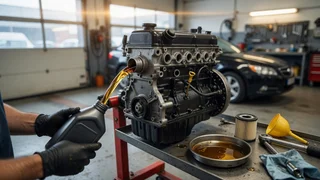
Adding diesel to engine oil before an oil change
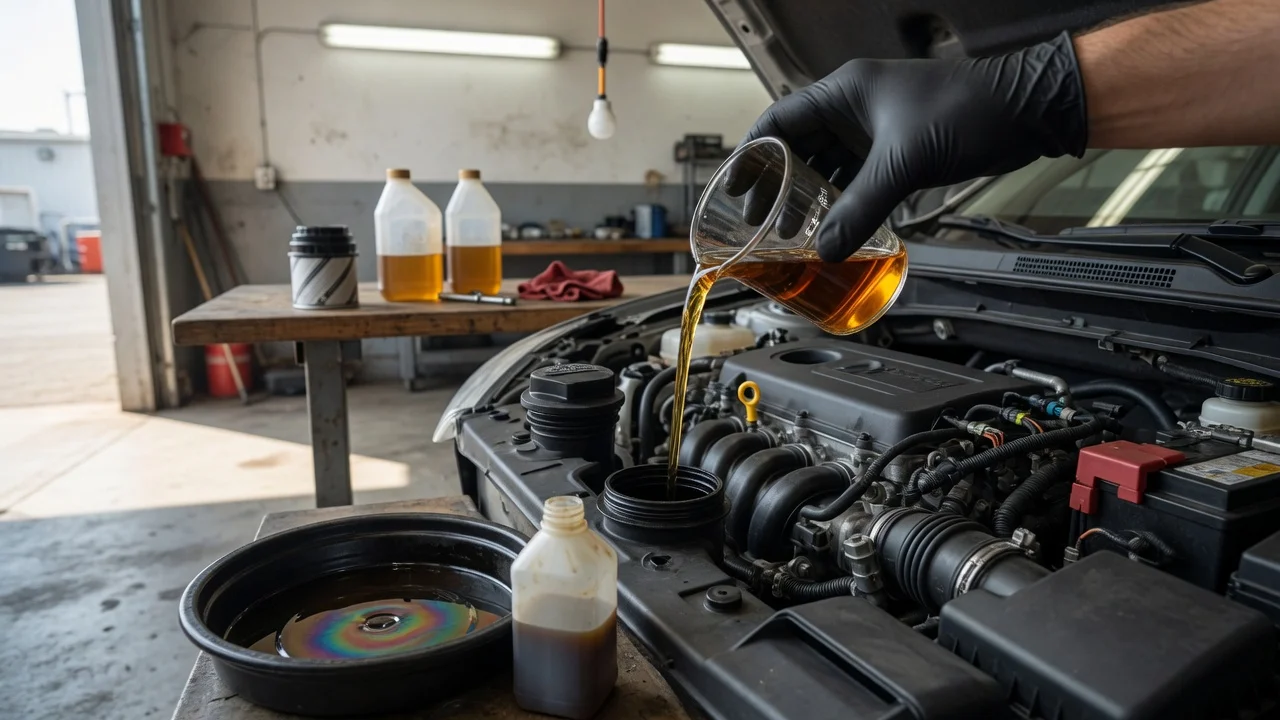
Essential answer
Adding diesel fuel to engine oil before an oil change is an unofficial flush method, not a factory service step. The intent is to thin dirty oil so sludge, varnish and trapped debris drain more completely with the old lubricant. For typical gasoline and light-duty diesel engines, that mix is oil contamination: it lowers viscosity and film strength, and leftover fuel can remain in the sump, galleries, filter housing and any oil-fed hardware if the drain is incomplete.
The subject of this question is diesel (or a similar fuel) poured into the oil filler or sump shortly before the oil is drained, sometimes with a short idle so the mixture circulates. It does not cover diesel that is already in the oil from injectors, a lift pump, short-trip condensation or diesel-particulate-filter regeneration; that is a fault or operating condition, not a treatment. It also does not cover purpose-made engine-flush additives, which are a different product category with their own directions.
Owner manuals and factory maintenance schedules specify the oil grade, capacity, drain interval and filter replacement. They do not list raw diesel as a pre-change flush. No universal “safe dose,” idle time or drain procedure for fuel-in-oil was supplied as a documented specification here, so any claimed percentage, mileage or minute count should be treated as unsupported. Attributed laboratory results on how much extra sludge this method removes versus a normal drain-and-filter change were also not supplied.
Qualifications that change the answer
Risk and usefulness depend on the engine, how the mix is used, and whether the oil is already diluted.
Modern engines with tight bearing clearances, turbochargers, variable oil pumps, hydraulic timing-chain tensioners or cam phasers rely on specified oil pressure and film strength. A fuel-thinned fill is a poor match for those parts, especially if the engine is idled or driven on the mixture. Aftertreatment changes the picture further. Catalytic converters, diesel particulate filters and related systems can be harmed if fuel-laden oil is burned or reaches the exhaust. That concern is much weaker on very old, simple engines that never had those systems, which is where this folk method is usually described. A diesel engine does not make the practice approved. Diesel fuel is a milder solvent than gasoline and is why some technicians historically used it even in gasoline engines, but crankcase oil is still specified as oil, not as a fuel blend. Gasoline poured into oil is more volatile and more damaging than diesel; neither belongs in a planned pre-change mix. If the oil is already fuel-diluted, adding more diesel moves the fill further from the specified lubricant. The useful next action is to find why fuel is entering the sump, drain and refill with the correct oil and a new filter, and recheck level and smell after a short run. Circulating the mix by idling or driving is a different, higher-wear procedure than adding a small amount immediately before a cold drain. Even a no-run drain can leave fuel in galleries and the filter if a large volume was added. Neither variant is a documented factory method in the material available for this article. A commercial engine-flush additive is not the same as diesel. If a flush is being considered for sludge, the relevant comparison is a product the vehicle maker accepts, used exactly as labeled, followed by a complete drain and a new filter—not fuel from the pump.
What to do instead
For a routine oil change, drain the old oil fully, replace the filter, and refill with the viscosity, specification and quantity listed for that engine, model year and market. Warm the engine only as the service procedure allows so the oil flows, then drain promptly and check the drain plug, washer and fill level.
If the oil looks sludged, smells of fuel, or the level has risen, treat that as a diagnostic issue rather than a reason to add diesel. Have the lubrication and fuel systems inspected, change the oil and filter once the cause is understood, and confirm the oil stays at the specified level and appearance on the next trips. Warranty and used-oil analysis can also be affected by unexplained fuel in the crankcase; those are ownership facts to raise with the servicing workshop when the history is unclear.
Editorial judgment, separate from any factory specification: adding diesel to engine oil before an oil change is not a supported maintenance choice for current passenger vehicles. Use the specified oil and filter, and investigate fuel dilution or sludge rather than thinning the fill with fuel.