6L90 TCC Solenoid Location: Where It Is and What It Means for Repairs
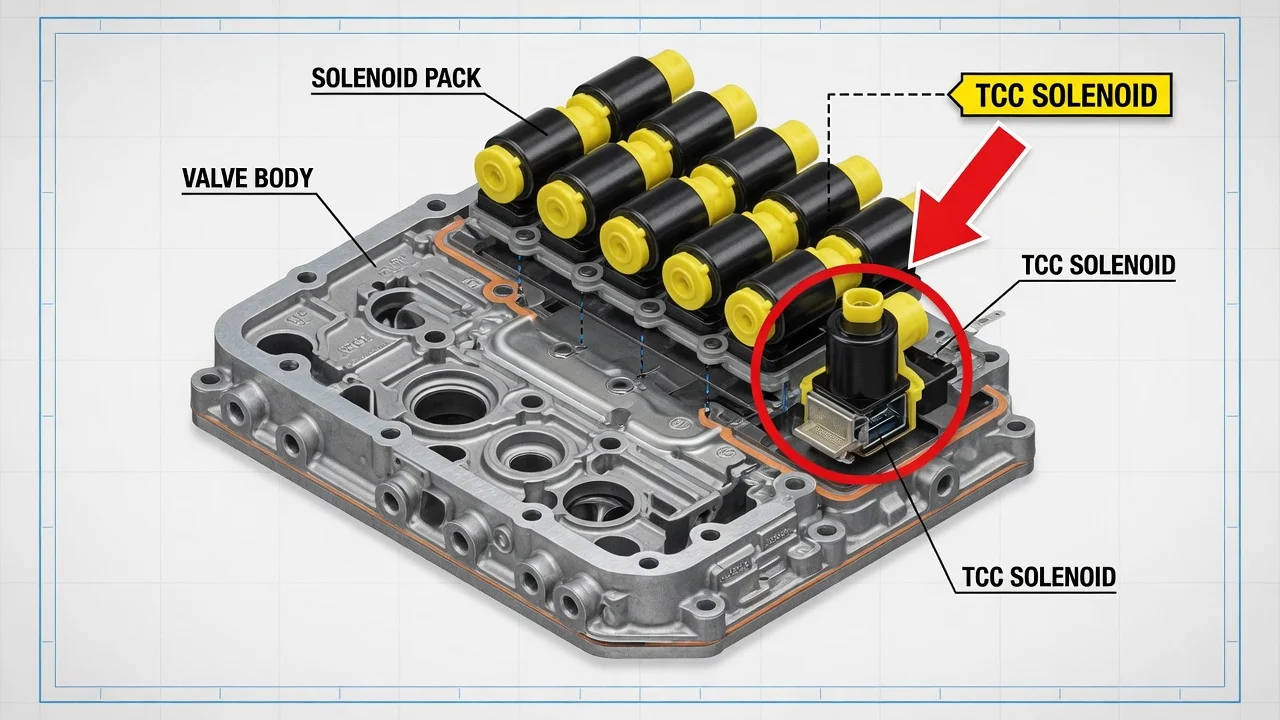
On the GM 6L90 six-speed automatic, the torque converter clutch (TCC) solenoid is not a separate part bolted to the outside of the case. It sits inside the transmission, under the oil pan, as part of the control solenoid valve and transmission control module assembly mounted to the valve body. That location shapes how a lockup problem is diagnosed, what a repair involves and whether the job suits a driveway or a shop.
Where the TCC solenoid sits on a 6L90
The 6L90 uses an internal transmission control module. The module, the shift solenoids, the line and clutch pressure control solenoids and the TCC pressure control solenoid are combined on one assembly bolted to the underside of the valve body. To see it, the fluid is drained and the oil pan and filter are removed. The assembly then faces you from the bottom of the transmission, and it connects to the vehicle wiring through a pass-through connector in the case rather than through a solenoid plug you can reach from outside.
GM generally services this as a complete assembly, which technicians often call the TEHCM. Some aftermarket suppliers offer individual solenoids, but replacing a single solenoid on the bench is a different job from GM's procedure, and a replacement assembly typically needs programming or setup with a capable scan tool before the transmission shifts correctly. In practice, the question of where the solenoid is located usually becomes a question of whether the whole control assembly needs attention.
How the converter clutch is controlled
A torque converter normally transfers power through fluid, which allows some slip between engine speed and transmission input speed. At steady cruising, the converter clutch applies to reduce or eliminate that slip, lowering heat and improving fuel use. The transmission control module commands the TCC pressure control solenoid, which regulates hydraulic pressure to the converter clutch valves in the valve body. Because the control is pressure-modulated rather than simply on or off, the module can allow a controlled amount of slip during apply and in some operating conditions.
The module judges the result by comparing engine speed with turbine or input shaft speed. If the measured slip does not match what it commanded, it can set a fault. That means a lockup complaint can originate in the electrical side (solenoid, module or circuit), the hydraulic side (fluid condition, valves, worn bores) or the converter itself (clutch lining, internal seals). The solenoid is only one link in that chain.
What changes the answer for your vehicle
First confirm the transmission type. The 6L90 shares its basic architecture with the 6L80, so the solenoid location is similar, but other GM six-speeds, including the lighter rear-drive units and the front-drive 6T family, are laid out differently. The service parts identification label, the vehicle build information or a dealer lookup by VIN can confirm which unit is installed. Do not rely on engine size or body style alone.
The 6L90 appears in heavy-duty pickups, full-size vans and some high-performance cars. The solenoid location is the same internally, but exhaust routing, crossmembers and pan clearance change how much work it takes to reach it. Model year matters too: calibrations, assembly part numbers and programming requirements have been revised over time, so fitment of a replacement assembly has to match the specific vehicle. Service history also counts. A rebuilt unit, earlier valve body work or an aftermarket calibration can change both the parts inside and how the transmission behaves.
Symptoms and diagnostic codes worth reading
Typical converter clutch complaints include a shudder that feels like driving over rumble strips at light throttle and steady speed, a lack of lockup that shows up as higher cruising rpm and poorer fuel economy, and, if the clutch stays applied, a stall or near-stall when coming to a stop. Related diagnostic codes commonly include P0741 (TCC system performance or stuck off), P0742 (TCC system stuck on) and P2763 or P2764 (TCC pressure control solenoid circuit high or low). Exact wording can vary by model year, so read the definition and freeze frame data your scan tool reports.
None of these codes proves the solenoid has failed. A circuit code points toward an electrical fault somewhere in the solenoid, its internal connections or the module. A performance or stuck code only says the measured slip did not follow the command, which fluid condition, a sticking valve or a worn converter clutch can cause just as easily.
What the owner can do
Start with a scan tool that reads the transmission module, not just generic engine codes. Record all codes and freeze frame information before clearing anything. Then check the fluid. Most 6L90 applications have no conventional dipstick and use a check plug procedure performed with the vehicle level, the engine running and the fluid within a specified temperature range. The fluid specification is Dexron VI. Low, overfilled, burnt or contaminated fluid can produce lockup symptoms on its own.
Note the conditions when the problem appears: road speed, gear, throttle position and whether the transmission is cold or fully warm. If your scan tool shows live data, compare commanded TCC pressure with actual slip speed during the event. Ask a dealer whether software updates or service bulletins apply to your VIN. If the pan is removed, inspect the magnet and pan for clutch material or metal, since heavy debris shifts the diagnosis away from a simple solenoid fault.
Repair options range from a fluid service or calibration update to replacing the control solenoid and module assembly, repairing the valve body or replacing the torque converter. Match the repair to the evidence. If you plan to do the work yourself, be aware that the assembly is sensitive to static and contamination, and a new or replacement unit usually cannot be finished without programming equipment.
Limitations and next step
This explanation covers the general 6L90 layout. Removal steps, torque values, fluid capacity, check procedures and programming requirements depend on the vehicle and model year, so use factory service information for your VIN before starting. If codes return after basic checks, if the fluid shows significant debris, or if the repair requires module programming you cannot perform, a transmission shop with GM-capable diagnostic equipment is the sensible next step. Because the control assembly is an expensive part, confirm the fault with testing rather than replacing it on the strength of a symptom alone.