6.7 Power Stroke Diesel Fuel Contamination: What to Check
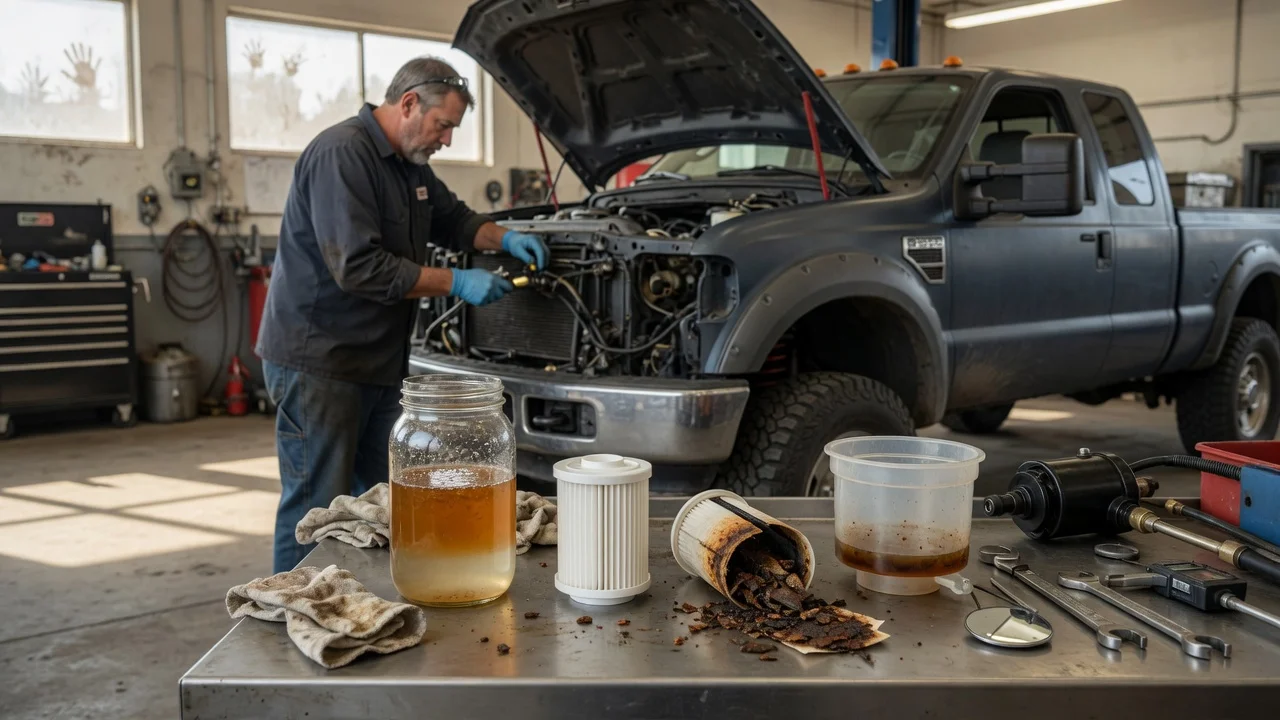
If fuel contamination is suspected in a Ford 6.7 Power Stroke diesel, establish what evidence supports the diagnosis before authorizing repairs. The immediate questions are what substance was found, where it was found and whether any component damage has been documented. No model year, symptoms, fuel-test results or manufacturer procedures were supplied here, so a specific diagnosis or repair procedure cannot be verified.
Identify the truck and the reason for concern
Record the model year, mileage, exact warning messages and any changes in how the engine starts or runs. Note when the concern began and whether it followed refueling or recent service. That timing is useful information to investigate; it does not establish that a particular fuel purchase or service caused the problem.
Keep fuel receipts and service records. If a workshop has already diagnosed contamination, request its written findings, including the suspected contaminant, the sampling location and the method used to identify it. A statement that the fuel is contaminated should be supported by evidence specific to the truck.
Verify the inspection procedure before opening the fuel system
Use Ford guidance applicable to the truck’s model year to establish the correct inspection and sampling procedure. The supplied material does not verify sampling points, filter-service steps, draining instructions, tools or restart requirements. Have a qualified diesel technician perform checks that require opening the fuel system rather than treating a generic procedure as applicable.
Ask the technician to document where each sample came from and what the examination established. Distinguish an observed difference in the fuel’s appearance from an identified contaminant. If the findings are inconclusive, the next step is further identification, not an assumed diagnosis.
Separate contamination evidence from component diagnosis
If diagnostic trouble codes are present, record the exact codes and the associated test findings. Treat a code as a reason to investigate, not proof that contamination occurred or that a particular part failed. Ask which findings support contamination, which support component damage and which questions remain unresolved.
Before approving replacement parts, request an itemized explanation of the proposed repair. It should identify the confirmed problem, the evidence supporting each replacement and the applicable manufacturer guidance. The information supplied here does not establish whether this truck needs fuel removal, cleaning, filter service or component replacement.
Decide whether to operate the truck
If you know an unintended substance entered the tank, the cautious next action is to leave the engine off and arrange professional advice before starting it. If the engine is already running poorly or displaying a warning, stop safely and obtain guidance specific to that warning and model year. This article cannot establish that continued driving or restarting is safe.
Confirm what was resolved
At completion, obtain a service record stating what was found, what work was performed and how the technician verified the result under the applicable procedure. Any uncertainty about the contaminant, its source or the extent of damage should remain explicit. Without those findings, a definitive diagnosis, repair scope or cost estimate would be unsupported.