Using 2-Stroke Oil in a Diesel Engine: What You Should Know
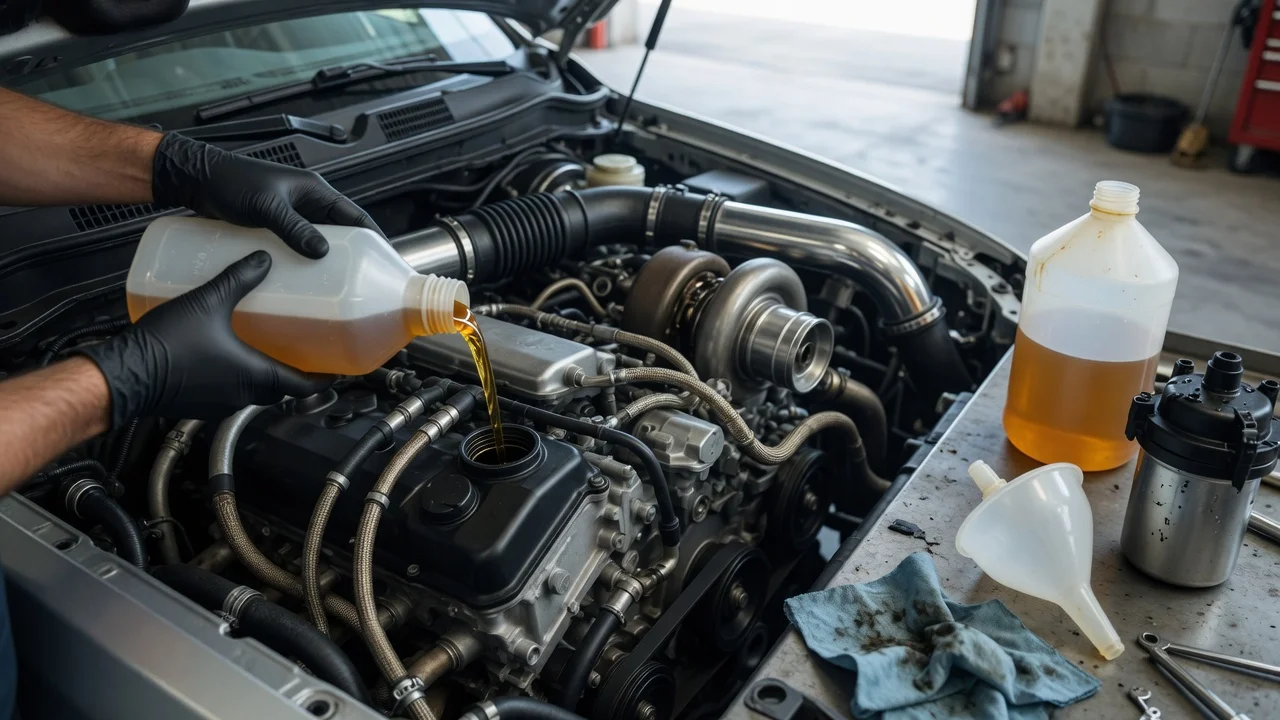
The short answer
Putting two-stroke oil in a diesel engine is not a practice that engine or fuel-injection manufacturers generally endorse, and it should never replace the engine's crankcase oil. The question usually refers to something narrower: mixing a small amount of two-stroke oil into diesel fuel as a do-it-yourself lubricity additive. That practice is widely discussed among owners, but it remains an unofficial workaround rather than a documented, manufacturer-approved treatment. Whether it is a reasonable idea depends heavily on the specific engine, its fuel system, its emissions equipment and its warranty status.
Two different questions hiding in one search
Two-stroke oil as engine oil: This is not appropriate. Two-stroke oil is formulated to be burned along with fuel in engines that have no separate oil sump, so it is not designed to serve as a long-term crankcase lubricant in a four-stroke diesel. Use only the engine oil grade and specification listed in the owner's manual. Two-stroke oil as a fuel additive: This is the practice most people mean. The oil is added to the diesel tank in small proportions with the aim of improving the fuel's lubricating properties for the injection pump and injectors.
Why some owners add it to diesel fuel
Diesel fuel helps lubricate parts of the fuel system, particularly high-pressure pumps and injectors. Lubricity is the term for a fuel's ability to reduce friction and wear between moving metal surfaces. The shift to ultra-low-sulfur diesel in many markets reduced the fuel's natural lubricity, and fuel standards responded by setting lubricity requirements that refiners typically meet using additives. Some owners, especially those running older engines with fuel systems designed before low-sulfur fuel was common, add two-stroke oil because they believe the extra lubrication may reduce pump and injector wear.
No independent test results or measurements were supplied for this article, so it cannot confirm whether two-stroke oil measurably improves lubricity in commercially available diesel, by how much, or whether any improvement translates into longer component life. Claims and mixing ratios circulated online should be treated as anecdotal unless backed by documented testing.
The risks and drawbacks
Warranty exposure: Adding non-approved substances to the fuel can give a manufacturer grounds to dispute a fuel-system warranty claim. Check your warranty terms before experimenting. Emissions equipment: Many modern diesels use a diesel particulate filter (DPF), which traps soot and can be clogged by ash left behind when certain oil additives burn. Two-stroke oils vary in formulation and ash content, and the effect of a particular product on a particular aftertreatment system is not established here. Modern high-pressure fuel systems: Common-rail systems operate at very high pressures with tight tolerances. Their designers specify fuel that meets the applicable diesel standard, not home-blended mixtures. Inconsistent products: Two-stroke oils are made for different applications, such as outboard motors, chainsaws or motorcycles, and their additive packages differ. Results from one product cannot be assumed for another. The fuel may already meet requirements: Diesel sold to the applicable standard in a given market is expected to meet a minimum lubricity level, which reduces the case for extra additives in a vehicle designed for that fuel.
How the answer changes by vehicle
The editorial judgment here is that the case against the practice is strongest for newer diesels with common-rail injection, particulate filters and active warranties, where the potential downside outweighs an unproven benefit. Owners of older, mechanically injected diesels without modern aftertreatment are the group most likely to consider it, but even there the benefit is not documented in the material available for this article. Exact guidance depends on the model year, engine generation, fuel-injection design and market fuel standard, so the owner's manual and the engine or injection-system manufacturer remain the authoritative sources.
A more cautious alternative
If fuel lubricity is a genuine concern, a purpose-made diesel fuel additive that the manufacturer states is compatible with your engine and emissions system is a more controlled option than two-stroke oil. Before using any additive, confirm what your owner's manual permits, and ask your dealer or a diesel fuel-system specialist whether a lubricity treatment is advisable for your specific engine.
Bottom line
Never use two-stroke oil in place of diesel engine oil. Adding it to diesel fuel is a popular owner workaround, not a manufacturer-backed practice, and its benefits are not supported by test data in the material available here. For modern diesels with particulate filters or remaining warranty coverage, the safer choice is to use diesel that meets the applicable standard and only additives the manufacturer approves.