6.0 Powerstroke Fuel in Oil: Causes, Signs and What to Do
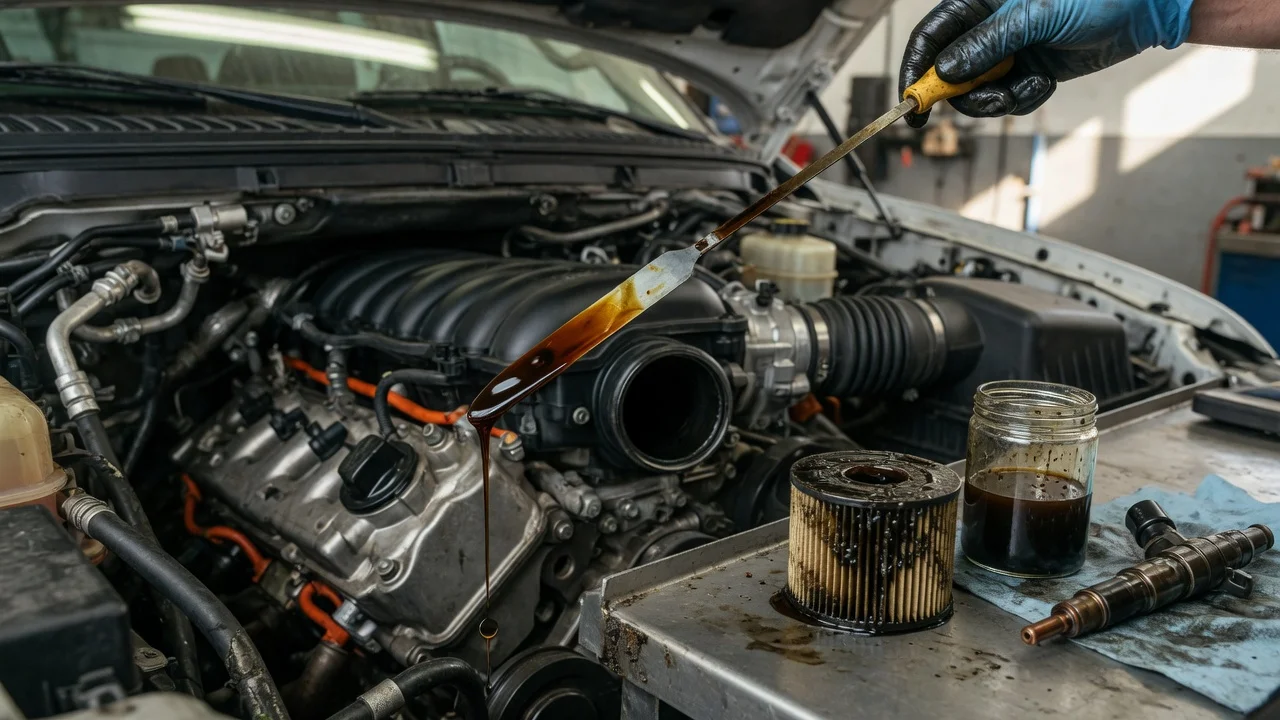
The short answer
Fuel in the oil on a 6.0L Power Stroke is not normal. It means diesel is getting past a seal or through a combustion chamber and reaching the crankcase. On this engine, the most commonly cited sources are leaking external O-rings on the fuel injectors and an injector that is leaking or sticking open. Long periods of idling or short, cold running can add a smaller amount of dilution. The problem should be confirmed and repaired promptly, because the 6.0L uses engine oil to fire its injectors, so diluted oil affects both lubrication and fuel delivery.
Which engines this covers
The 6.0L Power Stroke is the Navistar-built V8 diesel Ford used in Super Duty F-250 and F-350 pickups from the 2003.5 to 2007 model years. It was also used in the Excursion and, through later model years, in E-Series vans. These applications share the same basic fuel and injection design, but service details and part numbers can vary by vehicle and model year. Confirm these for the specific truck before buying parts.
The 6.0L did not use a diesel particulate filter. Fuel dilution caused by DPF regeneration, which is a recognized issue on later diesels such as the 6.4L, is therefore not one of the usual explanations here.
Why fuel can reach the oil on this engine
The 6.0L uses HEUI (hydraulically actuated electronically controlled unit injection). A high-pressure oil pump sends engine oil to the injectors, and that oil pressure drives fuel injection. Fuel reaches each injector through passages in the cylinder heads. Each injector therefore sits with engine oil on one side and pressurized fuel on the other, separated by O-rings. If those seals harden, crack or are damaged, fuel can seep into the oil under the valve covers and drain to the crankcase.
Leaking injector O-rings: the external seals between the fuel and oil passages wear or fail, letting fuel weep into the oil. Leaking or sticking injector: an injector that drips or stays partly open can send unburned fuel into the cylinder, where some washes past the rings into the crankcase. This often comes with rough running, misfire or smoke. Extended idling and cold, short trips: incomplete combustion at low load and temperature lets some fuel pass the piston rings. This tends to cause gradual, low-level dilution rather than a sudden rise in oil level.
Signs that point to fuel dilution
Oil level rising on the dipstick between changes, or reading above full. Oil that looks or feels thinner than fresh oil of the same grade. A diesel smell on the dipstick or at the oil fill. Lower than usual oil pressure, especially when hot. Rough running, misfire or smoke if a faulty injector is involved.
These signs suggest fuel dilution but do not prove it, and they do not show which component is at fault. A smell alone is a weak indicator.
How to confirm it
A used oil analysis from a laboratory is the clearest way to confirm fuel in the oil. The report usually lists fuel dilution as a percentage and may include a flash point test, which drops when fuel is present. This article does not give a specific acceptable or warning percentage for the 6.0L, because no documented threshold was supplied. Use the lab's own flagging criteria and Ford's service information instead. A technician can then narrow down the source with injector diagnostics, such as contribution or balance tests, and by inspecting the injector seals.
Why it matters
Diesel thins the oil, which reduces its ability to protect bearings, the turbocharger and other moving parts. On the 6.0L, the same oil also operates the injectors. Degraded oil is widely linked to injector performance problems on this engine, including stiction, a term for sluggish or sticking internal injector parts. Continuing to drive with significant dilution risks wear that is more expensive than the original seal or injector repair.
Don't confuse it with the 6.0L's coolant problems
The 6.0L is better known for oil cooler and EGR cooler failures, which involve coolant, not fuel. Coolant contamination usually shows up as milky or sludgy oil, or as coolant loss, rather than thin oil that smells of diesel. An oil analysis separates the two, because it tests for fuel and for coolant markers independently.
Practical next steps
Check the oil level regularly and note whether it is climbing between changes. Send a sample for used oil analysis before changing the oil, so the result reflects the problem. If fuel is confirmed, have the injectors and their O-rings diagnosed, along with any related misfire or running codes. Change the oil after the repair, and consider a follow-up analysis to verify that the dilution has stopped. If the truck idles for long periods, reduce idle time where practical, since extended idling contributes to dilution.
Gaps in this guide
This guide does not include documented fuel dilution limits, repair costs, failure rates or seal part revisions for the 6.0L, because no verified figures were supplied. For decisions that depend on those details, consult Ford service information or a diesel technician familiar with this engine.