3 Wheeler ATV: What to Check Before You Buy One
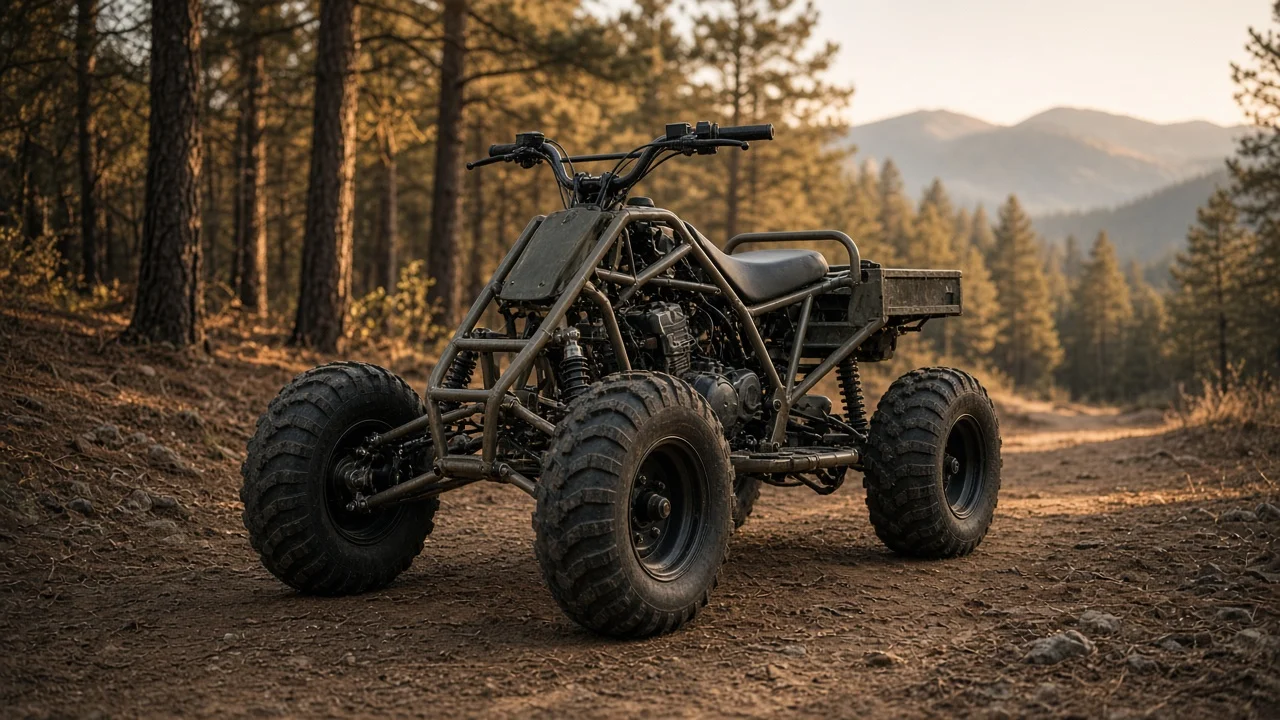
If you want a 3 wheeler ATV in the US, you will almost certainly be buying a used, decades-old machine. Major manufacturers stopped selling new three-wheelers in the late 1980s after a federal safety agreement. Current federal rules for ATVs effectively keep new three-wheel models off the US market. Buying, owning and riding a used one is generally legal, but registration, titling and trail access depend on your state and the land you ride on. So the real question is whether an older three-wheeler suits your intended use, and whether the specific machine is worth buying.
The Short Answer
A 3-wheel ATV makes sense mainly for collectors, restorers and riders who want a vintage machine for light, controlled recreational use. It is a weak choice for regular farm work, towing, hauling, carrying passengers or riding with children. Its stability, braking and parts support all fall short of a modern four-wheel ATV. If you need a dependable working vehicle, a modern quad or a side-by-side is usually the better buy.
Why New Three-Wheelers Aren't Sold in the US
Three-wheeled ATVs were widely sold in the US through the 1970s and 1980s. Rising concern about injuries and rollovers led to a 1988 consent decree between federal regulators and the major manufacturers. Under that agreement, the manufacturers stopped selling new three-wheel models. The decree expired years later, but the major brands did not bring three-wheelers back. Later federal legislation tied ATV sales to a mandatory safety standard that covers four-wheel designs, so new three-wheel ATVs remain unavailable through normal US dealer channels.
In practice, that means two things for a buyer. First, any listing for a "new" 3-wheel ATV deserves close scrutiny. It may be a different kind of vehicle, an import of unclear legal status, or a mislabeled item. Second, every genuine three-wheeler you find will be old enough that age, storage history and parts availability matter more than any original brochure figure.
Make Sure You're Looking at the Right Kind of Vehicle
Several different vehicles get described with similar words, and they serve very different purposes:
• Three-wheeled ATV (often called a trike): an off-road machine with one front wheel, two rear wheels, handlebar steering and a straddle seat. This is what most people mean by a 3 wheeler ATV. • On-road three-wheelers: street-legal motorcycles or autocycles with three wheels. These are road vehicles with their own licensing and registration rules, not ATVs. • Motorcycle trike conversions: road motorcycles converted to three wheels, also regulated as road vehicles. • Children's ride-on toys and small electric trikes: not comparable to an off-road ATV in capability or construction. • Adult utility tricycles: usually pedal or electric-assist vehicles for paved paths, not off-road machines.
If your goal is a street-legal three-wheeled vehicle, a vintage off-road three-wheeler is the wrong category. Check the listing's description, photos and paperwork to confirm what is actually for sale.
Use Case Suitability at a Glance
Intended use | How a used 3-wheel ATV fits | Usually better alternative; Collecting or restoration | Strong fit; this is the main reason people buy them today | None needed; Occasional recreational trail riding | Possible for experienced adults on suitable terrain, where permitted | Modern sport or recreational quad; Farm, ranch or property chores | Limited; low stability with loads and dated components | Utility quad or side-by-side; Towing and hauling | Poor; not designed for regular heavy work | Utility quad or side-by-side; Carrying a passenger | Not suitable | Side-by-side with proper seating; Riding by children or new riders | Not recommended | Age-appropriate youth quad with training; Hunting or remote access | Questionable; reliability and parts risk far from help | Modern utility quad or side-by-side
Model Identification
Accurate model identification comes before everything else, because parts, service specifications and value all depend on the exact model and year. Well-known three-wheelers include Honda's ATC series, Yamaha's Tri-Moto and Tri-Z machines, Suzuki's ALT models and Kawasaki's KLT models, along with sport-focused versions from several of these brands. Within each family, specifications often changed from year to year.
• Locate the frame or vehicle identification number and the engine number, and record both. • Older off-road vehicles may not use the 17-character VIN format found on modern road vehicles, so don't assume a short number is a red flag. • Check that the frame number and engine number make sense together. A replaced engine is common on old machines, but it changes which parts and service data apply. • Compare the bodywork, decals and features with reference photos for the claimed model year. Mismatched plastics or swapped parts are common. • Be wary of a frame number that is ground off, painted over, re-stamped or otherwise hard to read.
Engine Configuration
Most three-wheelers use a single-cylinder engine. Depending on the model, it may be a two-stroke or a four-stroke. Utility and entry-level models were typically air-cooled four-strokes, while some sport models used two-stroke engines, and a few used liquid cooling. The configuration affects how you maintain and operate the machine:
• Two-stroke engines need oil mixed with fuel or an oil-injection system. Confirm which setup the machine uses and that the system works if it is oil-injected. • Four-stroke engines use separate engine oil and generally need valve clearance checks at intervals given in the service specification for that model. • Liquid-cooled engines add a radiator, hoses and a water pump. Each of these can leak or fail after long storage. • Ask whether the engine has been rebuilt, with what parts, and whether any receipts exist.
Drive System and Suspension
Most three-wheel ATVs are two-wheel drive, powering the rear wheels through a solid rear axle with no differential. Final drive is usually by chain, though some utility models used a shaft. Early models relied largely on low-pressure balloon tires for cushioning, while later sport models added front and rear suspension.
The solid axle and single front wheel are central to how these machines handle. Because both rear wheels turn at the same speed, the machine tends to push straight ahead in a turn. The rider has to shift body weight to steer effectively. That handling is a big part of why three-wheelers have a reputation for tipping, and it should shape your expectations about where and how you ride.
• Chain drive: check chain stretch, sprocket tooth wear and chain alignment. • Shaft drive: check for leaks, unusual noise and play in the driveline. • Rear axle: look for bending, worn bearings and damaged hubs. • Suspension, if fitted: check for leaking shocks, worn bushings and sagging. • Tires: old balloon tires often crack or lose shape with age, and correct replacements can be harder to find than common quad tires.
Riding Controls
Riding controls vary by model and year, so confirm what the specific machine has before you buy, especially if you are used to modern ATVs.
• Clutch: some models use an automatic clutch with a foot shifter, while others have a manual clutch lever. • Reverse: some utility models have reverse; many sport models do not. • Throttle: usually a thumb throttle, but confirm it returns cleanly to idle when released. • Brakes: older models may have drum brakes, and braking performance is generally well below that of modern machines. Test brakes carefully. • Engine stop switch, lights and starter: verify each one works, and check whether the machine has electric start or kick start only.
Inspecting a Used Three-Wheeler
A careful inspection matters more than usual because of the machine's age. If possible, see it started from cold rather than already warmed up.
• Frame: look for cracks, welds, bends and heavy rust, especially around the steering head, footrests and rear axle mounts. • Steering: check for play or notchiness in the steering head bearings. • Engine: listen for knocking, check for smoke, oil leaks and hard starting, and confirm it idles and revs cleanly. Ask to see a compression check if one has been done. • Fuel system: old fuel tanks often rust inside, and carburetors gum up after storage. • Electrical: old wiring is often brittle or has been modified by previous owners. • Plastics and seat: originals may be cracked or faded, and correct replacements can be scarce for some models. • Paperwork: compare the title or bill of sale with the frame number.
Parts, Service Specifications and Equipment Compatibility
Parts support is often the deciding factor in whether a three-wheeler is a good buy. Many original manufacturer parts have been discontinued. Some popular models still have reasonable aftermarket or used-parts support, but less common models can be difficult to keep running.
• Before buying, check whether common wear parts are available for the exact model and year: tires, brake parts, chain and sprockets, gaskets, piston kits, carburetor kits and cables. • Get the service specification for that model, such as a service manual, so you have correct fluid types, capacities, clearances and torque values. Don't rely on figures for a similar-looking model. • Treat equipment compatibility claims with caution. Accessories made for modern quads, such as racks, hitches, winches or plows, may not fit a three-wheeler, and the machine may not handle the added weight safely. • If an engine or major component has been swapped, parts compatibility follows the actual component installed, not the original model listing. • Budget for refreshing tires, brakes, fluids and the fuel system even on a machine that looks good.
Paperwork, Registration and Riding Access
Rules for off-highway vehicles are set mostly at the state level, and sometimes by local authorities or land managers. Before you commit, check your state's requirements for titling, off-highway vehicle registration, trail permits and equipment such as spark arrestors. Some public riding areas restrict which vehicles may be used or have their own rules. Three-wheel ATVs are generally not street legal. Make sure the seller can provide a title or proper bill of sale, as your state requires, because registering an off-road vehicle without paperwork can be difficult. It is also worth asking your insurer whether they cover an older three-wheeler and on what terms.
Safety Expectations
Three-wheelers were withdrawn from the US market largely because of tip-over and injury concerns. Their single front wheel and solid rear axle make them less stable than four-wheel designs, especially on slopes, in turns and on uneven ground. If you ride one, wear a helmet and protective gear, ride only on terrain you know, avoid steep hills and high-speed cornering, and don't carry passengers. Don't treat a three-wheeler as a beginner's or child's machine. A rider who is new to ATVs will be better served by training on a modern quad first.
When a Quad or Side-by-Side Is the Better Choice
Choose a modern four-wheel ATV or a side-by-side if any of these matter to you: regular work use, carrying loads, towing, riding with a passenger, riding by family members with mixed experience, or dependable parts and dealer support. Modern machines offer better stability, brakes, suspension and, on many models, four-wheel drive. A side-by-side adds seating for passengers, and on many models a cargo bed.
Choosing Your Next Step
If you want a 3-wheel ATV for collecting, restoration or occasional recreational riding, start by deciding which model families interest you. Then check parts availability for those models, confirm your state's registration and riding rules, and inspect any candidate machine thoroughly, with clear paperwork that matches the frame number. If your actual need is practical work or family riding, shift your search to modern quads or side-by-sides and compare them by drive system, capacity and dealer support.