Lost Four Wheeler Key? How to Replace an ATV or Quad Bike Key
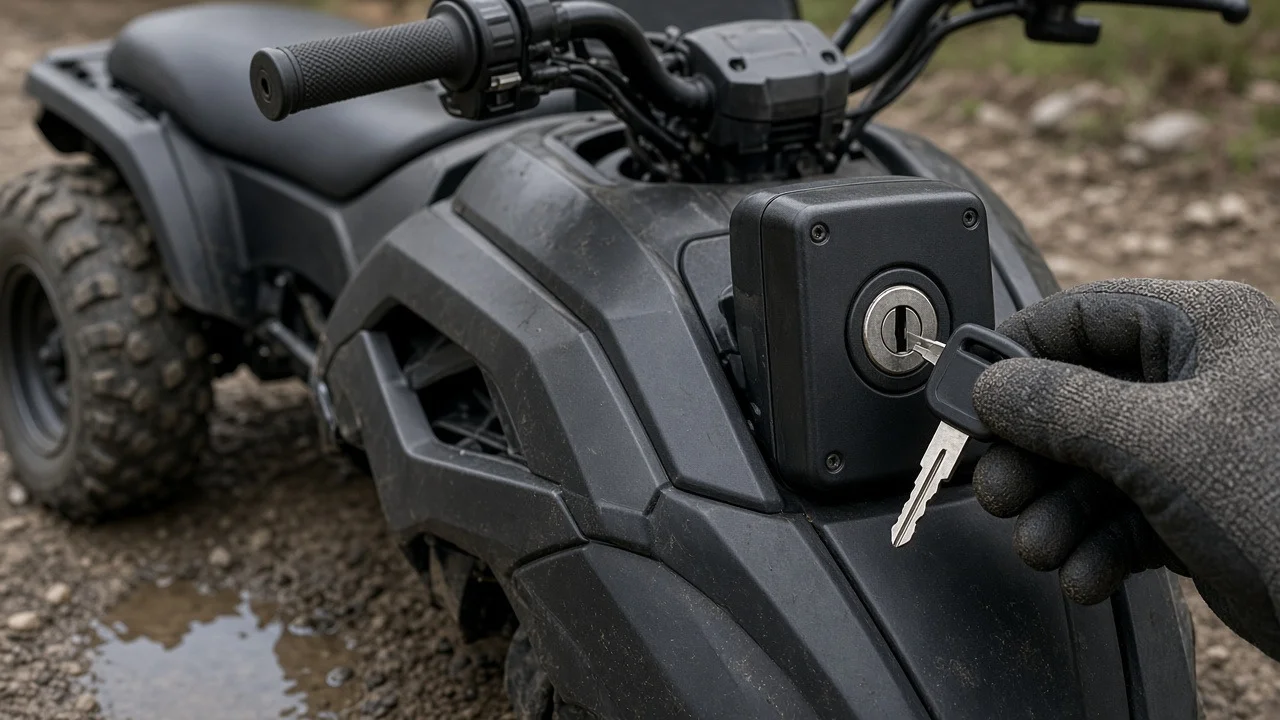
If you have lost your four wheeler key, you can almost always get a replacement. How hard it is depends mainly on one thing: whether your ATV uses a plain mechanical key or an electronically encoded key tied to an immobilizer. A simple cut key can often be duplicated from a key code by a dealer or locksmith. An encoded key usually needs a dealer with the right equipment to program it. In either case, expect to show proof of ownership before anyone cuts or programs a key for you.
The short answer
Find out what kind of key your ATV uses: plain mechanical, or encoded with an immobilizer. Look for the key code on a tag, in your purchase paperwork, or in the owner's materials. Gather proof of ownership, such as the title, registration or bill of sale, plus the vehicle identification number (VIN). Contact a dealer for your brand. For mechanical keys, also try a locksmith who works with powersports or small-engine locks. If no key code exists and the key cannot be decoded, replacing the ignition switch may be the practical fix.
Which type of key does your ATV use?
Lost-key situations for a quad bike fall into a few categories. Key design varies by manufacturer, model year and trim, so check what applies to your machine rather than assuming every ATV works the same way.
Key type | How it works | Typical replacement path; Mechanical key | A metal key physically turns the ignition switch. Nothing electronic is stored in the key. | Cut from the key code, decoded from the lock, or replaced with a new ignition switch and matching keys. Encoded key with immobilizer | The key carries an electronic identifier. The vehicle's immobilizer only allows the engine to run when it recognizes that key. | A new key is usually programmed to the vehicle with dealer-level diagnostic equipment. Some systems need an existing working key to add another. Remote transmitter or aftermarket alarm fob | A fob arms or disarms an alarm or starter interrupt that was added to the vehicle. | Contact the alarm installer or the system's maker. The fob may need to be paired with the alarm module.
A mechanical key is the simplest case. An immobilizer is an anti-theft system that blocks starting or running unless it detects an authorized key. That is why a correctly cut blade alone may not start an encoded-key ATV. Key programming is the process of registering a new key with the vehicle's control module so the immobilizer accepts it.
Step 1: Track down the key code
Many ATV keys are made from a key code, a short alphanumeric reference that tells a key-cutting machine how to cut the blade. With the code, a replacement mechanical key can often be made without the original. Common places to look:
A small metal or plastic tag that came on the original key ring. The bill of sale, dealer paperwork or warranty documents from when the vehicle was new. The owner's manual, where some owners write the code down or keep the tag. Your selling dealer's service records, if the code was recorded at delivery. The ignition switch itself. On some models a code is marked on the switch body, though reaching it may require removing panels.
If you cannot find the code, a locksmith may be able to decode the lock and cut a key to match. Whether that works depends on the lock design and how accessible it is.
Step 2: Get your proof of ownership ready
Reputable dealers and locksmiths generally want to confirm the vehicle is yours before making a key, especially an encoded one. Requirements vary by business and by state, but useful documents include:
The title, where your state titles off-road vehicles. Current registration, where your state requires it. A bill of sale, particularly for private-party purchases. Government-issued photo ID that matches the name on the documents. The VIN, which is stamped on the frame and usually appears on your paperwork.
If you bought the ATV used and never received a title or bill of sale, sort that out first. Without documentation, some businesses will decline to make a key at all.
Step 3: Choose between a dealer, a locksmith or a new ignition switch
Your best option depends on the key type and what information you have.
Dealer: Usually the most reliable route for encoded keys, because programming typically needs brand-specific diagnostic tools. A dealer can also order a key by code or supply a new ignition switch. Locksmith: Often faster and convenient for mechanical keys, especially one who handles powersports, motorcycle or small-engine locks. Capabilities vary, so ask whether they can work with your make and key type before you go. Ignition switch replacement: If no code is available and the lock cannot be decoded, a new ignition switch with its own keys solves the problem. On encoded-key systems this is more involved, because the new keys still have to be accepted by the immobilizer.
Prices and turnaround times vary widely by brand, region and parts availability. Ask for a quote before authorizing work, and ask whether the price covers both cutting and programming.
If you lost the key away from home
Losing the key to an ATV on a trail or at a riding area adds a transport problem. Check whether your roadside assistance plan covers off-road vehicles. Many plans are written for street-registered vehicles and may exclude ATVs or only cover them on maintained roads, so read the terms or call the provider. Otherwise, you may need a trailer and help loading the machine to get it to a dealer or locksmith.
Avoid bypassing the ignition to get going. It can damage wiring, may not work on immobilizer-equipped models, and can create safety and warranty problems.
Preventing the next lost key
Get a spare made as soon as the replacement is sorted. For encoded systems, adding a key while you still have a working one is often simpler. Record the key code and VIN somewhere safe, such as a photo stored with your vehicle documents. Use a brightly colored or floating key fob so a dropped key is easier to spot. Keep the spare at home, not on the vehicle, so it does not make the ATV easier to steal.
Bottom line
A lost key for a quad bike is usually an inconvenience, not a dead end. Identify whether your ATV uses a mechanical or encoded key, find the key code if you can, and bring proof of ownership to a dealer or qualified locksmith. Once you have a working key again, have a spare made so the next lost key is a minor problem.