2018 Honda Civic Parasitic Battery Drain: What It Means and What to Do Next
The short answer
If a 2018 Honda Civic repeatedly has a dead or weak battery after sitting, the cause is either a battery or charging problem, or a parasitic drain. A parasitic drain is current that keeps flowing after the car is switched off and locked, usually because an electronic module, accessory or circuit fails to go to sleep. A flat battery alone does not prove a parasitic drain, so the first step is to separate a failing battery or charging system from an actual excessive draw.
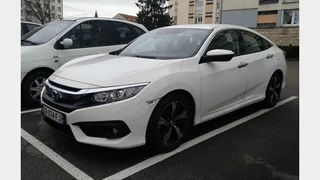
The 2018 model year belongs to the tenth-generation Civic, which covers sedan, coupe and hatchback body styles with several engine and trim combinations. Equipment varies by trim, especially the infotainment and audio system, so the circuits that could be involved differ from one car to another. Treat any claim about a single universal cause with caution.
What counts as a parasitic drain
Every modern car draws a small amount of current when it is off, to keep memory, the clock, keyless entry and security functions alive. That background draw is normal. It becomes a problem when it is high enough, or lasts long enough, to discharge the battery between drives. Honda's service information specifies the acceptable draw for this model; that figure was not included in the material available for this article, so confirm it from the service manual or a dealer before judging a measurement.
Common categories of causes
Without a confirmed diagnosis, the possible sources fall into broad groups rather than one known fault:
Electronic modules that stay awake, such as the audio or infotainment unit, telematics or Bluetooth functions, or body control electronics. Aftermarket add-ons, including dash cameras, remote starters, alarms, trackers or audio equipment wired to a constant power source. Items left on or not fully shut, such as interior or trunk lights, a door, hatch or trunk that does not fully latch, or a device left plugged into a powered outlet. A weak or aging battery that can no longer hold charge, which can look like a drain even when the draw is normal. A charging system that does not fully recharge the battery, especially on cars driven mainly on short trips.
How the cause is usually confirmed
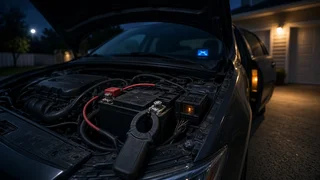
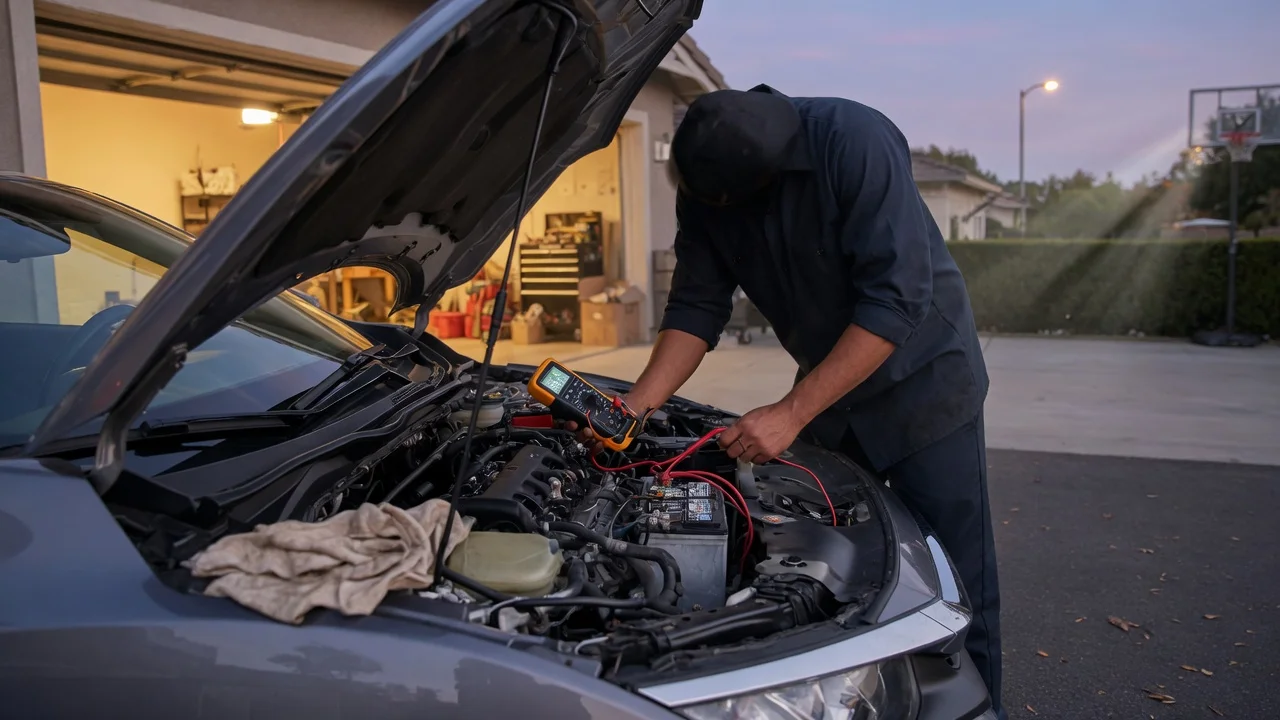
A technician typically starts by load-testing the battery and checking charging output. If both are healthy, a parasitic draw test follows: an ammeter is connected in series with the battery while the car is locked, and the reading is taken only after the vehicle's modules have had time to enter sleep mode. Measuring too soon shows a misleadingly high number because modules are still active.
If the draw is excessive, fuses are removed or monitored one circuit at a time to see which one drops the reading, which narrows the problem to a specific system. Intermittent drains, where a module wakes up only occasionally, can be harder to catch and may need longer monitoring.
Recommended next steps
Remove or disconnect any aftermarket electronics and anything plugged into power outlets, then see whether the problem continues. Check that all doors, the trunk or hatch, and interior lights turn off and latch properly. Have the battery and charging system tested before replacing parts. Ask a Honda dealer to check the vehicle identification number for open recalls, campaigns and technical service bulletins that relate to battery drain or module behavior. If the battery and charging system pass, request a parasitic draw test with circuit isolation rather than a battery swap alone.
What this article cannot confirm
No recall records, service bulletins, owner complaint data, warranty terms or test measurements were supplied for this article. It therefore does not state whether a specific factory fault is documented for the 2018 Civic, whether a software update or repair is available, or what Honda's acceptable draw limit is. Those points should be verified through a dealer lookup by VIN and Honda's service information.