2008 Acura TL Battery Drain: Likely Causes and How to Narrow It Down
The short answer
When a 2008 Acura TL repeatedly goes flat while parked, the cause is usually one of two things: a battery that can no longer hold a charge, or a parasitic draw. A parasitic draw is current that keeps flowing after the car is locked and its electronics should have gone to sleep. The only reliable way to tell these apart and find the source is to test the battery and charging system, then measure the draw with the car shut down.
The 2008 model year was the last of the third-generation TL, built from 2004 to 2008. Owners of this generation frequently name the HandsFreeLink Bluetooth module as a suspect for parasitic drain. That claim comes from owner reports and general repair discussion. No service bulletin or test data was supplied for this article, so treat the module as a common suspect to check, not a confirmed cause for any particular car.
What changes the answer
Battery age and condition: an old or weak battery can look like a drain problem, so load-test it before chasing a draw. Charging system: a failing alternator, including a faulty internal diode, can undercharge the battery or let current leak away while parked. Equipment fitted: HandsFreeLink, navigation, satellite radio and any aftermarket electronics such as remote starters, alarms or audio add circuits that can stay awake. Something left on: a trunk, glove box or courtesy light that doesn't switch off, or a door or trunk switch that tells the car it is still open, can keep modules awake. How far the car is driven: short trips and long periods parked leave less margin, so a small draw becomes noticeable sooner.
How a parasitic draw test narrows it down
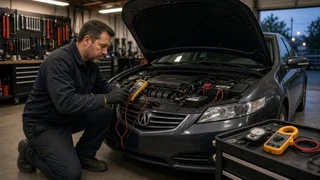
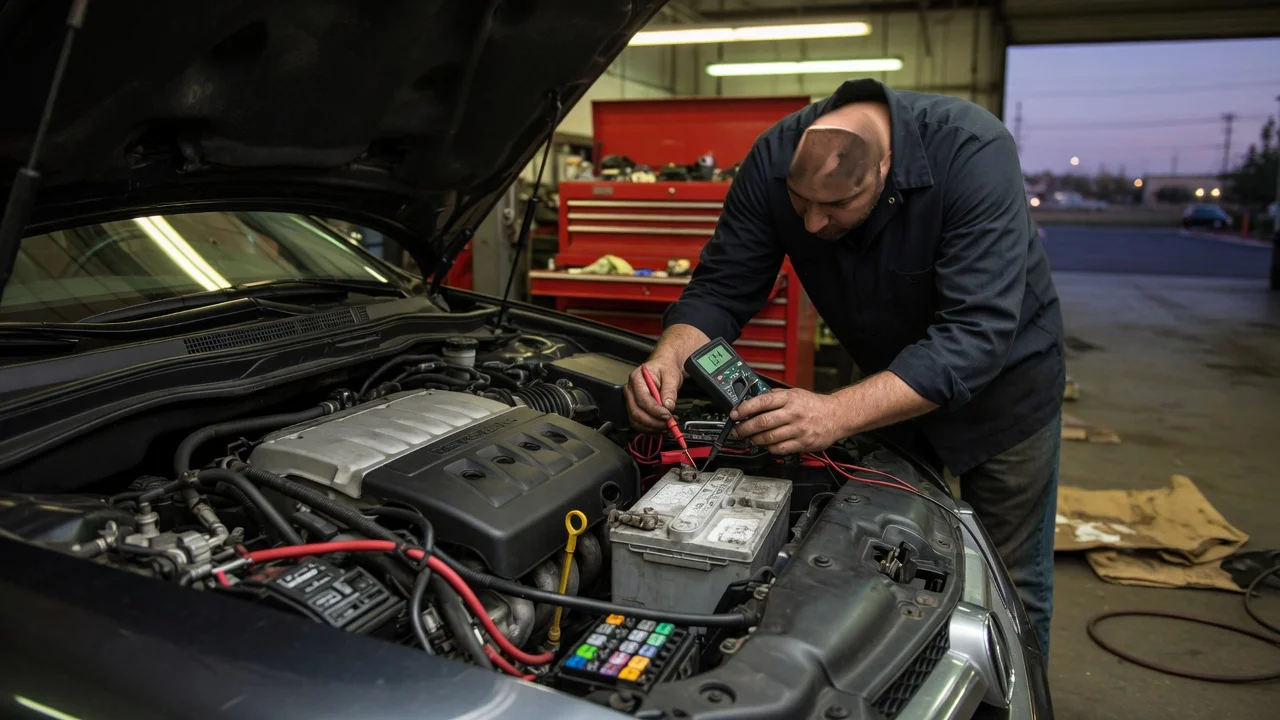
The standard method is to connect an ammeter, usually a multimeter set to read current, in series between the negative battery terminal and its cable. With everything off and the doors closed, wait for the car's modules to go to sleep. Then read the current and pull fuses one at a time. When the reading drops noticeably, the circuit on that fuse contains the source.
Fully charge the battery first and confirm it passes a load test. Latch the hood and door switches, or close the doors with the windows down, so the car believes it is shut and locked. Give the modules time to sleep before you take a reading. Opening a door or cycling the ignition can wake them and reset the wait. Use the fuse box legend in the owner's manual to identify each circuit as you pull fuses. If a fuse feeds several systems, check each component on that circuit one at a time.
Acura's own acceptable-draw specification and module sleep time for the 2008 TL were not available for this article. Check the factory service information or ask a dealer before deciding whether a measured reading is excessive. Rule-of-thumb figures circulate online, but they may not match this car.
If the HandsFreeLink module is suspected
Owners commonly test this module by disconnecting it or pulling its fuse and checking whether the drain stops. A large drop in measured current after isolating the module, or a battery that no longer goes flat, points to it as the source. Whether a repair, replacement or software update applies depends on dealer records for the specific vehicle. Ask an Acura dealer to run the VIN for open recalls and service bulletins rather than relying on forum consensus.
Gaps in this guide
No manufacturer bulletins, measured draw figures or independent test results were supplied for this article. The causes above are general electrical diagnosis and commonly reported suspects for this generation, not verified findings. A measured draw test is still the step that turns suspicion into a diagnosis.