2-Stroke Oil for Generators: When You Need It and When You Don't
The short answer
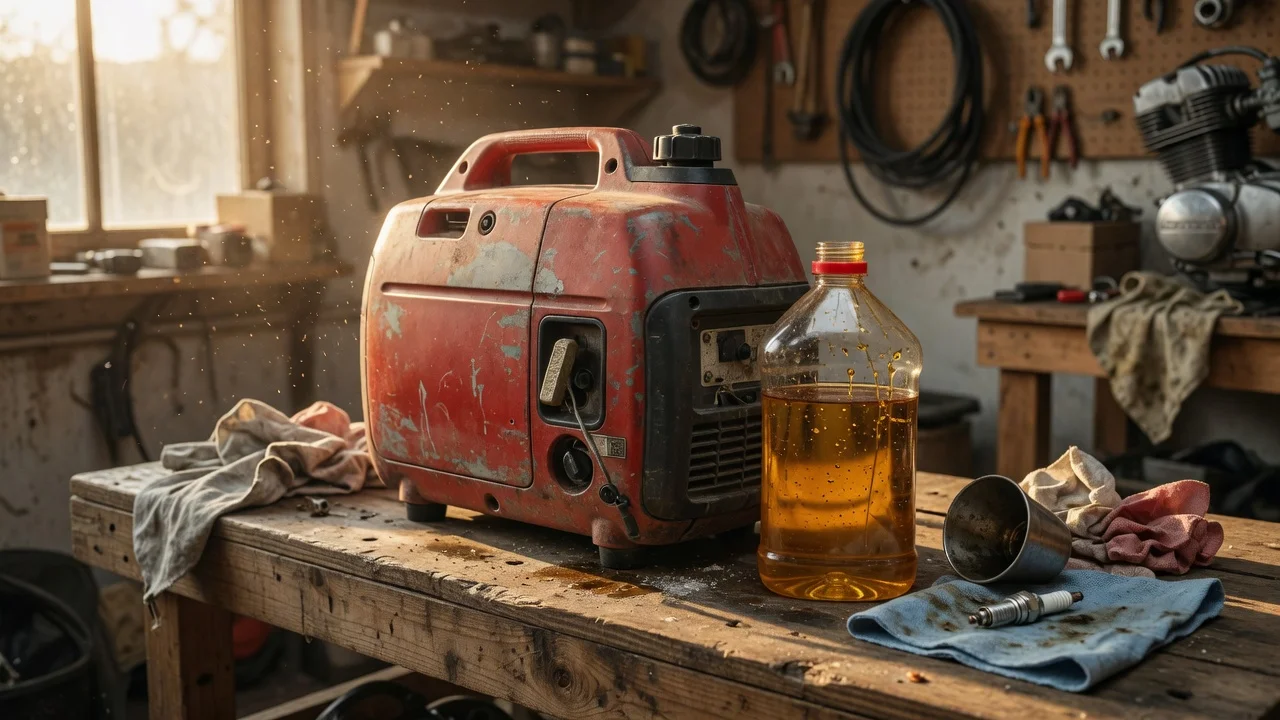
Only use 2-stroke oil if your generator has a 2-stroke engine. Most portable and standby generators use 4-stroke engines. A 4-stroke engine takes regular motor oil in its crankcase and plain gasoline in the tank, with no 2-stroke oil anywhere. A smaller number of compact, lightweight generators use 2-stroke engines. These need 2-stroke oil mixed into the fuel at the ratio the manufacturer specifies. Which group your generator belongs to decides the answer, so check that first.
How to tell which engine your generator has
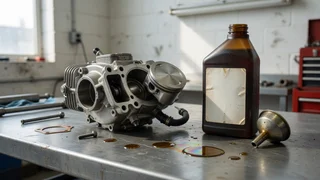
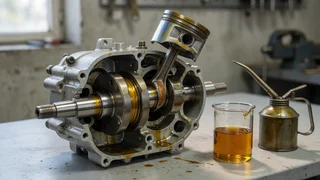
A 2-stroke engine completes its power cycle in two piston movements and has no separate oil sump. It is lubricated by oil carried in the fuel, which is why the oil must be premixed or metered in. A 4-stroke engine has an oil reservoir in the crankcase, filled and checked separately from the fuel.
Signs your generator is a 4-stroke (no 2-stroke oil needed): • It has an oil fill cap or dipstick on the engine block, separate from the fuel tank. • The manual lists an engine oil capacity and an SAE viscosity grade. • The manual or fuel cap calls for unleaded gasoline only. Signs your generator is a 2-stroke (2-stroke oil required): • There is no crankcase oil fill or dipstick. • The fuel cap, tank label or manual states a fuel-to-oil mixing ratio. • The manual or spec sheet describes the engine as 2-stroke or two-cycle.
If the markings are worn and you have no manual, look up the exact model number on the data plate. The engine type, oil type and mixing ratio for a specific model come from its manufacturer documentation. Nothing in this article can confirm those details for your unit.
If your generator is a 2-stroke
Use an oil sold as 2-stroke or two-cycle engine oil for air-cooled engines, and mix it at the exact ratio your manual gives. Ratios differ between models. Too little oil risks scoring the piston and cylinder. Too much can cause heavy smoke, fouled spark plugs and carbon buildup. Mix in a clean, approved fuel container rather than pouring oil straight into the generator tank, so the oil disperses evenly.
Oil containers often list performance classifications. JASO FC or FD and ISO-L-EGD or EGD are common ones for air-cooled 2-stroke engines, and API TC is an older general rating. Oils labeled TC-W3 are formulated for water-cooled outboard boat motors. They are generally not the first choice for an air-cooled generator unless the manufacturer allows them. If your manual names a specific classification, follow it.
If your generator is a 4-stroke
Don't use 2-stroke oil. Don't pour it into the crankcase in place of motor oil. 2-stroke oil is designed to burn with the fuel and does not protect a sump-lubricated engine the same way. Also don't add it to the gasoline. A 4-stroke engine gets no lubrication benefit from it, and the extra oil can increase smoke and deposits. Use the motor oil grade and quantity listed in the manual. The recommended grade can change with the outdoor temperatures you expect to run in.
Quick reference
Engine type | Where oil goes | Uses 2-stroke oil? 2-stroke | Premixed into the fuel at the manufacturer's ratio | Yes; 4-stroke | Separate crankcase, checked with a dipstick | No
What this guide can't confirm
No model-specific data was available for this article, so it does not give mixing ratios, oil capacities or approved product names for any generator. Those figures can differ by model and production year. Before buying oil or fueling up, confirm them in your generator's manual or with the manufacturer.