2-Stroke Dirt Bike Oil Mix Ratio
The Short Answer
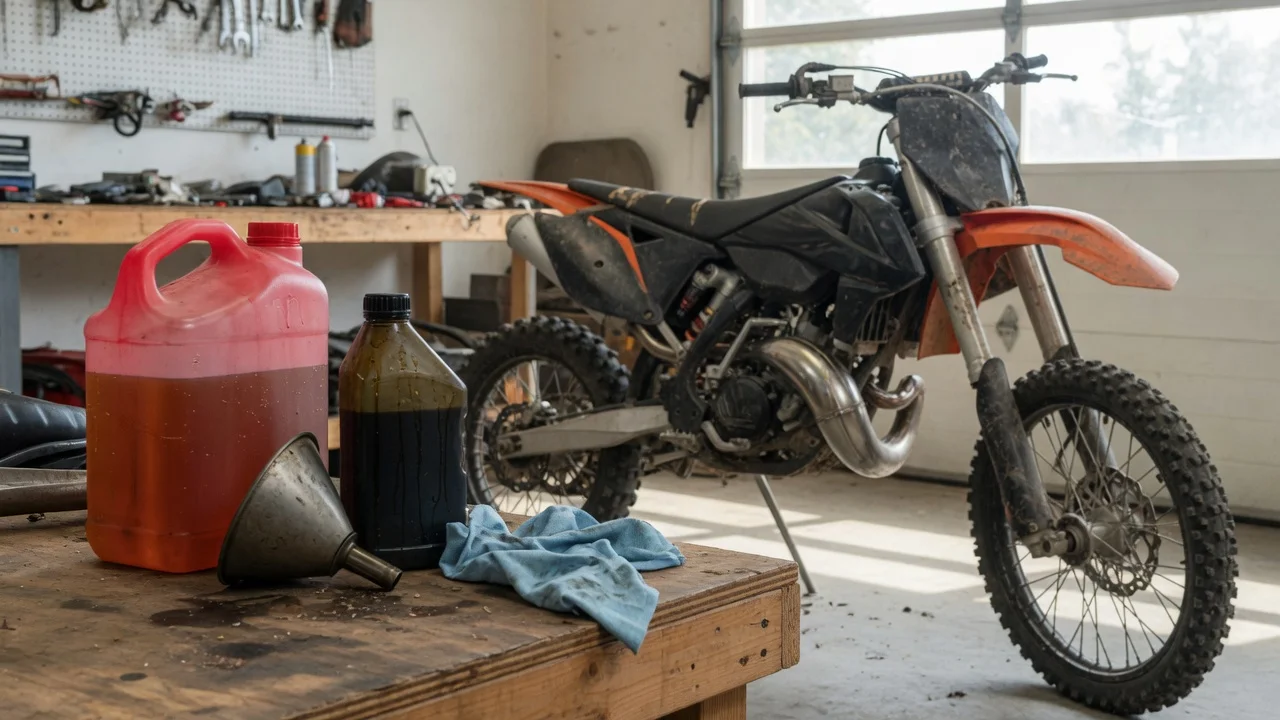
There is no single correct premix ratio for every two-stroke dirt bike. The right figure is whatever the bike's manufacturer specifies in the owner's or service manual, read together with the oil maker's instructions. Commonly quoted premix ratios for two-stroke dirt bikes fall roughly between 32:1 and 60:1, with older designs generally sitting toward the richer end of that span. That range is general guidance, not a specification. Use the documented figure for your exact model, model year and engine.
One qualification changes the answer completely. Some two-strokes, including certain fuel-injected models, deliver oil from a separate oil-injection system instead of premixed fuel. On those bikes you may not need to mix oil into the fuel at all. Check which system your bike uses before adding oil to the tank.
What the Ratio Means
A ratio such as 40:1 means 40 parts gasoline to 1 part two-stroke oil, measured by volume. A lower first number means more oil in the mix, which is called a richer mixture. A higher first number means less oil, which is called a leaner mixture. For example, 32:1 contains more oil than 50:1.
Premixing is needed because a typical two-stroke engine has no separate oil sump feeding the crankshaft bearings, connecting rod and cylinder. The oil travels with the fuel charge through the crankcase and lubricates those parts on the way.
Why the Correct Ratio Varies
Manufacturer specification: Engine design, displacement and intended use differ between makers and model years, and each maker states its own figure. Oil formulation: Two-stroke oils are formulated differently, and some oil makers state their own recommended ratios. If the bike manual and the oil label disagree, follow the manual or ask the manufacturer or dealer. Engine age and condition: Older engines are often specified with richer mixtures than newer designs. A rebuilt or modified engine may come with different guidance from the builder. Lubrication system: Premix and oil-injection bikes need different handling, as noted above.
Editorial judgment: if you cannot find a documented figure, do not guess toward a very lean mix. Too little oil risks inadequate lubrication and engine damage. Too much oil tends to cause smoke, carbon buildup and spark plug fouling. Neither extreme is a substitute for the specified ratio.
Mixing Quantities for Common Ratios
The amounts below are calculated by dividing the fuel volume by the first number of the ratio. They are arithmetic conversions, not recommendations for any particular bike. Metric figures are rounded to one decimal place, and imperial figures to two decimal places.
Ratio | Oil per 1 liter of fuel | Oil per 5 liters of fuel | Oil per 1 US gallon of fuel; 32:1 | 31.3 ml | 156.3 ml | 4.00 fl oz; 40:1 | 25.0 ml | 125.0 ml | 3.20 fl oz; 50:1 | 20.0 ml | 100.0 ml | 2.56 fl oz; 60:1 | 16.7 ml | 83.3 ml | 2.13 fl oz
To calculate any other combination, divide the fuel volume by the first number of the ratio. For example, 5 liters at 40:1 is 5,000 ml ÷ 40 = 125 ml of oil.
oil volume = fuel volume ÷ ratio; example (40:1, 5 L): 5000 ml ÷ 40 = 125 ml oil
Basic Mixing Practice
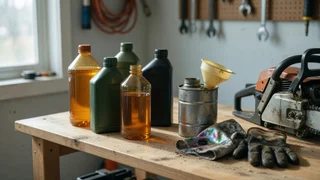
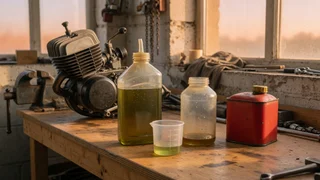
Use oil labeled for two-stroke engines, of the type the bike or oil maker specifies. Measure the oil with a graduated container or a dedicated ratio bottle rather than estimating. Mix in a clean, approved fuel container, not in the bike's tank, so the blend is consistent. Shake or agitate the container to combine the oil and fuel before filling the bike. Mark the container with the ratio so the mix is not confused with fuel for other equipment.
Where to Confirm Your Bike's Ratio
The authoritative sources are the owner's manual or service manual for your exact make, model and model year, followed by the manufacturer or an authorized dealer. Some bikes also carry a label near the fuel filler stating the ratio. The oil container's label tells you what that particular oil is designed for.
Gap in this guide: no model-specific manufacturer specifications were available for this article. It therefore does not state the correct ratio for any named bike, oil brand or model year. Treat the ranges here as orientation only, and confirm the figure in your bike's documentation before mixing.