Fitting Disc Brakes to a 1969 Mustang
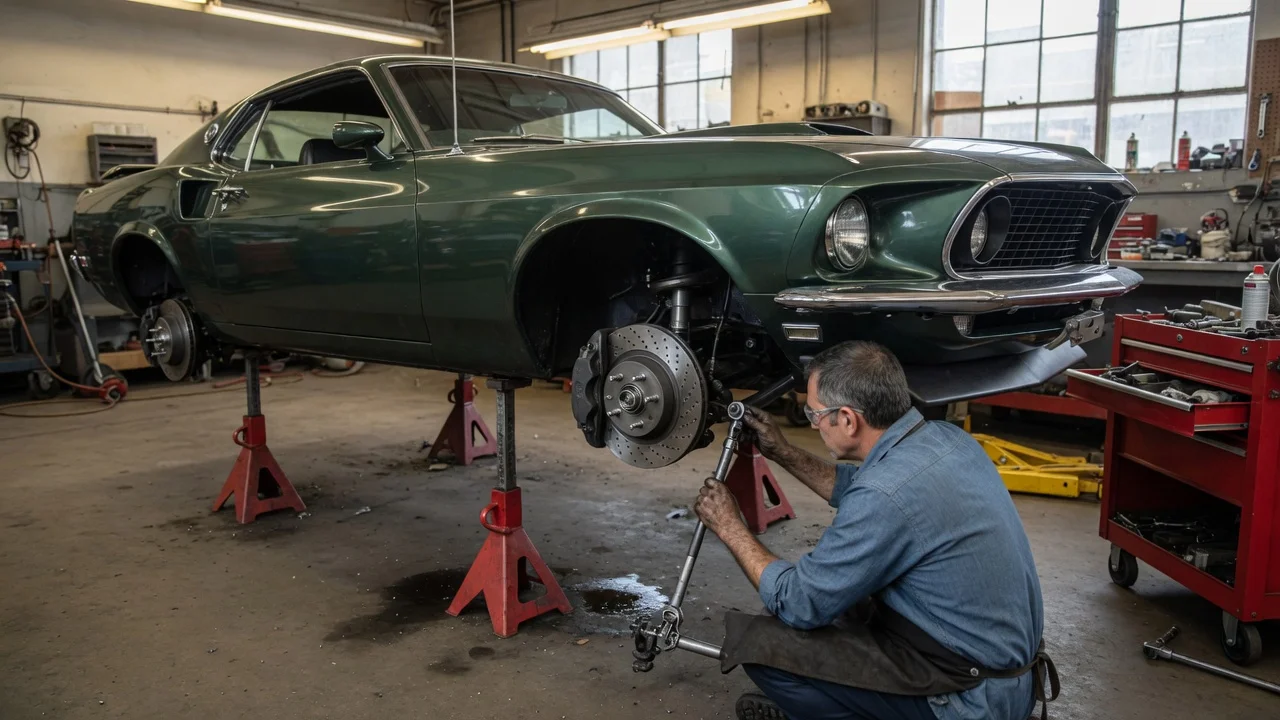
The short answer
Yes, a 1969 Mustang can be fitted with disc brakes, and front disc conversion is one of the most common upgrades for this model year. Ford offered front disc brakes as a factory option in 1969, while many cars left the factory with drum brakes at all four corners. That makes a front-disc swap a well-trodden path, either by reproducing the factory option or by installing an aftermarket kit.
The main qualification is that a disc conversion is a braking-system change, not a simple parts swap at the wheel. The hydraulic components that control pressure and front-to-rear balance usually need to change along with the calipers and rotors. Most conversions also keep drum brakes at the rear, which is an established and workable setup for this car.
What the conversion covers
For a drum-equipped 1969 Mustang, a front disc conversion generally involves the following areas. Exact part lists vary by kit and by the car's original configuration.
Front hub and spindle hardware: factory-style conversions use disc-brake spindles, while many aftermarket kits use brackets that bolt to the existing drum spindles. Rotors, calipers and caliper mounting brackets. Brake hoses and hard lines suited to the new calipers. The master cylinder: one designed for disc front brakes rather than one set up for four-wheel drums. A proportioning or combination valve to set the front-to-rear brake balance. Optional power assist: a brake booster if the car does not already have one or if the chosen kit calls for it.
Choosing a conversion route
There are three broad approaches, and the right one depends on whether originality, budget or braking performance matters most.
Factory-style: reproduces the original 1969 front disc option. This suits owners restoring toward a correct specification, although period components are modest by modern standards. Bolt-on aftermarket kit: typically adapts the existing spindles and adds modern calipers and rotors. This is often the most straightforward route for a driver-quality car. Larger performance kits: bigger rotors and multi-piston calipers for stronger, more fade-resistant braking. These usually require larger-diameter wheels to clear the hardware.
Hydraulic changes that should not be skipped
Disc and drum brakes need different hydraulic conditions. A master cylinder set up for drum front brakes may contain a residual pressure valve in the front circuit, which can cause disc pads to drag. Brake bias is the other concern. Front-to-rear balance changes when discs replace drums, and without a suitable proportioning valve the rear brakes can lock early or the car can feel unbalanced under hard braking. Matching the master cylinder and valving to the kit maker's recommendations is the safest course.
Check before you buy
Confirm whether the car still has drum spindles, or has already been converted or fitted with factory disc hardware. Check wheel clearance. Some kits will not fit inside the smaller original wheels. Confirm whether the car has power brakes and whether the kit requires a booster. Match the kit to the car's suspension and steering setup, especially if those parts have been modified. Decide whether originality matters, since a non-factory system can affect the car's value to concours-minded buyers.
Information gaps
No specifications, measurements or test results were supplied for this article. It therefore gives no rotor sizes, minimum wheel diameters, pedal-effort figures or stopping distances. Those details vary between kits and between the original factory configurations. Confirm them from the kit manufacturer's documentation and the car's own build details before buying parts. Because brakes are safety-critical, have the finished installation inspected and bled properly by a qualified person if you are not experienced with brake hydraulics.