Fit disc brakes on a 1969 Mustang
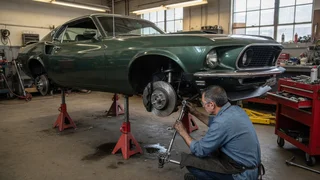
Converting a 1969 Mustang to disc brakes changes how the car slows, how it feels under repeated use, and which wear parts you inspect. Drums fade sooner because heat and dust stay trapped inside the rotating assembly, while a disc setup cools more directly and sheds water faster. The swap generally improves straight-line stopping and reduces the pedal effort needed in traffic. Owners ask about 69 Mustang disc brakes most often when planning a front-brake upgrade, and the answer is usually reassuring: the spindle layout supports conversion brackets, stock-style calipers, and common brake rotors without radical chassis surgery.
Essential answer
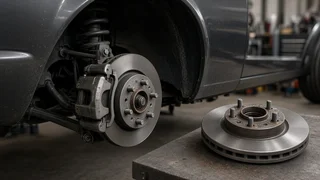
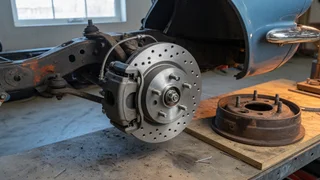
Yes, a 1969 Mustang can be fitted with disc brakes, and the front axle is the practical place to start. Factory drum-brake cars used a spindle that can accept a caliper mounting bracket once the drum backing plate is removed. The conversion relies on matching the bracket to the spindle, then fitting a rotor, caliper, and disc-brake pads that work with the hub and wheel offset. Brake fluid flows from the master cylinder to the caliper, so the hydraulic side also needs attention. This is not one interchangeable kit across every wheel size and steering option, but the basic mechanical fitment is well supported.
The scope of the change depends on whether you are rebuilding a worn drum system or adding power assist. A rotor-and-caliper swap changes the friction components and the way heat is managed, while the rest of the brake system still influences pedal feel and front-to-rear balance. Brake pads squeeze the rotor faces, so the caliper must be centered and the wheel bearings in sound condition. Because the rear brakes remain drums on many conversions, the front upgrade alone does not create a fully modern four-wheel disc system. The essential answer is therefore qualified: the front disc conversion is straightforward, but correct vehicle fitment and hydraulic matching determine how well it works.