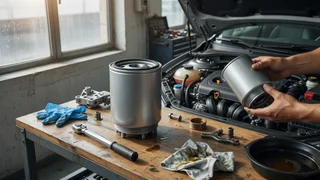
Wix Oil Filter 51060: What to Check Before You Buy
The Wix 51060 is a spin-on oil filter from Wix's standard filter range. Whether it is the right filter for you depends entirely on your vehicle's model year, market, and engine. The reliable way to confirm fitment is to look up your exact year, make, model, and engine in a current parts catalog, or to match the part number already listed for your vehicle. Don't choose a filter because it looks the same as your old one. Filters with similar dimensions can differ in thread, gasket size, and internal valves, and those differences matter.
What the 51060 Part Number Tells You and What It Doesn't
A filter part number identifies one specific design: housing size, mounting thread, gasket diameter, and internal valving. It does not tell you which vehicles it fits. That information lives in the manufacturer's application catalog, and catalogs get revised as applications are added, corrected, or superseded.
Wix sells filters in more than one product tier, typically a standard line and premium lines aimed at synthetic oil and longer change intervals. A premium equivalent of a standard filter usually carries a different part number. Confirm it through a cross-reference lookup rather than assuming the digits will match.
How to Confirm the 51060 Fits Your Vehicle
Start with equipment identification, meaning pinning down exactly what engine your vehicle has. Many models were sold with several engines in the same model year, and each engine may use a different filter. Trim names alone are not enough.
Find your engine size and engine code. The owner's manual, the emissions label under the hood, or the VIN decoded by a dealer or parts counter will show them. Look up that exact year, make, model, and engine in a Wix catalog or a retailer's fitment tool, and see whether 51060 is listed. If a fitment tool shows notes such as engine code, production date split, or market, read them. A US-market vehicle and an export version can differ. Check the part number on the filter currently installed. If it is a factory filter or another brand, run that number through a cross-reference to see whether it maps to 51060. If sources disagree, treat the vehicle manufacturer's specified filter as the reference point and ask a parts counter to compare it against the Wix part.
Cross-reference charts are useful but not infallible. They match filters that are interchangeable in typical use, and some cross-references are approximate rather than exact. When a chart and the vehicle-specific lookup disagree, go with the vehicle-specific lookup.
Physical Features That Determine Fitment
If you are comparing the 51060 against another filter, these are the characteristics that matter. Exact values should come from the catalog listing for the part, not from estimating.
Feature | What it is | Why it matters; Thread size and pitch | The threaded center hole that screws onto the engine's mounting stud | A mismatch either won't install or won't seal properly; Gasket diameter | The rubber seal ring that presses against the engine's filter mount | Too large or too small and the seal can leak under pressure; Height and outer diameter | The overall can size | Affects clearance near exhaust parts, frame members, or splash shields, and changes oil capacity slightly; Anti-drainback valve | A flap that keeps oil in the filter when the engine is off | Matters most on engines where the filter is mounted sideways or upside down; helps reduce dry-start time; Bypass valve setting | A relief valve that lets oil skip the filter element if it becomes clogged or oil is very thick | Engines are designed around a particular bypass pressure; the wrong setting can affect filtration or flow
Matching the Filter to Your Oil and Service Interval
The filter is only part of an oil change. Your owner's manual sets the lubricant specification: the viscosity grade and the performance standard the oil must meet. Some manufacturers also require a manufacturer approval code printed on the oil container. Using a correctly fitting filter does not offset using an oil that doesn't meet those requirements.
Service interval matters when choosing between filter tiers. A standard filter is generally intended for conventional change intervals. If you run synthetic oil on an extended interval, or your vehicle's oil life monitor allows long intervals, check that the filter you buy is rated for that use. That may point you to a premium Wix equivalent rather than the standard 51060. Whichever filter you use, follow the vehicle manufacturer's interval rather than a longer one suggested by oil or filter marketing.
Fill quantity is listed in the owner's manual, often with separate figures for an oil change with and without a filter replacement. A filter of a different size than the original holds a slightly different amount, so add oil in stages and confirm with a level check on the dipstick or electronic gauge rather than pouring in a fixed amount.
What to Check When Buying
Confirm the part number printed on the box and on the filter can both read 51060, or the exact number your lookup returned. Buy from an established retailer. Counterfeit filters exist; unusually low prices, poor printing, or damaged or unsealed packaging are warning signs. Check the filter for dents in the can or a damaged gasket before installing. A dented housing can weaken the filter or interfere with sealing. Keep the receipt. If fitment turns out to be wrong, an unopened filter is usually easier to return. If you buy several to stock up, confirm the fitment once more and store them in their boxes, away from moisture.
Warranty concerns sometimes come up with aftermarket filters. In the US, federal law generally prevents a manufacturer from voiding a warranty solely because a non-original part was used, unless that part is shown to have caused the problem. Keep records and receipts for oil changes either way, and check your warranty booklet for any specific maintenance-record requirements.
Installation Basics
Make sure the old filter's gasket came off with the filter. A leftover gasket stuck to the mount, with the new one on top, is a common cause of major leaks. Wipe the engine's sealing surface clean. Apply a thin film of fresh oil to the new filter's gasket. Thread the filter on by hand and tighten according to the instructions printed on the filter or box, usually a specified amount of turning after the gasket makes contact. Avoid overtightening, which makes removal difficult and can distort the gasket. Add oil, start the engine, and check for leaks around the filter. Shut the engine off, wait for oil to drain back, and do a final level check, topping up as needed.
Bottom Line
The Wix 51060 is a good choice only if a vehicle-specific lookup lists it for your exact engine, or it cross-references directly to the filter your vehicle is specified to use. Confirm the engine first, compare the thread, gasket, size, and valve features if you are substituting, and choose the filter tier that suits your oil type and service interval. Then buy from a reputable seller and verify the oil level after installation.