51060 Oil Filter: What the Part Number Tells You and How to Confirm Fit
The short answer
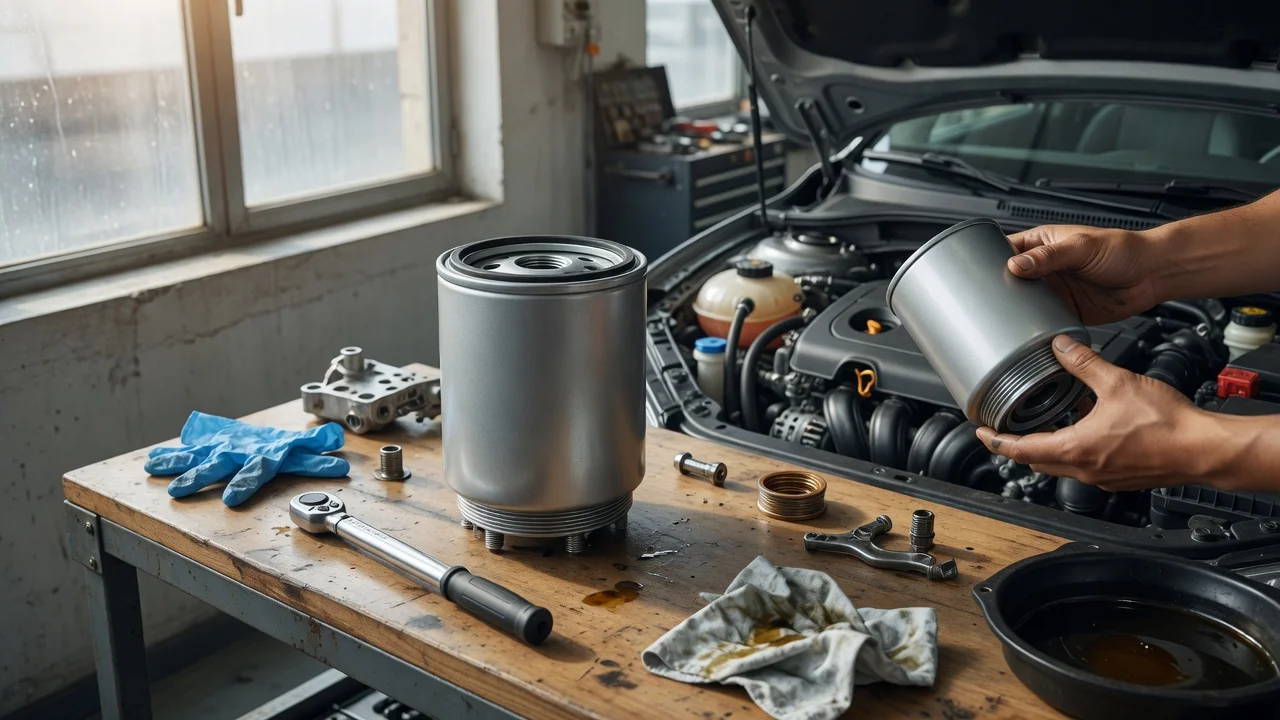
51060 is a spin-on oil filter part number in aftermarket catalogs. A spin-on filter is a sealed canister that threads onto a mounting stud on the engine and is replaced as one unit. The number alone does not tell you whether it fits your vehicle. Fitment depends on the exact engine, so confirm it against your model year, market, trim and powertrain before buying.
The material available for this article does not include the brand behind the number, the filter's dimensions, its thread size or a list of applications. Those details are not stated here. Get them from the manufacturer's current catalog or from the filter's packaging.
Why the part number is not enough on its own
Oil filter numbers are brand-specific. Different manufacturers can use similar-looking numbers for unrelated filters. Even within one brand, a single filter is usually listed for some engines in a model line and not others. A filter that fits one engine size or one model year may not fit another version of the same car, especially across engine changes, mid-cycle updates or different markets.
How to confirm a 51060 fits your vehicle
Identify the vehicle precisely: model year, make, model, market, trim and engine displacement or engine code. Look up that exact configuration in the filter maker's catalog, not just the model name. Compare the result with the filter the vehicle maker specifies, which is usually listed in the owner's manual or in parts information for your vehicle. If the filter currently on the engine is the correct one, compare its part number and physical size with the replacement before installing it. If sources disagree for your configuration, treat the fit as unresolved and ask a parts counter or dealer to check by VIN.
Specifications to match when cross-referencing
If you are comparing 51060 with another brand's filter, a matching cross-reference listing is a starting point, not proof of fit. The figures for 51060 are not included here, so check each of the following against published specifications:
Thread size and pitch: the internal thread must match the engine's mounting stud. Gasket diameter and thickness: the sealing ring must seat fully on the engine's filter mounting surface. Height and outside diameter: the canister must clear nearby components and fit the filter's mounting area. Bypass valve setting, if the filter has one: this valve lets oil flow around a clogged or cold filter element, and the opening pressure should suit the engine's requirements. Anti-drainback valve, if specified: this rubber valve helps keep oil in the filter when the engine is off, which matters on engines where the filter is mounted sideways or upside down.
When the answer changes
Several factors can make a listed filter the wrong choice. The vehicle may have had an engine swap. A previous owner may have fitted an aftermarket remote filter mount. The vehicle may be a regional variant with a different engine. Or the filter specification may have changed within a model year. In any of these cases, check the physical mounting and the maker's specification rather than relying on a catalog lookup by model name.
Gaps to resolve before buying
This article cannot confirm the following for 51060: the brand, the dimensions, the thread size, the valve specifications, the vehicle applications, the price or the availability. Check these against a current manufacturer catalog or the product packaging for your specific vehicle configuration.