Why Does Rain Bead Differently on Different Car Windows?
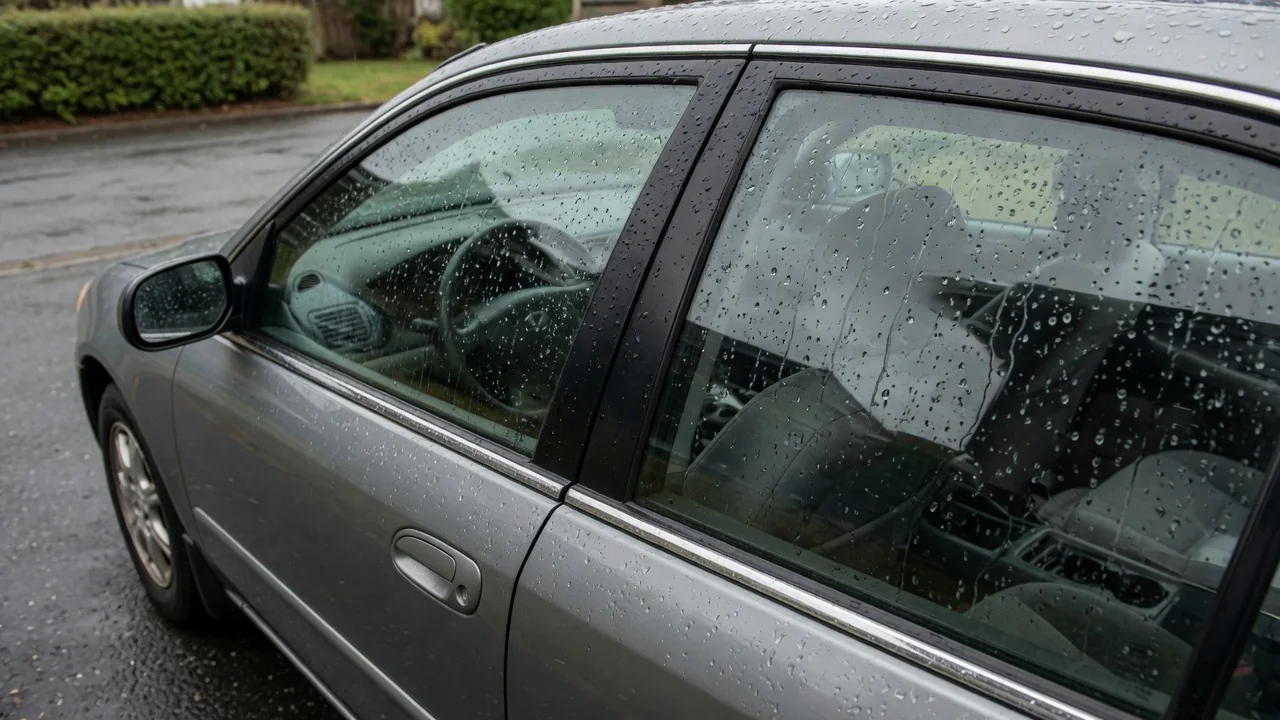
Watch a car in a light shower and the glass rarely behaves as one surface. The windshield may sheet water while a side window holds tight round drops and the rear glass stays hazy. Asking why does rain bead differently on different car windows leads to three answers: what is on the glass, how steeply it sits, and how it has been cleaned.
Surface condition
Beading depends on how strongly water is attracted to the surface it lands on. Bare, truly clean glass attracts water, so droplets flatten and merge into a film. A water-repellent layer reverses that: the droplet pulls itself into a tall, rounded bead because it clings to itself more than to the surface. Some vehicles leave the factory with a hydrophobic treatment on the front door glass only, while the windshield and rear glass are untreated, which produces a visible difference from the first rainfall.
Aftermarket products add another layer of variation. An owner may apply a rain repellent to the windshield and skip the side glass, or a car wash may leave wax or sealant residue on some panes and not others. Wear also matters. Wiper blades sweep the windshield thousands of times and gradually thin any coating within their arc, so the swept area can sheet water while the corners still bead. Door glass that slides past its seals wears along different lines, often showing vertical streaks of altered behavior.
Glass angle
Gravity acts differently on each pane because each one sits at its own slope. A steeply raked windshield holds a droplet against a shallow incline, so small beads can sit in place until they grow heavy enough or until airflow pushes them upward. Side windows are close to vertical, so drops of the same size start sliding much sooner, collecting others along the way and leaving clear trails. The same coating can therefore look far more effective on a door window than on the windshield.
Airflow changes the picture once the car is moving. Air accelerates over the windshield and can drive beads up and over the roof, while the side glass sits in turbulent flow behind the mirrors and pillars, where drops wander or stall. Rear windows vary most by body style. A sloping fastback or sedan backlight often sits in slower, recirculating air and holds standing drops, whereas an upright hatchback or SUV tailgate collects fine road spray that dries into a film and alters how the next rain behaves.
Cleaning
Contamination changes how glass treats water as much as any coating does. Road film, exhaust residue, tree sap, bug remains and silicone from tire dressings or wiper blades all bond to glass in uneven patches. Some of these residues repel water and create irregular, misshapen beads; others attract it and cause smeary sheeting. Because the windshield faces forward into traffic spray, it usually carries the heaviest load, while the side glass picks up dirt mostly along its lower edge and behind the front wheels.
The products used for washing leave their own signature. Shampoos containing wax or gloss enhancers, spray sealants that drift onto the glass, and automatic wash treatments can all deposit a temporary water-repellent film. That film is rarely uniform, so one window may bead well for a week and then fade. Glass cleaned thoroughly with a dedicated glass cleaner and a clean towel tends to sheet water instead, which surprises owners who expect clean glass to bead. Flat, even wetting is often a sign of a residue-free surface.
Everyday Use and Observations
Patterns in daily driving reveal a lot. Small, tall, evenly spaced beads suggest a healthy repellent layer. Larger, flattened drops with irregular edges point to a coating that is wearing out or sitting under a layer of grime. A clear boundary between sheeting and beading that follows the wiper sweep indicates abrasion, while a boundary that follows the top edge of the door glass shows where the pane hides inside the seal when lowered and escapes both weather and washing.
Parking habits and exposure also split the windows apart. Glass facing a sprinkler dries with mineral spots that later hold water in rings. A car parked under trees gathers sap on its upward-facing surfaces, so the windshield and rear glass change while the vertical side panes stay closer to original. The interior matters too: fogging on the inside can be mistaken for poor beading outside. Wiping a small area on each side of the glass quickly shows which surface is responsible for the haze.
Limits and Next Steps
Beading is an appearance, not a direct measure of visibility. Tightly beaded water on a windshield can scatter oncoming headlights at low speed, when airflow is too weak to clear it, and some repellents cause wiper chatter or leave a haze as they wear. Sheeting water under a good wiper blade can give a cleaner view in those conditions. Any treatment also has a finite life, and how long it lasts depends on the product, climate, wash routine and wiper use.
A sensible starting point is to clean all the glass thoroughly and observe how each pane behaves in the next rain, since that shows what is contamination and what is a lasting surface property. If a consistent look is wanted, the same treatment can be applied to every window following the product instructions. The owner's manual or the dealer can confirm whether particular panes carry a factory coating and whether the manufacturer advises against certain products, especially near cameras, rain sensors or heating elements bonded to the glass.