Why Does Engine Oil Pressure Vary With RPM?
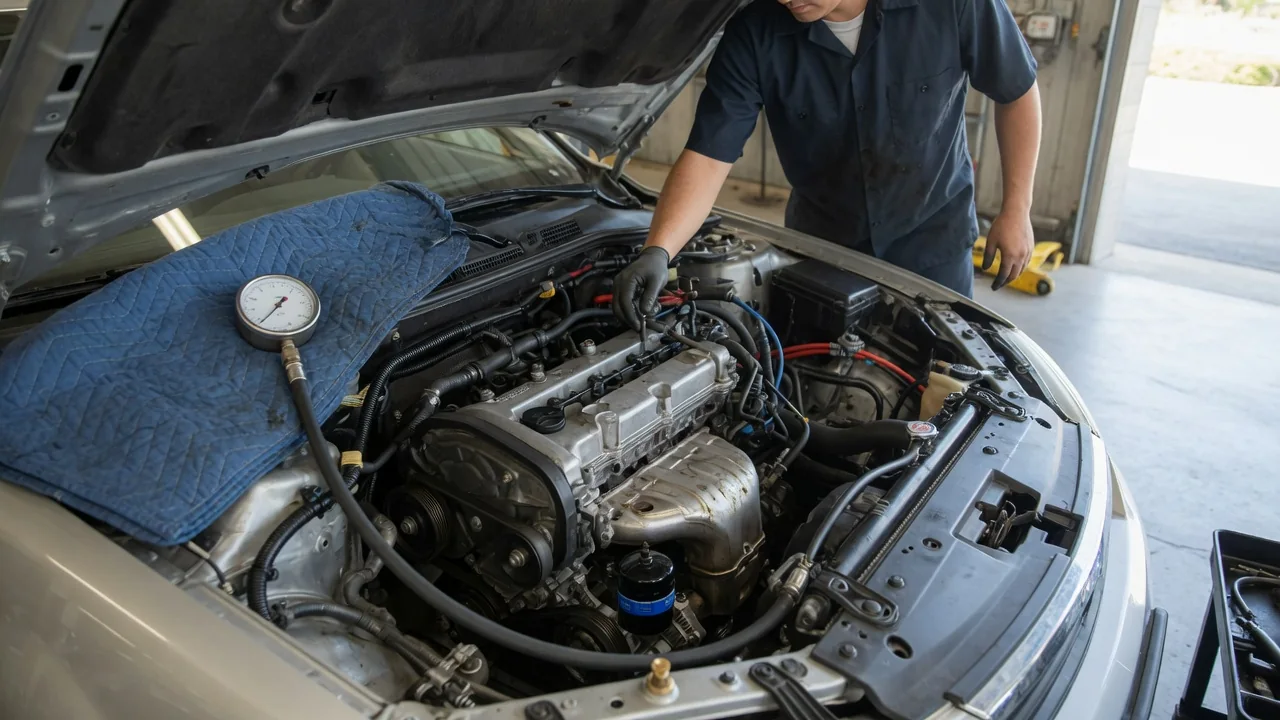
On an oil pressure gauge, the needle typically rises when the engine revs and drops toward the low end at idle. That movement is normal, and it comes from how the lubrication system is built. The link between oil pressure and engine speed depends on pump output, oil temperature and the resistance oil meets as it moves through the engine. Knowing how these interact helps you tell expected behavior from a real problem.
Pump output and engine speed
Most engine oil pumps are positive displacement designs, such as gear or rotor (gerotor) pumps. They are driven by the crankshaft, a camshaft or a balance shaft. Each revolution moves a roughly fixed volume of oil from the sump into the pressurized passages. Because the pump is mechanically tied to the engine, it turns faster as RPM rises, so it delivers more oil per minute. At idle the pump turns slowly and delivers relatively little flow. At higher engine speed it delivers much more.
The pump does not create pressure by itself. Pressure comes from the pump pushing flow against resistance. That resistance includes the oil filter, the drilled galleries and, above all, the tight clearances at the crankshaft main bearings, connecting rod bearings, camshaft journals and other lubricated points. Oil leaks out through those clearances all the time. When the pump delivers more oil than can escape, pressure builds. So more flow at higher RPM shows up as higher pressure on the gauge, and pressure falls when flow drops back at idle.
Pressure does not climb without limit. Conventional pumps have a pressure relief valve that opens at a set pressure and sends excess oil back to the pump inlet or sump. Above that point, extra RPM adds flow that the valve bypasses, so the gauge tends to level off. Many modern engines use variable displacement pumps or electronically controlled pressure regulation. These systems can hold pressure lower at certain speeds and loads to reduce the energy the pump uses. On such engines, the pressure curve against engine speed may look different from older designs. The manufacturer's data is the only reliable reference for what is normal.
Temperature and oil viscosity
Oil temperature changes how a given pump output turns into pressure. Viscosity, the oil's resistance to flow, drops sharply as oil warms. Cold oil is thick and moves slowly through bearing clearances and galleries, so even modest pump output creates high pressure. After a cold start, it is common to see high pressure at idle and to reach the relief valve setting quickly when the engine is revved.
As the engine warms up, the oil thins and flows through clearances more easily. The pump has to move more oil to hold the same pressure, so warm idle pressure is usually the lowest reading you will see in normal driving. This is also when the link between pressure and engine speed is easiest to see: a hot engine at idle may show low pressure, then climb noticeably as RPM increases. Sustained heavy loads, towing or high outside temperatures can push oil temperature higher and pressure lower still.
The oil grade defines how viscosity behaves across that temperature range. Multigrade oil is formulated to flow well when cold while staying thick enough when hot. Several things can shift the pressure you see at a given RPM and temperature: using a grade other than the one the manufacturer specifies, oil thinned by fuel, or oil that has broken down over a long change interval.
Warning signs
Pressure naturally varies, so the real question is whether the variation fits the expected pattern. Signs that deserve attention include an oil pressure warning light that comes on while driving, a light that flickers at hot idle and goes out when you rev the engine, a gauge that reads lower than it used to under the same conditions, and pressure that does not rise with RPM. A warning light at higher engine speed is especially serious, because pump output should be strongest there.
Low pressure has several common causes. A low oil level can let the pickup draw air, especially during cornering or braking. A partly blocked pickup screen or a restricted filter limits supply. Worn main or rod bearings have larger clearances, so oil escapes faster than the pump can replace it. This usually shows up first at hot idle. A worn pump, a relief valve stuck open, or incorrect or diluted oil can cause similar symptoms. Abnormal pressure may come with noises such as valvetrain ticking or knocking from the bottom of the engine.
Not every abnormal reading means a mechanical fault. Oil pressure senders and switches can fail, and wiring can short or break. Some factory gauges are designed to sit steadily at mid-scale across a wide range of actual pressures instead of showing exact values. Unusually high pressure on a warm engine can point to a stuck relief valve, a blocked passage or a faulty sender. The standard way to tell a sensor problem from an engine problem is to measure actual pressure with a mechanical test gauge installed by a technician.
Practical implications and limits
In everyday driving, pressure that rises with RPM and dips at warm idle is expected. A warning light is not something to drive through. If the oil pressure light comes on with the engine running, the usual advice is to stop safely, shut the engine off and check the oil level before restarting. Running an engine without enough pressure can damage the bearings quickly, and that repair costs far more than the inconvenience of stopping.
A few routine habits help keep pressure stable: check the oil level regularly, use the viscosity grade and specification listed in the owner's manual, change the oil and filter on schedule, and avoid high RPM and heavy loads until the engine has warmed up. These steps do not change how the pump works. They keep oil supply, viscosity and filtration within the range the system was designed for.
The dashboard can only tell a driver so much. No single normal pressure applies to all engines, and the expected values at idle and at higher engine speed depend on engine design, pump type and oil control strategy. A warning light only reports that pressure has dropped below a switch threshold; it does not show how much margin remains. When readings change, the service manual specifications for that engine and a proper pressure test are the reliable basis for diagnosis.