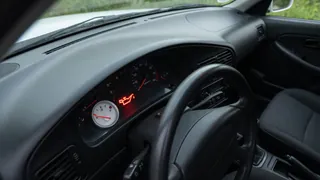
Low Engine Oil Pressure Only When Stopped
The short answer
Some drop in oil pressure when the car is stopped and idling is normal. On most conventional engines, the oil pump is driven by the engine itself, so it moves less oil at idle than at higher engine speeds. Hot oil is also thinner than cold oil, so pressure at a warm idle is usually the lowest the engine sees in everyday use. A gauge needle that sits lower at a stoplight than on the highway is not, on its own, a sign of trouble.
An oil pressure warning light, or a reading below the manufacturer's minimum idle specification, is different. The warning light is designed to come on only when pressure falls below a level considered unsafe, so a light that flickers or stays on at idle points to a real problem that needs attention before the engine is driven much further.
What changes the answer for your vehicle
The correct minimum idle pressure is specific to each engine and is published in the manufacturer's service information, not in a universal rule. It can differ by model year, engine code and oil specification. Some newer engines use variable-displacement or electronically controlled oil pumps that deliberately run lower pressure under light load, which can make idle readings look low compared with older designs. On some vehicles, the dashboard gauge is buffered or simplified and does not display actual pressure accurately, so a reading on the gauge alone may not be conclusive.
Common causes of abnormally low pressure at idle
Low oil level, which can let the pump draw air, especially when the oil is hot; Oil that is thinner than the specified viscosity, or oil diluted by fuel; Worn crankshaft or camshaft bearings, which increase internal clearances and let pressure bleed off most noticeably at low engine speed; A worn oil pump or a relief valve that is sticking open; A partially blocked oil pickup screen or a heavily restricted filter; A faulty oil pressure sensor or sending unit giving a false low reading; An idle speed set lower than specified; Faults in the control of variable-displacement or electronic oil pumps, on engines that use them
What to do next
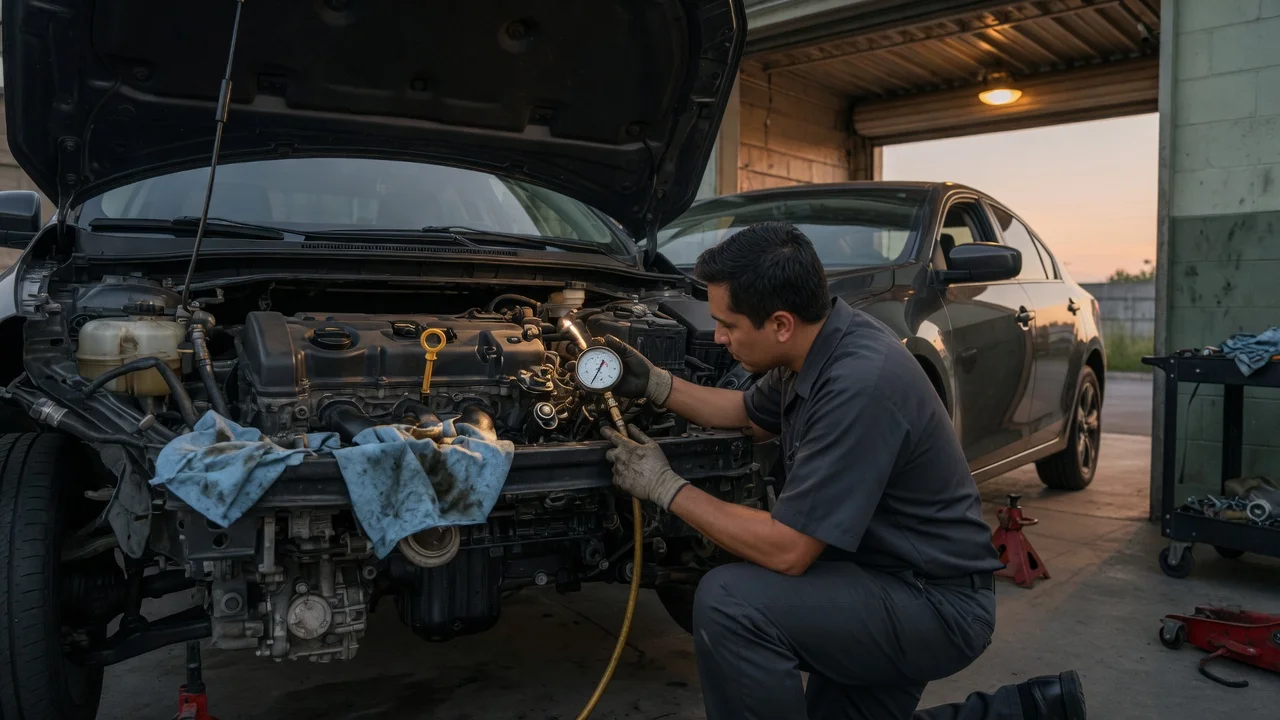
If the oil pressure warning light comes on and stays on, stop the engine as soon as it is safe and check the oil level before driving further; Check the oil level and condition with the engine off on level ground, and confirm the oil grade matches the owner's manual; Note whether the low reading happens only when the engine is fully warm, and whether it rises with a slight increase in engine speed; Have a technician confirm actual pressure with a mechanical test gauge and compare it with the manufacturer's specification for your engine; If the test gauge shows normal pressure, the sensor or dashboard gauge is the likely culprit rather than the engine
Limits of this guide
No vehicle-specific data or test measurements were supplied for this article, so it does not give pressure figures for any engine. Whether a particular idle reading is acceptable depends on the published specification for your exact engine, and a mechanical pressure test is the reliable way to tell a sensor fault from a genuine lubrication problem.