Why Does a Car Use More Fuel on Short Trips?
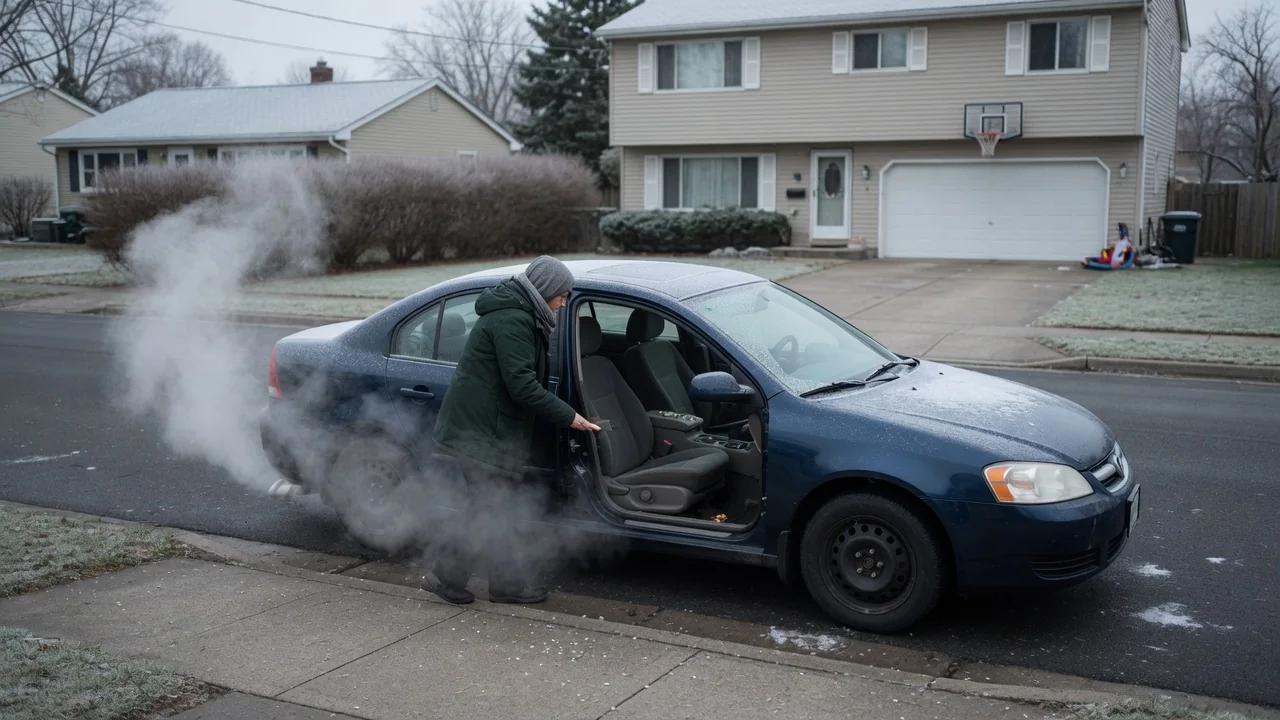
Many drivers notice that fuel economy drops sharply when most journeys cover only a few miles. If you have ever wondered why a car uses more fuel on short trips, the answer comes down to engine temperature, stop-and-go traffic, and how little time the vehicle spends in its efficient operating range. The sections below explain warmup behavior, idling losses, and what is worth watching.
Cold operation
A cold engine runs deliberately rich. Gasoline vaporizes poorly against cold intake ports and cylinder walls, so the engine computer commands extra fuel to keep combustion stable until the coolant temperature climbs. Idle speed is usually raised as well, and many calibrations delay ignition timing to heat the catalytic converter quickly for emissions reasons. All of this burns fuel that does not move the car forward, and on a short trip the engine may spend most of the drive in this warmup phase.
Cold fluids add further drag. Engine oil and transmission fluid are thicker at low temperatures, so pumps, bearings, and gears absorb more energy until everything thins out. Drivers can often observe a higher idle speed after a cold start, a temperature gauge that sits low for the first miles, and an automatic transmission that holds gears longer or delays torque converter lockup. How long warmup takes varies with engine size, ambient temperature, and design, and diesel engines, turbocharged gasoline engines, and hybrids each behave differently.
Traffic and idling
Short trips usually happen on city streets, where stop-start driving compounds the warmup penalty. Every time the car accelerates from a stop, the engine must supply energy to build speed, and conventional brakes then turn that energy into heat at the next light. A route with frequent intersections repeats this cycle many times per mile. At steady highway speed the engine works within an efficient load range, but an urban errand rarely allows that, so consumption per mile rises even with a warm engine.
Idling produces zero miles for the fuel burned, which drags the average down quickly over a short distance. Waiting in a drive-through, a school pickup line, or a congested junction can account for a noticeable share of a brief journey. Vehicles with automatic stop-start systems shut the engine off at a standstill, yet many of these systems stay inactive until the engine, battery, and cabin reach suitable conditions, so the feature may not help much on a cold short run. Behavior depends on the manufacturer's strategy.
What to monitor
The trip computer is the easiest tool. Resetting the average fuel economy display before a short errand and again before a longer drive shows the contrast clearly, and instantaneous readouts typically show heavy consumption in the first minutes after startup. Watching the coolant temperature gauge reveals whether the engine reaches its normal position before you arrive. For a more reliable picture, compare fuel added at fill-ups against miles driven over several tanks, since dashboard estimates can differ somewhat from actual usage.
Certain signs suggest something beyond normal short-trip behavior. A temperature gauge that never reaches its usual position on longer drives, a heater that stays lukewarm, or economy that remains poor on the highway may point toward a cooling system issue such as a thermostat stuck open, though that requires proper diagnosis. A check engine light deserves attention too; any stored fault code is evidence to interpret rather than proof that a particular part has failed, and manufacturer-specific codes need confirmation against information for that exact vehicle.
Everyday Use and Observations
Typical patterns make the effect easy to recognize. A commuter who drives two miles to a train station, a parent making separate school and grocery runs, or a driver moving the car between nearby job sites may see far worse mileage than the window-sticker figures suggest, especially in winter. Cold weather lengthens warmup, and defrosters, heated seats, and rear window heaters add electrical load that the alternator must supply. Air conditioning in summer adds its own demand during short hops, when the cabin is hottest.
A few habits reduce the penalty. Combining errands into one longer loop keeps the engine warm between stops, since a restart after a brief pause needs far less enrichment than a fully cold start. Driving off gently soon after starting generally warms the engine faster than extended idling in the driveway, though the owner's manual is the authority for a specific vehicle. Correct tire pressure and removing unnecessary cargo help as well. Hybrids and electric vehicles respond differently, yet they also lose efficiency while heating a cold cabin and battery.
Limits and Next Steps
Higher consumption on short trips is largely physics, so no driving technique eliminates it entirely. Exact figures cannot be generalized, because the size of the penalty depends on engine design, transmission type, climate, terrain, and trip length. Repeated short runs carry side effects beyond fuel: moisture and unburned fuel can accumulate in the oil when the engine seldom reaches full temperature, the battery may not fully recharge, and diesel particulate filters may struggle to regenerate. Some maintenance schedules treat this pattern as severe service, so checking the owner's manual is worthwhile.
A sensible next step is to establish a baseline. Track fuel economy across several tanks, note the proportion of short journeys, and take an occasional longer drive to see whether the numbers recover once the engine is fully warm. If economy stays poor in all conditions, or if warning lights, rough running, or unusual temperature readings appear, have a qualified technician inspect the vehicle with proper diagnostic equipment. Describing your typical trip lengths helps them separate normal short-trip behavior from a genuine fault that needs repair.