How to Make a Car More Comfortable for Long Trips
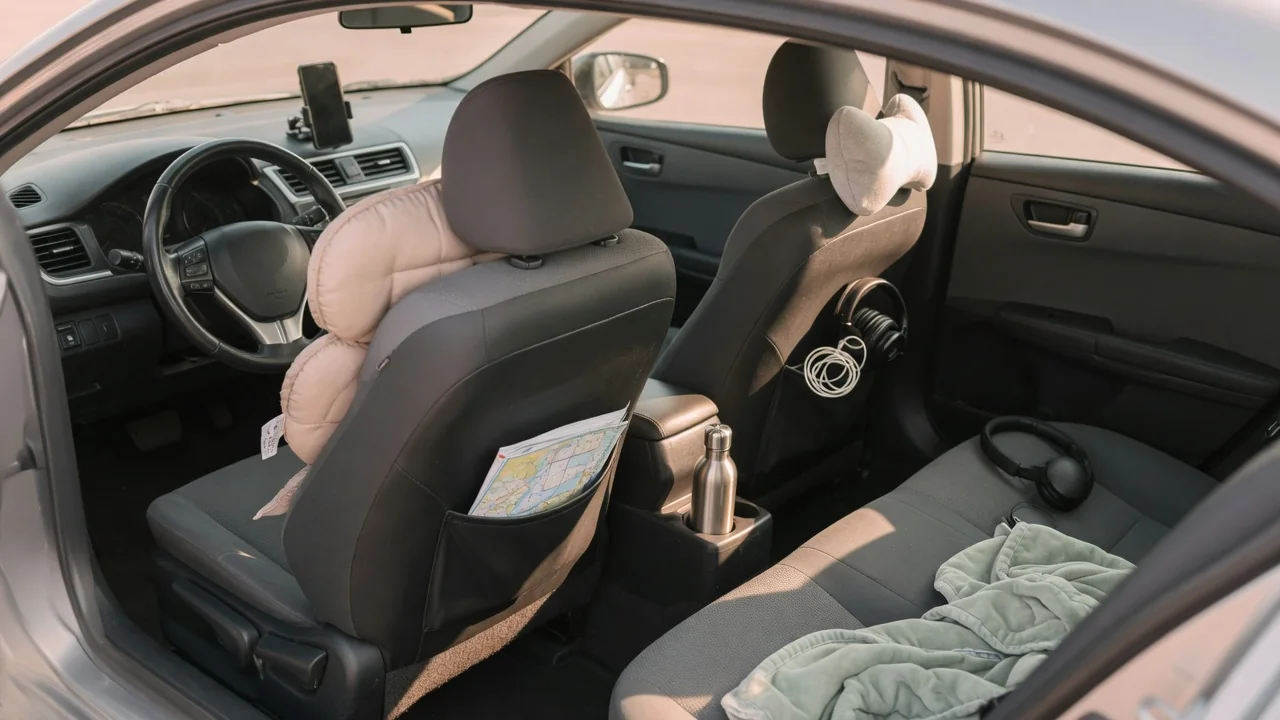
Learning how to make a car more comfortable for long trips starts in the driveway, not at the first rest stop. Seat position, cabin airflow and the way luggage is stowed all shape how the body feels after several hours on the highway. A short setup session before departure usually prevents the stiffness, stuffiness and distraction that build up mile after mile.
Adjust seating
Seat setup works best when done in a fixed order with the car parked. Start with the distance to the pedals, sliding the seat until the brake can be pressed fully while the knee stays slightly bent. Then set the height so the hips sit level with or a little above the knees and the view over the hood is clear. A cushion tilted too far upward presses behind the thighs and restricts circulation, so a small gap between the seat edge and the back of the knee is worth checking.
The backrest should be reclined only slightly from upright, enough that the shoulders stay in contact when both hands hold the wheel. Lumbar support, where fitted, should fill the curve of the lower back without pushing it forward; in cars without it, a small rolled towel can serve the same purpose. Steering wheel reach and tilt, head restraint height and mirror angles follow last. The range of adjustment differs widely between vehicles, and the owner's manual shows which controls a particular seat actually offers.
Manage temperature
Cabin temperature affects alertness as much as comfort. A warm, still interior encourages drowsiness, while cold air aimed straight at the face or hands dries the eyes and stiffens the fingers. Directing the center vents past the shoulders and toward the roof lets air circulate to the rear seats without a constant draft on anyone. Before leaving, it helps to run the air conditioning for a few minutes and confirm that the air turns properly cold and the fan works at every speed.
Recirculation mode cools a hot cabin faster, but leaving it on for hours can make the air feel stale and may fog the glass in humid weather, so switching back to fresh air periodically is sensible. Weak airflow or a musty smell often points toward a clogged cabin air filter, though that deserves inspection before anything is replaced. Sunshades on the rear side windows reduce radiant heat on passengers. Some vehicles have separate rear vents or multi-zone climate controls, while others rely entirely on the front outlets.
Reduce clutter
Loose items are a comfort problem and a safety problem at once. A bottle rolling under the brake pedal, a bag sliding across the rear seat in every curve or a phone cable draped over the shifter all demand attention that belongs on the road. Clearing the footwells completely gives each occupant room to shift their legs, which matters more than it seems after the third hour. Anything not needed during the drive belongs in the trunk or cargo area rather than the cabin.
Heavy luggage rides best low and pushed against the rear seatback, with lighter bags on top and nothing stacked above the seat line where it could block the rear window or fly forward under hard braking. Items needed on the move, such as water, snacks, sunglasses and charging cables, should each have a fixed place in the door pockets, console or a seatback organizer. Storage layouts vary considerably; some cars offer underfloor compartments and cargo tie-down points, while smaller models may need a compact organizer to keep things contained.
Everyday Use and Observations
Ordinary commuting is the best rehearsal for a long drive. A seat position that feels fine for twenty minutes may reveal a pressure point under one thigh or tension in the shoulders after an hour, so a longer local drive a few days before departure is a useful test. Notice whether the right ankle rests naturally on the accelerator, whether the wrists reach the top of the wheel without leaning forward, and whether the head restraint sits close behind the head rather than well back.
Noise and vibration also deserve attention during those everyday miles. A steady hum that rises with speed, a vibration through the steering wheel or a rattle from the cargo area will be far more tiring over a full day than on a short errand. Tire pressure set to the figure on the door-jamb placard, rather than guessed, affects both ride firmness and road noise. Passengers can report what the driver cannot feel, such as a rear seat that receives little airflow or a sunny side that overheats.
Limits and Next Steps
Preparation can only do so much. Even a well-adjusted seat holds the body in one posture, and stiffness returns if the drive continues without breaks. Stopping regularly to walk, stretch and drink water does more for comfort than any cushion or accessory. Aftermarket seat pads and covers need care as well, because thick padding can change seating height and some covers may interfere with seat-mounted side airbags. Checking the owner's manual before adding anything to the seat avoids creating a new problem.
Some discomfort signals a mechanical issue rather than a setup issue. Air conditioning that never gets cold, a persistent vibration at highway speed, a seat adjuster that will not hold its position or a pull to one side are matters for a qualified technician to diagnose before a long journey, not symptoms to tolerate. Once the car itself is sound, a final walk-around the evening before, with seats set, vents aimed and cargo secured, leaves only the driving for departure morning.