Why Does a Car Turn More Tightly in Reverse?
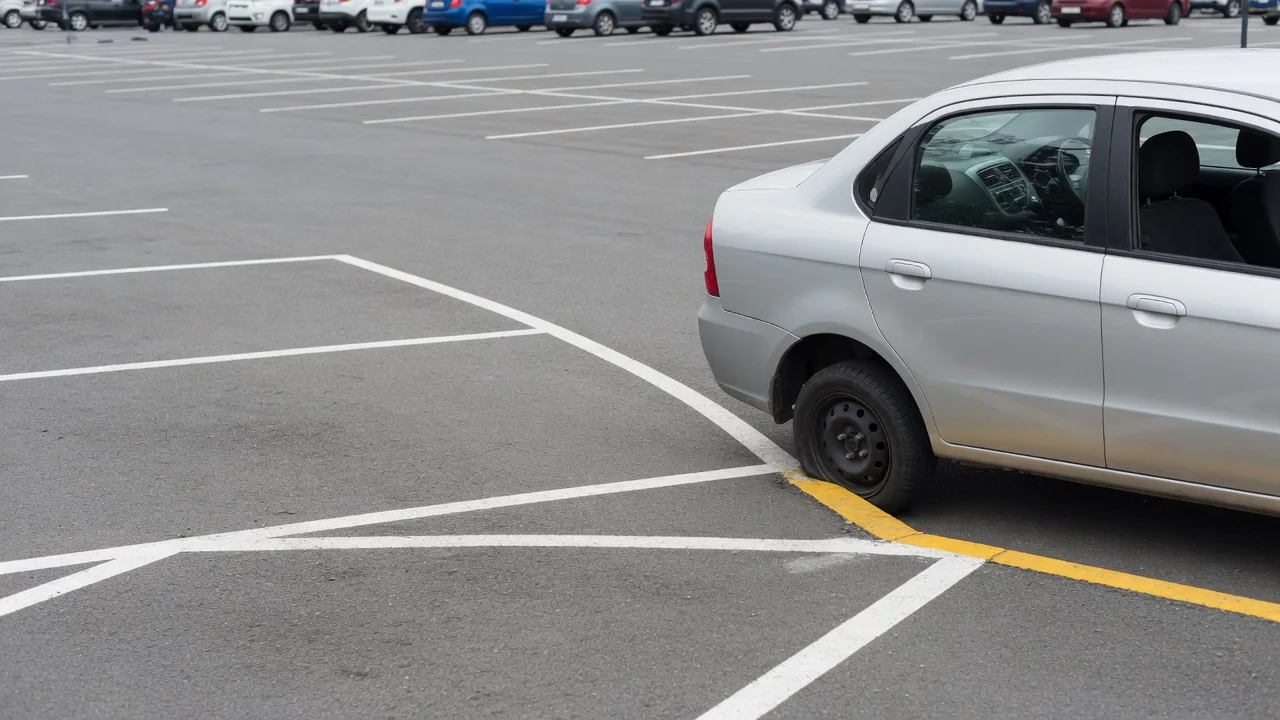
Many drivers ask why does a car turn more tightly in reverse, especially after slipping into a space backward that seemed impossible nose-first. The short answer is that the turning circle itself does not shrink. What changes is which end of the car leads, and that alters how the steering geometry feels and how the vehicle fits into a confined space.
Front-steered axle
On nearly every passenger car, only the front wheels steer. The rear wheels are fixed in line with the body, so the car always pivots around a point located somewhere along an imaginary line extended from the rear axle. Turn the steering wheel to full lock and the front tires angle toward that pivot point while the rear tires simply roll around it. This layout holds whether the transmission is in drive or reverse, so the geometric turning radius is identical in both directions.
The difference is the position of the steered axle relative to travel. Moving forward, the steered wheels lead and the fixed axle follows. Moving backward, the fixed axle leads and the steered wheels trail, much like the back wheels of a forklift or a shopping cart pushed from the swiveling end. Vehicles with rear-wheel steering systems behave differently, because the rear tires can angle slightly at low speed, so owners of those models should expect a noticeably different response than a conventional layout provides.
Wheel path
During a turn, the four tires do not follow the same arc. The rear wheels trace a smaller circle than the front wheels, and the inside rear tire follows the tightest path of all. Driving forward, this is why the rear tire can clip a curb the front tire cleared easily. The effect is called off-tracking, and it grows with wheelbase, which is why a long pickup or a three-row SUV cuts a corner more than a short hatchback does.
In reverse, that tight-tracking rear axle arrives first. The leading end of the car now follows the smallest arc, while the front end swings outward on the larger one behind it. From the driver's seat, the rear appears to rotate almost on the spot, giving the strong impression of a sharper turn. The body has not found any extra steering angle; the end that hugs the inside of the curve is simply the end being aimed at the target.
Parking use
Parallel parking shows the advantage clearly. Entering nose-first, the front slides toward the curb but the rear cannot move sideways, so the tail remains stuck out in the lane unless the space is very long. Backing in places the fixed rear axle near the curb first, and the steerable front can then swing sideways into line. The steered end acts like a lever that tucks the car in, which is why a space barely longer than the vehicle can still work.
The same reasoning applies to perpendicular bays and tight garages. Reversing lets the driver set the rear wheels between the lines early, then sweep the front across the aisle where there is open room. Pulling in forward demands that swing space inside the bay, where neighboring cars sit. Results still depend on the vehicle. Long overhangs, wide bodies, and a limited steering lock all affect how much aisle width a particular model needs to complete the maneuver cleanly.
Everyday Use and Observations
Several things can be observed without any tools. In an empty lot, a driver can make a slow full-lock circle forward, then repeat it in reverse, and notice that the tires follow essentially the same marks. What differs is the sensation. Steering inputs in reverse seem to act quickly on the direction the rear is heading, because a small sideways movement of the front produces an immediate change in where the trailing-turned-leading axle points.
The front corner deserves attention during these maneuvers. As the rear tucks inward, the opposite front corner swings wide and can contact a pillar, a parked car, or a shopping cart corral that sat safely clear a moment earlier. Mirrors, backup cameras, and parking sensors mostly watch the rear, so that front swing is easy to miss. Drivers of vehicles with long hoods or generous front overhangs tend to notice this more than those in compact cars.
Limits and Next Steps
The perceived advantage has clear limits. Reversing does not reduce the published turning circle, and it will not rescue a vehicle that is physically too long for a space. Visibility is poorer, speeds must stay very low, and the quick response that helps in parking makes a car less stable when backing at any real pace. Towing reverses the logic again, since a trailer pivots at the hitch and responds opposite to the steering input at first.
If a car seems to turn noticeably tighter in one direction than the other, or its steering lock feels different from left to right, that is a separate matter from geometry and worth a professional inspection of the steering and suspension. For ordinary questions, the owner's manual lists turning figures and describes any rear-steering or parking-assist features fitted. Practicing in an open lot remains the most reliable way to learn how a specific vehicle places its wheels in both directions.