Why Does a Car Rock When Stopping?
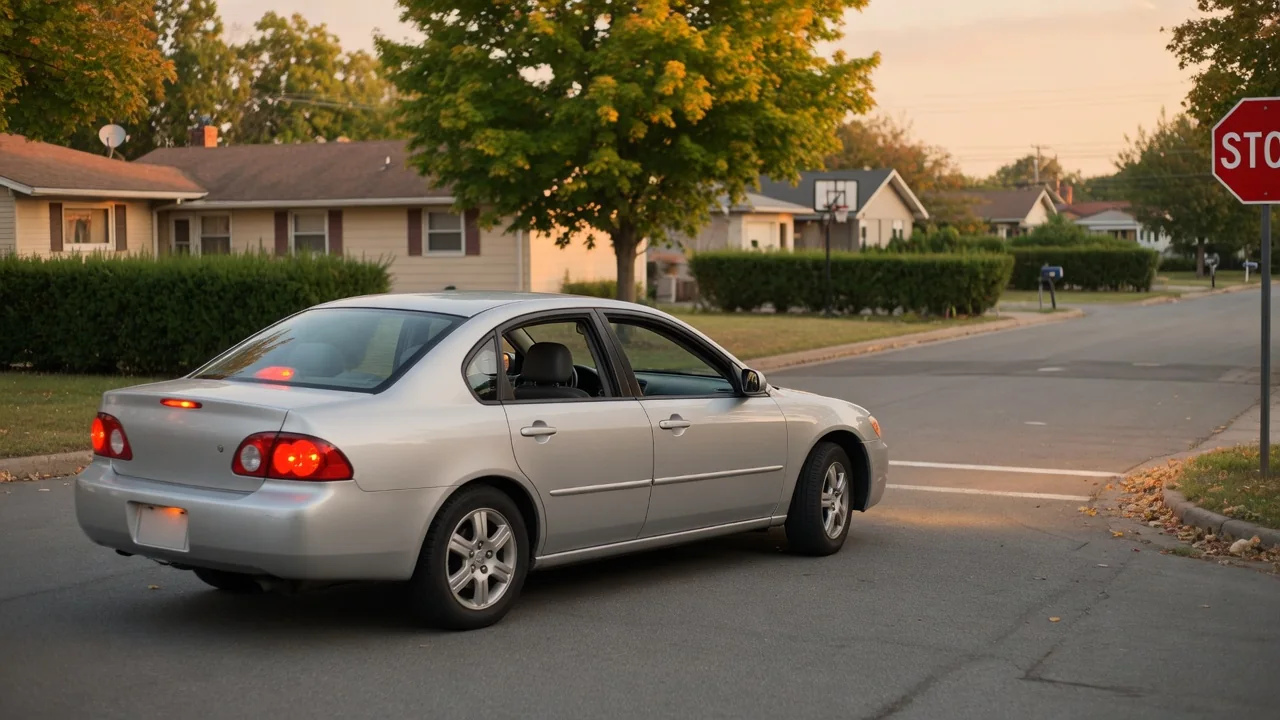
Anyone asking why does a car rock when stopping is really asking about suspension pitch. As the brakes slow the vehicle, the body tips forward on its springs, then settles back once motion ends. A small nod is normal physics. A pronounced bounce, repeated rocking, or a lurch at the final moment can point to wear worth investigating.
Weight transfer
A moving car carries momentum, and its center of gravity sits well above the road surface where the tires generate braking force. That height difference creates a rotating effect: when the brakes are applied, load shifts toward the front axle and away from the rear. The front springs compress, the rear springs extend, and the nose dips. Engineers call this brake dive, and it is a form of pitch, meaning rotation of the body around an axis running side to side through the vehicle.
The rocking sensation arrives at the very end of the stop. While the car is decelerating, the front springs stay compressed under the shifted load. The instant the wheels stop turning, deceleration vanishes and the stored spring energy releases, pushing the nose back up and settling the rear. Occupants feel that rebound as a backward rock. Taller vehicles with soft springs, such as many trucks and sport utility vehicles, typically show more of it than low sedans with firmer suspension tuning.
Dampers
Springs hold the car up, but they would keep oscillating after every disturbance if nothing controlled them. That job belongs to the dampers, commonly called shock absorbers or, where they form part of the suspension structure, struts. Inside each one, a piston forces hydraulic fluid through small valves, converting motion into heat. During braking, the front dampers slow the rate at which the nose drops, and when the car stops they slow the rebound so the body returns to level in one controlled movement.
As dampers age, internal seals and valving wear, and fluid can leak past the piston or out of the body altogether. Resistance fades gradually, so drivers often adapt without noticing. The effect during a stop is that the nose dives faster and deeper, then springs back with less restraint, sometimes overshooting and bobbing once or twice more. Some vehicles use adaptive or electronically controlled dampers that stiffen under braking, so the amount of pitch considered normal differs considerably between designs.
Excessive movement
Normal pitch is a single dip followed by one smooth return to level. Movement becomes excessive when the body continues to rock back and forth after the car is stationary, when the nose plunges sharply under moderate pedal pressure, or when the rear seems to lift noticeably. Weak dampers are a frequent explanation, but not the only one. Sagging or broken springs, worn control arm bushings, and deteriorated strut mounts can all let the suspension move farther or more loosely than intended.
The braking system itself can also produce a rocking or lurching feel. Brakes that grab unevenly, a sticking caliper, or contaminated friction material may cause an abrupt bite just before the stop, exaggerating the final rebound. Worn engine or transmission mounts can let the drivetrain shift and send a thump through the body that resembles suspension rock. Because these causes overlap in how they feel from the driver's seat, the sensation alone does not identify which component is responsible.
Everyday Use and Observations
Driving technique has a large influence on how much a healthy car rocks. Holding firm, constant pedal pressure right down to zero keeps the front springs fully loaded until the last instant, so they release all at once. Easing off the pedal slightly just before the car stops lets the nose rise gradually while the vehicle is still rolling, which makes the stop feel far smoother. Chauffeurs use this method routinely, and it works on almost any vehicle regardless of suspension design.
Conditions change the picture as well. A full load of passengers, cargo, or a trailer shifts more weight forward under braking, and a steep downhill stop adds to the effect. Pay attention to patterns: whether the rocking has grown worse over time, whether it occurs at every stop or only hard ones, and whether it comes with clunks, squeaks, a pull to one side, or pedal pulsation. Those accompanying details help separate ordinary pitch from a developing mechanical problem.
Limits and Next Steps
A few safe observations can be made without tools. Pressing down firmly on one corner of a parked car and releasing it shows roughly how the body settles; continued bouncing suggests weak damping, though this informal check is far from conclusive on modern suspensions. Looking for oily residue on the damper bodies, uneven or cupped tire wear, and a corner that sits lower than the others can add evidence. None of these signs proves a particular part has failed, and the details vary by vehicle.
Excessive pitch is more than a comfort issue. Poorly controlled weight transfer can lengthen stopping distances, reduce tire contact over bumps, and affect how stability and antilock systems behave. If the rocking is new, worsening, or accompanied by noise, pulling, or a change in pedal feel, a qualified technician should inspect the suspension, brakes, and mounts together. Suspension components are usually replaced in axle pairs, and the correct parts and procedures depend on the specific make and model.