What Is Residual Heat Mode in a Car?
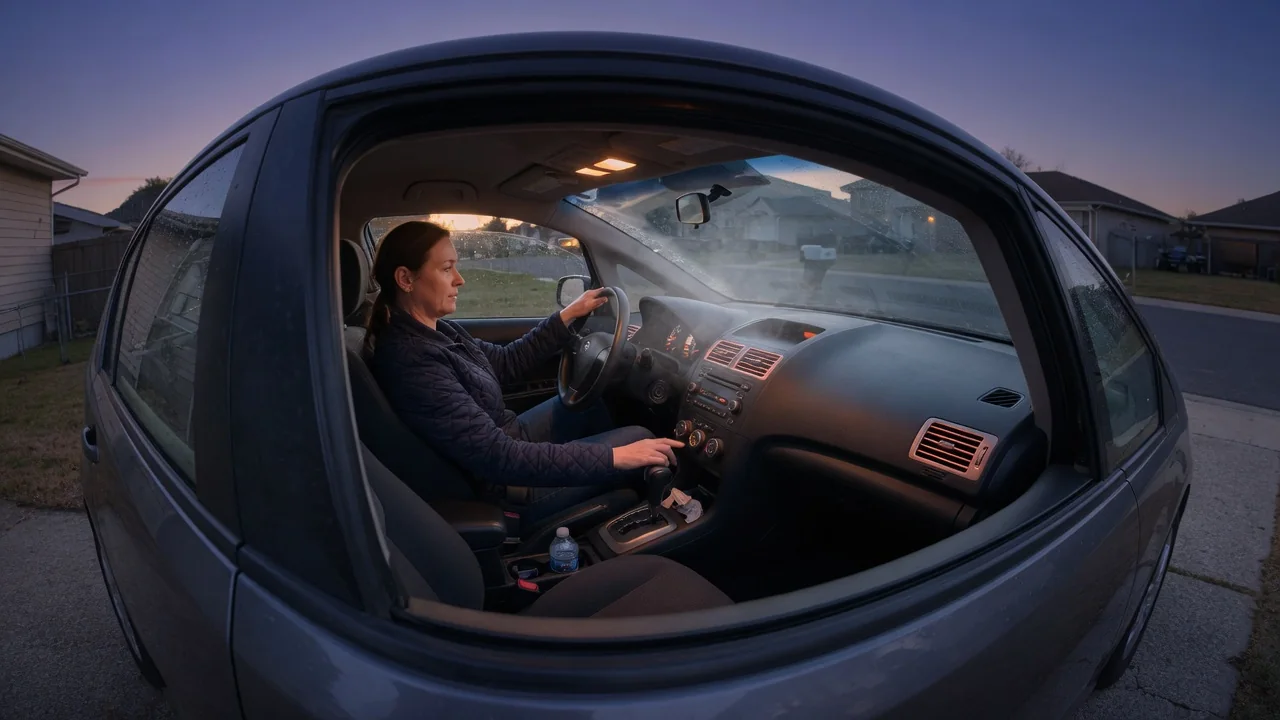
Anyone asking what is residual heat mode in a car is usually looking at a button marked REST or a similar label on the climate panel. The feature keeps the cabin warm after the engine is switched off by circulating heat already stored in the cooling system, so a short wait in a parked vehicle stays comfortable without idling.
Heat source
A combustion engine produces far more heat than it needs, and the coolant carries much of that surplus away from the cylinders. When the engine stops, the coolant, the engine block and the heater core remain hot for some time. Residual heat mode taps this stored warmth instead of letting it dissipate under the hood. A small electric pump keeps coolant moving through the heater core, and the cabin blower pushes air across it and out through the vents, much as it does while driving.
Because the only source is heat already in the system, nothing new is being generated. No fuel is burned and the engine does not restart to support the function. This separates it from a fuel-fired parking heater or an electric auxiliary heater, which create warmth on their own. How the feature is labeled, whether it has a dedicated button, and whether it appears on a given trim level all depend on the manufacturer, so the owner's manual is the reliable reference for any particular vehicle.
Operating limits
The feature only works when there is meaningful heat to recover. After a long highway drive the coolant is at full operating temperature and the vents can deliver warm air for a useful stretch. After a two-minute trip on a freezing morning the engine has barely warmed, and the system may refuse to engage or may deliver only lukewarm air. Many vehicles check coolant temperature before allowing activation, so a button that does nothing on a cold engine is often behaving as designed.
Running time is finite because the coolant cools steadily as heat is drawn into the cabin and lost to the outside air. Colder weather, wind and a higher blower demand all shorten the useful period. Control modules commonly end the function on their own once coolant temperature drops below a threshold, a time limit is reached, or the ignition state changes. The exact conditions and duration differ between makes and models, so the warm airflow fading out after a while is expected rather than a sign of trouble.
Battery considerations
With the engine off, the alternator is not charging, so the blower motor, the auxiliary coolant pump and the climate control electronics all draw from the twelve-volt battery. The load is modest compared with cranking the engine, yet it runs continuously for as long as the mode stays active. To limit the drain, the system typically holds the fan at a low speed, which also explains why airflow feels gentler than it does during normal heating on the road.
Most designs monitor battery voltage and switch the function off if it falls too low, protecting the ability to start the engine. A battery that is aged, undersized or already depleted by short trips may therefore cause the mode to end early or not start at all. Repeated early shutoffs can be a hint that the battery deserves testing, though they are not proof of a failed battery on their own. Hybrids and vehicles with stop-start systems may manage this differently, depending on their electrical architecture.
Everyday Use and Observations
Typical situations suit the feature well: waiting in a parking lot for a school pickup, sitting through a railroad crossing delay with the engine off, or staying in the car while a passenger runs an errand. Instead of idling to keep the heater working, the driver presses the button after shutting down and lets stored warmth carry the cabin through the wait. It saves fuel, avoids idling exhaust around the vehicle, and keeps the windshield from fogging as quickly as it would in a cooling cabin.
Drivers will usually notice an indicator light on the button, a quiet fan sound and a faint hum from the electric pump. Air from the vents starts warm and gradually cools as the stored heat is used. Some vehicles let occupants adjust temperature or air distribution during operation, while others fix the settings automatically. The air conditioning compressor does not run in this state, so there is no cooling or active dehumidifying, and on some models the function is only available for a limited window after shutdown.
Limits and Next Steps
Residual heat mode is a comfort bridge, not a substitute for a heater during a long cold wait. It cannot preheat a car before a morning start, because a cold-soaked engine has nothing to give, and it will not keep a cabin warm for hours in severe weather. Children, pets and vulnerable passengers should never be left relying on it, since the warmth declines and the system can switch off without warning once its temperature, time or voltage limits are reached.
If the feature stops working when it previously did, the practical first checks are whether the engine was fully warm and whether the battery is in good health. Persistent failure on a hot engine with a strong battery may point toward the auxiliary pump, a control fault or a coolant level problem, but that needs proper diagnosis, and any stored fault code should be read as a clue to investigate, not a verdict on a part. Confirming whether the vehicle is equipped with the function at all is a sensible step before pursuing repairs.