Why Do Windshields Need Primer During Replacement?
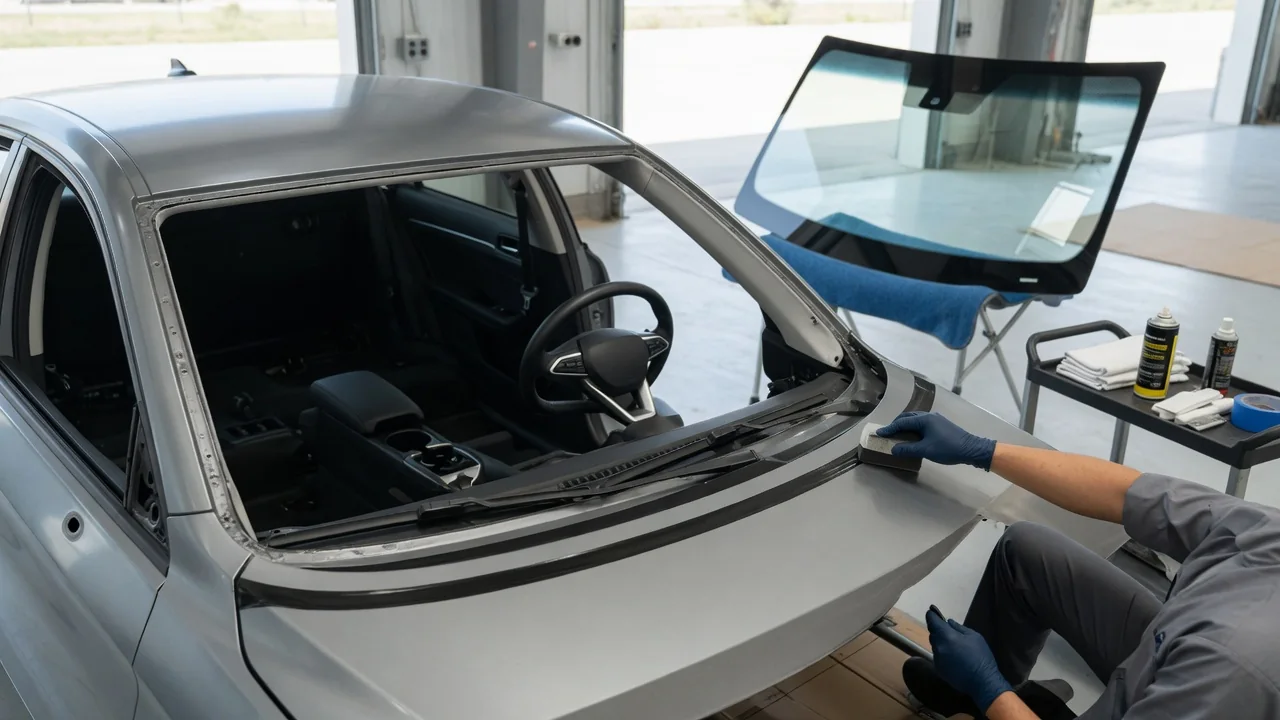
When a windshield is replaced, the new glass is not simply pressed into the opening. It is bonded to the vehicle body with a structural urethane adhesive, and primer is often a key part of that bonding system. Understanding why windshields need primer during replacement helps explain the difference between a durable, leak-free installation and one that may loosen, leak, or allow rust to develop around the opening over time.
Surface adhesion
Urethane adhesives bond strongly to some surfaces and much less reliably to others. Glass is smooth and chemically fairly inert, and the black ceramic band printed around the edge of most windshields, often called the frit, has its own surface chemistry. A windshield bonding primer or glass activator is formulated to create a compatible layer between that surface and the urethane. Instead of relying on the adhesive simply gripping a slick surface, the primer helps the urethane wet out evenly and form a chemical bond, which is what gives the joint its long-term strength.
Primer can also help protect the bond line from sunlight. Ultraviolet light passing through the glass can gradually degrade urethane if it reaches the adhesive directly. The ceramic frit blocks much of this light, and the black primers used in many adhesive systems add another protective layer, particularly where frit coverage is thin or incomplete. Whether a separate glass primer is required depends on the specific adhesive system and the glass being installed, which is why installers follow the adhesive manufacturer's instructions rather than a single universal rule.
Strong adhesion matters because in many modern vehicles the windshield is more than a window. It contributes to body stiffness, can help support the roof structure, and in many designs serves as a surface the passenger airbag deploys against. A bond that seems fine in everyday driving could still be inadequate under those loads. How much the glass contributes varies by vehicle design, but the general principle is that the bond must perform as part of the structure, not just as a seal.
Corrosion protection
The windshield sits on a painted metal flange around the opening, commonly called the pinch weld. Removing the old windshield involves cutting through the existing urethane, and the tools used can scratch through the paint and expose bare metal. Once the new glass is installed, those scratches are hidden under the adhesive bead and trim, but moisture can still find its way to them. Applying a pinch weld primer to exposed areas restores a protective barrier over the metal and gives the new urethane a compatible surface to bond with.
Corrosion under the bond line is a double problem. Rust weakens the metal itself, and it also undermines adhesion, because the urethane is attached to coatings that can lift as corrosion spreads beneath them. The results can include water leaks, wind noise, and in serious cases a windshield that is no longer securely held. Because the affected area is covered by glass and moldings, this kind of damage can progress for a long time without being noticed.
Vehicle construction also affects primer choice. Bodies with aluminum or composite components around the windshield opening may call for different preparation than painted steel. In those cases, the vehicle maker's and adhesive maker's guidance determine which products are appropriate.
Installation
A typical replacement follows a consistent sequence: remove the old glass, trim the remaining urethane on the flange to a thin, even layer, inspect the pinch weld for damage, clean the surfaces, prime any exposed metal or paint damage, prepare the new glass with the specified cleaner, activator, or primer, apply a fresh urethane bead, and set the glass in position. Many adhesive systems are designed so fresh urethane bonds directly to freshly trimmed old urethane, so that layer may not need primer, while exposed metal still does. Some replacement glass arrives pre-primed or with factory-applied moldings, which changes which preparation steps apply.
Primers, cleaners, and urethanes are generally designed as matched systems. The adhesive manufacturer specifies which products work together, how long each coating must dry before the next step, how to store them, and under what temperature and humidity conditions they can be used. Mixing products from different systems, skipping required drying time, or using expired materials can compromise the bond even if the installation looks correct. Primed surfaces should also not be touched, since skin oils and dust can contaminate them and interfere with adhesion.
It is worth distinguishing primer drying from adhesive curing. Primer usually needs only a short drying period before the urethane is applied, but the safe drive-away time after replacement is governed by how quickly the urethane cures, which depends on the product and on conditions such as temperature and humidity. The installer should state that time for the specific adhesive used.
Practical implications and limits
For car owners, the practical takeaway is that primer is a normal and expected part of a quality windshield replacement, not an optional upsell. It is reasonable to ask the installer which adhesive system they use, whether any scratches on the body flange were treated, and how long the vehicle should sit before driving. Clear answers suggest the shop follows the adhesive manufacturer's process and recognized industry installation practices.
Primer also has clear limits. It is not a rust repair: if the pinch weld already has significant corrosion, coating over it will not stop the damage, and the affected metal needs proper repair before a new windshield can be bonded reliably. Primer cannot make up for contaminated surfaces, an uneven or insufficient urethane bead, or glass that does not fit the opening correctly. Applying more primer than specified is not better either, since overly heavy coats may not dry properly and can weaken the bond rather than strengthen it.
After a replacement, signs worth having checked promptly include water entering around the windshield, new wind noise at highway speed, visible gaps or shifting moldings, and rust staining near the glass edge. These symptoms do not always mean the primer step was missed, but they indicate the bond or seal may need inspection. Exact requirements for any given vehicle depend on its body construction and the replacement glass, so the vehicle maker's and adhesive maker's instructions remain the deciding reference.