What Is Automotive Urethane Adhesive? Bonding, Cure and Repair
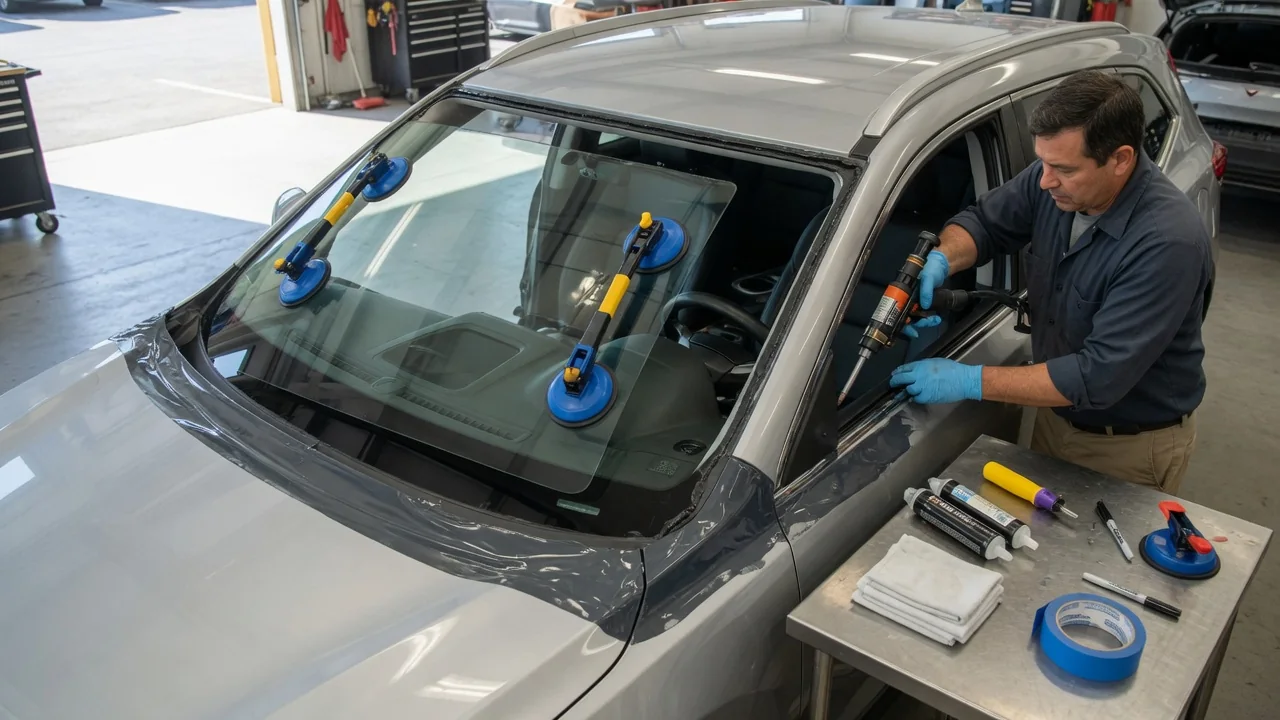
Automotive urethane adhesive is a polyurethane-based bonding material used to attach glass and some other components to a vehicle's body. It is best known as the black bead that holds a modern windshield in place, but it does far more than seal. This guide explains what windshield urethane adhesive does structurally, how it cures, and what matters when a bonded joint has to be repaired or replaced.
Bonding role of urethane adhesive
On most modern cars, the windshield is not simply set into a rubber gasket. It is bonded directly to the body opening, called the pinchweld, with a continuous bead of urethane. Once cured, that bead joins glass and body into a single assembly. The adhesive stays tough and somewhat elastic, so it can transmit loads between the two while tolerating vibration, body flex and the different rates at which glass and metal expand and contract with temperature.
That bond matters for safety, not just for keeping rain out. A properly bonded windshield helps stiffen the body structure and can contribute to roof strength in a rollover. On many vehicles the passenger-side airbag is designed to deploy against the windshield, which then helps hold the airbag in position, so the glass must stay attached under that sudden force. The windshield also helps keep occupants inside the vehicle in a crash. How much each of these roles depends on the glass varies by vehicle design, which is why manufacturers specify adhesive requirements for their own models.
Urethane also seals. The same bead keeps water, dust and air from entering around the glass and helps limit wind noise. Beyond windshields, urethane adhesives are used for back glass, some fixed side windows and certain body and trim bonding applications, alongside other adhesive chemistries such as epoxies. Urethane-based products also appear as seam sealers, though those are formulated for sealing rather than for structural glass retention.
How urethane adhesive cures
Most windshield urethane adhesive is a one-component, moisture-curing product. It leaves the cartridge as a thick paste, and reactive chemistry within it reacts with water vapor in the surrounding air. The surface forms a skin first, and cure then progresses inward from the exposed surfaces. Because the reaction depends on moisture reaching the material, the core of a thick bead cures more slowly than its surface, and the bond keeps gaining strength well after the installer has finished.
Temperature and humidity strongly influence how fast that happens. Cold, dry conditions generally slow the cure, while warm, humid conditions speed it up. To reduce this dependence, some products are formulated for faster strength development, and two-component urethanes mix a resin with a curing agent so the reaction does not rely only on ambient moisture. Adhesive makers publish a minimum safe drive-away time for their products, usually tied to stated temperature and humidity conditions and to whether the vehicle has airbags that rely on the windshield. That figure differs between products and conditions, so there is no single universal waiting period.
Cure is only part of a good bond. Urethane needs clean, properly prepared surfaces to adhere reliably. Glass usually has a ceramic frit band around its edge, and many adhesive systems call for a primer or activator on the glass and on the body flange. Primers improve adhesion and, on glass, help shield the bond line from ultraviolet light, which can degrade urethane over time. Skipping a step the system requires can leave a bead that looks cured but does not hold as designed.
Repairing urethane-bonded joints
Replacing bonded glass starts with cutting through the cured urethane, using cold knives, wire-based cutting systems or powered cutters. A widely used approach is to trim the old urethane on the pinchweld down to a thin, even layer instead of removing it completely. Freshly cut cured urethane is generally a good surface for new urethane to bond to, and leaving it in place reduces the risk of scratching through the paint and primer beneath. Whether this method is acceptable for a given job, and how thick the remaining layer may be, is defined by the adhesive maker's instructions and the vehicle's service information.
Any spot where cutting exposes bare metal needs attention before new adhesive goes on. Unprotected steel under a urethane bead can rust, and corrosion along the pinchweld can eventually weaken the bond or cause leaks. Repair procedures typically call for treating such areas with the specified primer. Contamination is the other common enemy: silicone, oils, cleaner residue and even fingerprints on prepared surfaces can interfere with adhesion. Mixing products from different adhesive systems is generally discouraged, because primers and urethanes are designed to work together as a set.
Leaks around bonded glass are a related repair. Where a gap in the bead lets water in, the fix is usually to locate the gap and fill or rebuild it with compatible urethane, or to remove and reinstall the glass if the bond is broadly compromised. Surface-applied silicone sealants are a poor substitute: they do not provide the same structural bond, and silicone residue can make a later urethane repair harder to bond.
Practical implications and limits
For owners, the main implication is that windshield work is structural work. A replacement affects how the body and airbag system perform, so the adhesive choice, surface preparation and observance of the drive-away time matter as much as the glass itself. It is reasonable to ask an installer which adhesive system they use and how long the vehicle should sit before driving in the current weather. Aftercare advice, such as leaving a window slightly open or avoiding car washes for a while, exists to protect a bond that is still gaining strength, and following it costs little.
There are also limits to what urethane adhesive can or should do. It is not a general-purpose glue for interior trim, it is not meant to fill large gaps or bridge damaged metal, and it cannot compensate for a rusted or distorted pinchweld that needs body repair first. It is also not easily reversible: once cured, it has to be cut, which can damage nearby trim, paint or mounted components. Vehicles with cameras or other driver-assistance sensors behind the windshield may need calibration after glass replacement, a separate step from the bonding itself. Specific products, cure figures and procedures always come from the adhesive manufacturer and the vehicle's service information, not from general rules.