Why Do Some Interior Cleaners Leave a Shiny Residue?
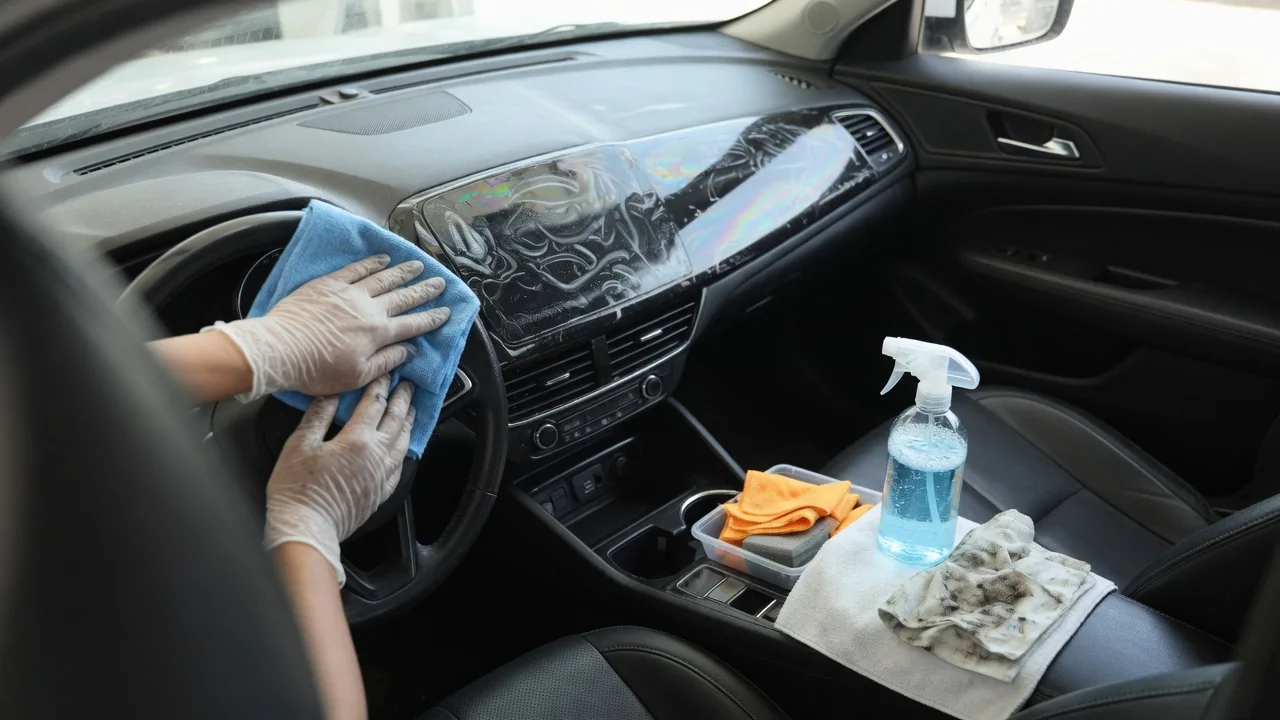
A dashboard that looks glossy and feels slightly slick after cleaning is usually not cleaner. In most cases, part of the product stayed on the surface. Three factors decide whether an interior cleaner leaves a shiny residue: what the formula contains, how much of it reached the surface, and how well it was wiped off. Once you understand each one, interior cleaner residue shine becomes easier to predict and avoid.
Ingredients: What Stays Behind When the Liquid Evaporates
Most interior cleaners are mostly water. They also contain surfactants, sometimes a small amount of solvent, and various additives. Water and volatile solvents evaporate after application, but the non-volatile ingredients stay where they land. A product designed purely as a cleaner aims to leave very little behind. Many products sold as cleaner and protectant, or as all-in-one interior care, work differently. They deliberately include film-forming ingredients such as silicone oils (often listed as dimethicone or polydimethylsiloxane), silicone emulsions, glycerin or glycols, oils, waxes, or polymers. These ingredients are meant to remain on the surface so they can darken faded plastic, create a fresh appearance, or hold UV-absorbing additives in place.
The shine comes from how light behaves. Interior plastics and vinyl are usually grained or textured, so they scatter light and look matte. A smooth liquid or semi-liquid film fills that microscopic texture. Light then reflects more like a mirror and less diffusely, so a matte panel starts to look glossy. Silicone oils spread easily into thin layers and stay liquid instead of drying hard, which is why they tend to look wet and feel slippery. Humectants such as glycerin attract moisture from the air and can leave a surface feeling faintly tacky.
Surfactants can cause residue too. Detergent left on a surface dries into a thin film that may look streaky or slightly glossy and can feel sticky to the touch. Ingredient lists are often incomplete, so the label wording is usually the best practical clue. Terms such as protectant, dressing, conditioner, satin finish, or high gloss signal that the product is meant to leave something behind.
Overapplication: More Product Means More Film
A product designed for a light satin finish can still turn glossy if too much is used. When the liquid evaporates, the non-volatile portion stays, so a heavier application leaves more film. Spraying directly onto the dashboard makes this worse. The mist drifts onto the windshield, instrument cluster lenses, and screens, and heavy wet coats collect in seams, around stitching, and in the low points of textured grain.
Textured surfaces hold excess product in a way that is hard to wipe out evenly, so the result often looks blotchy, with shinier patches where the grain trapped more liquid. Repeated applications also build up over time, because each new coat adds to whatever the last one left. That buildup can grow uneven, darken some areas more than others, and collect dust and lint. Working on a hot panel or in direct sun adds another problem. The water flashes off before you can wipe, leaving a more concentrated layer of the remaining ingredients and more visible streaks.
The simplest correction is to apply the product to a towel or applicator rather than to the surface. Use only enough to dampen it, and work one small section at a time so nothing dries before it is wiped.
Wiping: Removal Matters as Much as Application
Cleaning has two parts. The product loosens soil, and wiping removes both the soil and the product. If the wipe is skipped or rushed, the dissolved grime and the surfactant dry back onto the surface together. A brief dwell time, light agitation with a soft brush on textured areas, and then a deliberate wipe will remove much more than spraying and leaving the panel to dry.
The towel matters as much as the motion. A towel that is already damp with product spreads residue around instead of picking it up. A clean, dry microfiber towel folded into quarters gives you several fresh faces to turn to as each one loads up. A second dry towel used for a final buff removes leftover film and evens out what remains. If a pure cleaner left residue, a towel lightly dampened with plain water can lift the remaining surfactant. If the product is a dressing, buffing levels the layer and removes the excess, which typically lowers a wet-looking gloss to a more even satin.
Towels can also add residue of their own. Fabric softener used in the wash coats microfiber with a film that can transfer to the surface and reduce absorbency. Towels that were used with a silicone dressing keep carrying it into later cleaning jobs. Keeping separate towels for cleaning and for dressing avoids this cross-contamination.
Practical Implications and Limits
Residue causes more than a cosmetic problem. A glossy dashboard top can reflect in the windshield and create glare. A slick film on the steering wheel, shift lever, door pulls, or pedals can reduce grip, so dressings generally do not belong on controls or on any surface a hand or foot needs to hold. Residue on displays and gauge lenses tends to smear rather than wipe clean. A tacky layer on any panel attracts dust more quickly than bare plastic does.
Not every shine is product residue. Some interior trim and coated leather have a slight sheen from the factory. Surfaces that are touched often can become polished by wear over time. Some vinyl and plastic components can also release plasticizers, which may leave an oily film on nearby surfaces, including the inside of the windshield. Cleaning removes that film for a while, but it does not stop the material from producing more. Silicone-based films also resist plain water, so removing an existing layer may take several passes with a dedicated interior cleaner. Stronger solvents can damage soft-touch coatings, printed graphics, or screen treatments, so they are not a safe shortcut.
The mechanisms described here are general, but materials and coatings vary between vehicles. The care guidance in the owner's manual and on the product label should take priority, and a test in an inconspicuous spot is a sensible step before treating a whole panel. If you want a factory-matte look, choose products described as cleaners only or as matte-finish formulas, and treat cleaning and protecting as separate decisions rather than relying on one product to do both.