Why Do Some Cars Have Two Tailpipes?
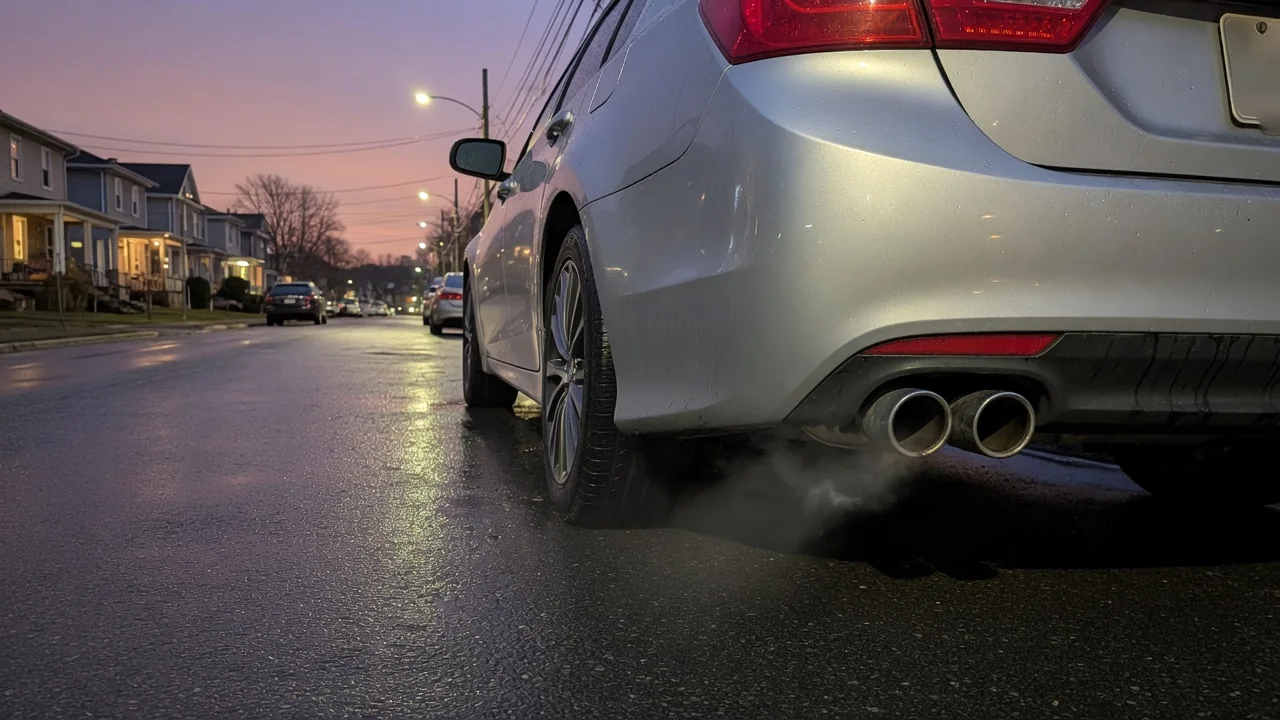
If you have ever wondered why do some cars have two tailpipes, the answer is rarely a single thing. Sometimes a pair of outlets reflects how the exhaust system is laid out beneath the floor, and sometimes it is mostly a design decision at the rear bumper. Understanding both possibilities helps you read what you see without jumping to conclusions about what sits under the hood.
Exhaust routing
Engines with two cylinder banks, such as V-shaped or horizontally opposed layouts, collect exhaust gas from each side separately. Engineers can keep those streams apart all the way to the rear, creating a true dual exhaust with one pipe per bank, or merge them into a single pipe somewhere under the floor. When the streams stay separate, two tailpipes are simply the natural endpoint of two parallel paths, often with a crossover section linking them to balance pressure pulses and shape the sound.
Other vehicles run a single pipe for most of their length and split it only near the back, typically at or after the rear muffler. In that arrangement, the two outlets share the same gas flow, so the split has more to do with packaging and symmetry than with separate engine banks. A transverse muffler mounted behind the rear axle makes this easy, with an outlet at each end. Looking under the car from a safe distance usually reveals which layout you are seeing.
Appearance
Styling is a major reason for dual outlets. A tip at each corner gives the rear of a car visual balance, and designers often use that symmetry to make a vehicle look wider, lower, and more planted. Paired outlets also carry a long association with performance models, so they are frequently added to sport trims or appearance packages to distinguish them from base versions, even when the engine and most of the exhaust system are shared across the lineup.
The finishing pieces vary widely. Some cars use polished or dark-coated tips attached to the actual pipes, while others have trim surrounds molded into the bumper, with the real pipe ending a little behind the opening. A few designs have decorative bezels that are not connected to any pipe at all, and the working outlet is tucked out of sight and pointed downward. Looking closely into the opening, when the car is cold and switched off, shows whether a pipe is really there.
Do not infer engine type
It is tempting to treat two tailpipes as proof of a large or powerful engine, but the outlet count is unreliable evidence. Four-cylinder cars are commonly fitted with a split rear section and two tips, while some six- and eight-cylinder vehicles merge everything into one outlet for packaging, weight, or noise reasons. Trucks may route a single pipe out one side behind the rear wheel. The number of visible tips describes the last few inches of the system, not the cylinder count.
The same caution applies to guessing about turbocharging, fuel type, or performance tuning. A turbocharged engine can exhale through one pipe or several, and diesel models may have one outlet, two, or a hidden downturned one. Even four tips arranged in pairs can be fed by a single pipe upstream. If you need to know what engine a vehicle has, the reliable sources are its documentation, the underhood emissions label, or a decode of the vehicle identification number rather than the bumper.
Everyday Use and Observations
In daily driving, a dual-outlet system behaves much like a single one. On a cold morning you may notice vapor coming from both tips, or more from one than the other. With a split rear section, uneven vapor is often normal because gas follows the path of least resistance and one branch may be slightly shorter or warmer. Water dripping from a tip after a short trip is typically condensation, a normal byproduct of combustion collecting in a cool system.
Some vehicles add valves in one or both outlets that open and close with engine load or drive mode, so one tip may appear inactive at idle and come alive under acceleration. Soot on the tips varies by engine and fuel system, and darker deposits on one side are not automatically a fault. What deserves attention is a change from the usual pattern, such as new rattles, a louder or raspier note, visible rust-through, or hangers that let a pipe sag.
Limits and Next Steps
What you can learn from the outside has limits. Visual inspection will not tell you whether a system is a true dual layout, whether emissions components are working properly, or how much the design affects performance. Any benefit from separate pipes depends on the whole system, including pipe diameter, muffler design, and engine calibration, so claims about added power from two outlets should be treated carefully. On many modern cars, the difference is primarily about sound character and appearance.
If you are considering changing your exhaust, check what applies to your specific vehicle first. Emissions and noise rules differ by state, and modifications near the catalytic converters or sensors can cause warning lights or inspection problems. A rear bumper may also need a different valance to accept a second outlet. For a suspected leak, unusual smell in the cabin, or damaged pipe, have a qualified shop examine the system on a lift, since exhaust gas entering the cabin is a genuine safety concern.