Why Do Some Cars Have a Cooled Glove Box?
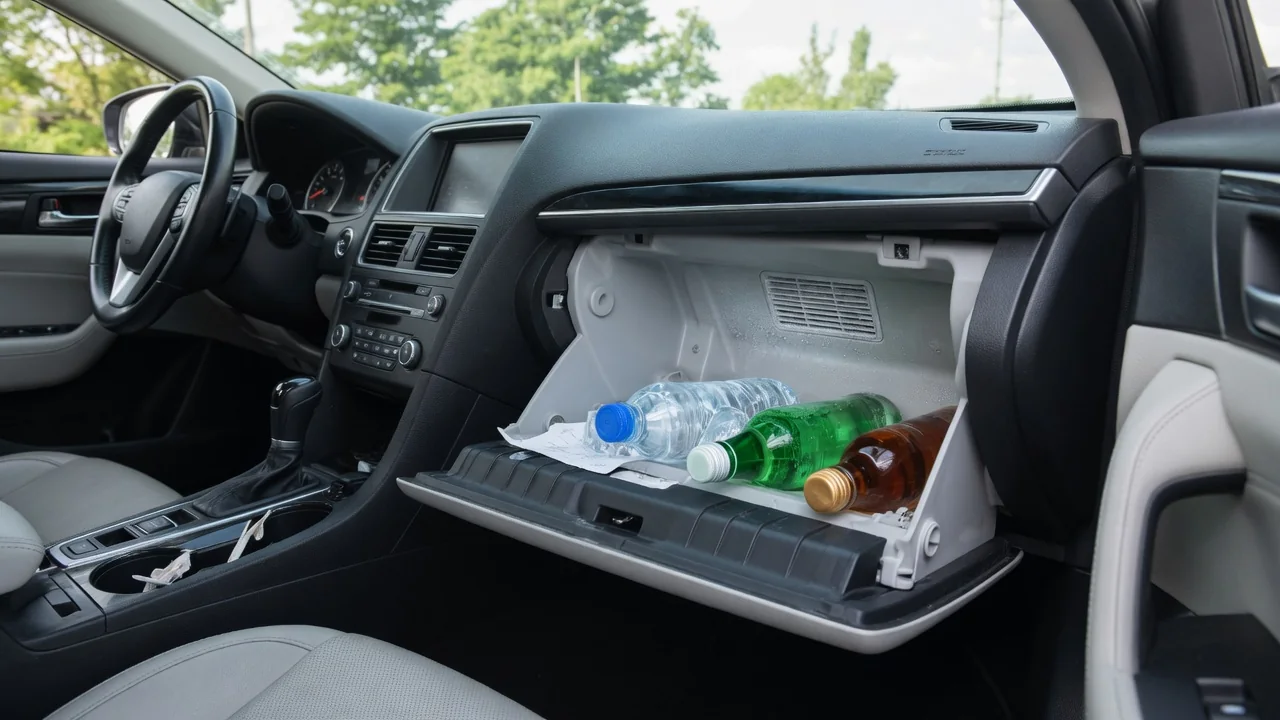
Why do some cars have a cooled glove box? The short answer is convenience: automakers route a small stream of air-conditioned air into the compartment so drinks, snacks, and heat-sensitive items stay cooler than the cabin on a hot day. The feature borrows from equipment the vehicle already carries, which makes it simple to add but also defines what it can and cannot do.
Air source
A cooled glove box almost never has its own refrigeration hardware. Instead, it taps the climate control system that already sits behind the dashboard. The glove compartment is located close to the HVAC housing, where the evaporator chills incoming air before the blower pushes it toward the dash vents. A short duct or molded passage branches off that cold airflow and delivers a small portion into the compartment through an opening in its rear or upper wall.
Because the supply comes from the air conditioning, the compartment only receives chilled air when the compressor is running and the system is set to cool. Open the glove box in an equipped vehicle and you can usually spot a small round or slotted outlet, often with a rotating dial, sliding shutter, or snap-in cover that opens or closes it. The exact location, shape, and control style differ between manufacturers, and the owner's manual normally identifies the vent and explains how it operates.
Use cases
The most common purpose is keeping a beverage or two cool during a drive. A water bottle or canned drink that starts cold will stay pleasant far longer in a ventilated compartment than in a cup holder exposed to sunlight through the windshield. The same logic applies to chocolate, energy bars, fruit, or a packed sandwich on a long highway trip, where a hot interior would otherwise soften or spoil food within an hour or two.
Some drivers use the space for items that simply dislike heat rather than items that need chilling. Lip balm, cosmetics, sunscreen, and certain adhesives or crayons can melt or separate in a parked car's dashboard area, and moving cool air through the compartment while driving reduces that stress. Automakers often include the feature on vehicles sold in warm climates or on trim levels aimed at families and long-distance travelers, so availability may depend on the market, model year, and equipment package.
Cooling limits
A cooled glove box is not a refrigerator. It receives a small share of air that is also being used to cool the whole cabin, and the compartment walls are usually thin plastic with little or no insulation. The result is a space that sits somewhat below cabin temperature rather than at food-safe refrigeration levels. It is far better at slowing the warming of something already cold than at pulling heat out of a warm drink.
The cooling also stops when the air conditioning stops. Once the engine is off, or the climate control is switched to heat or to ventilation without the compressor, the vent delivers warm or ambient air instead. In a parked vehicle under direct sun, the dashboard absorbs heat quickly and the compartment warms along with it. Perishable food, medication with strict storage requirements, and anything that must stay at a specific temperature should travel in a proper insulated cooler instead.
Everyday Use and Observations
In daily driving, the feature works best with a little planning. Starting the air conditioning a few minutes before loading the compartment lets the duct deliver cold air right away, and placing items so they do not block the outlet allows the flow to circulate. Owners often notice a faint draft from the vent with the door open, and a bottle resting near the outlet will feel noticeably cooler than one tucked in a far corner behind manuals and paperwork.
In colder months, the same vent can work against you. With the heater running, some designs pass warm air into the compartment, which is why many vehicles provide a way to close the outlet. Shutting it when cooling is not wanted also keeps a little more airflow available for the cabin vents. Light condensation on a cold can is normal, so keeping registration papers and other documents in a sleeve or away from chilled drinks helps prevent damp, curled pages.
Limits and Next Steps
If the compartment does not seem to cool, the cause is often simple. The vent may be closed, covered by stored items, or the air conditioning may be off or set to a mode that bypasses the compressor. When the dash vents themselves blow weak or warm air, the glove box will follow, because both depend on the same system. In that case the concern is the air conditioning overall, not the compartment, and it deserves a proper diagnosis.
Not every vehicle has the feature, and a glove box without a visible outlet is simply an ordinary storage space. Checking the owner's manual or the equipment list for the specific model and trim confirms whether it is fitted and how the control works. A weak air conditioning system, unusual odors from the vents, or water collecting inside the compartment are worth having a qualified technician inspect, since those symptoms point to issues beyond the convenience feature itself.