Why Do Engines Have Piston Rings? Sealing, Oil Control and Wear
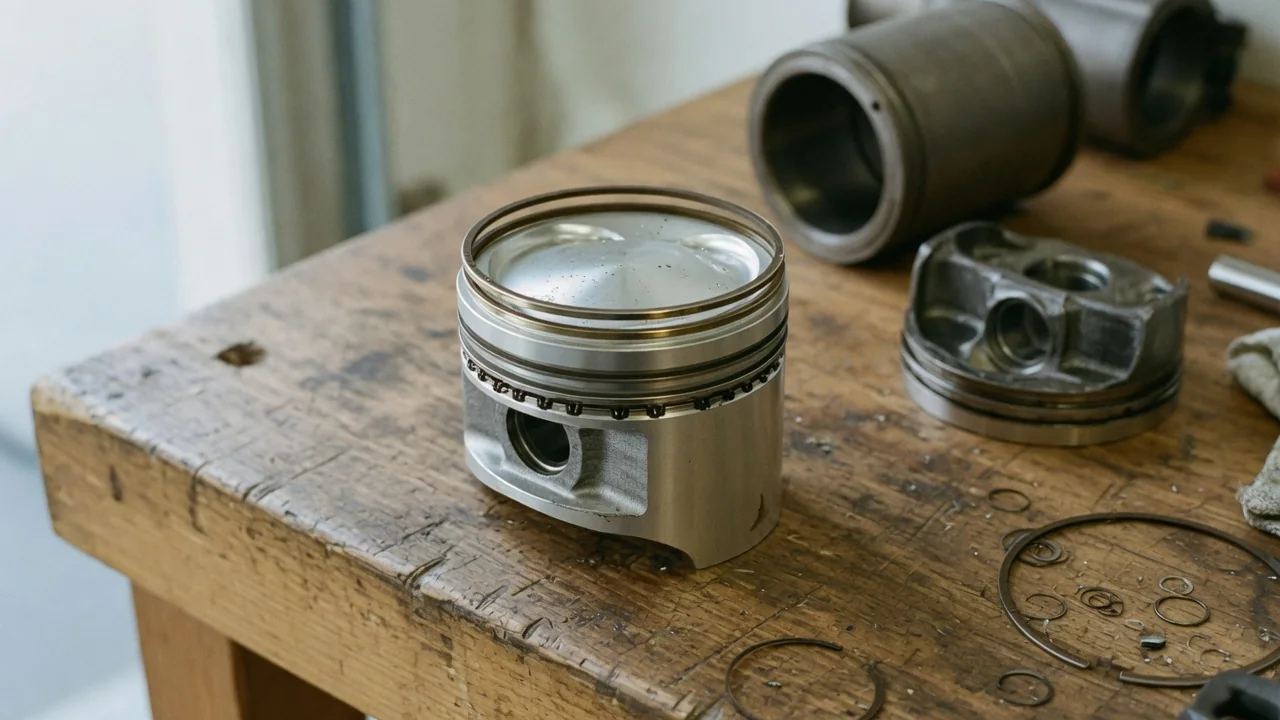
A piston has to move freely inside its cylinder, yet the space above it must hold the pressure of compression and combustion while the oil below stays where it belongs. Piston rings resolve that conflict. These thin, springy metal bands sit in grooves around the piston and press outward against the cylinder wall. The answer to why engines have piston rings comes down to three connected jobs: sealing compression, controlling oil, and managing wear.
Compression seal
A piston cannot seal the cylinder on its own because it needs running clearance. It expands as it heats, its crown runs hotter than its skirt, and it needs room for an oil film. A piston fitted tightly enough to seal when cold would scuff or seize when hot, while one loose enough to run hot would leak heavily. Rings bridge that gap. Because they are separate from the piston and flexible, they spring outward against the bore and keep following it as temperatures and clearances change.
Rings are made with built-in outward tension, but engine pressure does much of the sealing work. During compression and combustion, gas enters the small space above and behind the top ring. That pressure pushes the ring outward against the cylinder wall and down against the lower face of its groove, so the sealing force rises when cylinder pressure is highest. The top ring does most of the sealing, and the second ring catches gas that slips past it. Each ring also needs an end gap so it can expand with heat without its ends butting together, which could break the ring or damage the bore. That gap is a small, unavoidable leak path, which is one reason engines use more than one compression ring.
No ring set is perfectly gastight. Combustion gas that escapes into the crankcase is called blow-by, and in modern engines the positive crankcase ventilation system routes it back into the intake to be burned. Excessive blow-by lowers compression, costs power and efficiency, and contaminates the oil with combustion byproducts and fuel. Rings also have a thermal role: they carry heat from the hot piston to the cylinder wall, where the cooling system can remove it, making them an important part of keeping the piston itself cool.
Oil control
Cylinder walls need lubrication. Oil reaches them as it is thrown off the spinning crankshaft and connecting rods, and many engines also spray oil at the underside of the pistons for cooling. Without that film, the rings and piston skirt would scuff the bore. Oil left on the wall above the rings, however, is exposed to combustion. It burns, increases oil consumption, forms carbon deposits, and over time can contaminate the catalytic converter. The goal is a thin, controlled film rather than as much oil as possible.
The lowest ring on the piston is the oil control ring. It typically has two narrow scraping edges held against the wall by an expander. A common design uses three pieces, two thin rails separated by an expander-spacer, while others use a slotted ring backed by a coil spring. As the piston moves down, the ring scrapes excess oil from the wall, and that oil drains through slots or holes in the ring and piston groove back into the crankcase. The second compression ring usually helps as well, since its face is often shaped to wipe oil downward on the downstroke.
Oil control is a balance. More ring tension scrapes more oil but adds friction and wear; less tension reduces friction but can let more oil past. The cylinder surface matters too. Bores are honed with a fine crosshatch pattern that holds small amounts of oil for lubrication, and a bore that is distorted, worn out of round, or glazed smooth can let oil past even when the rings are in good shape. Compression sealing and oil control also interact, because blow-by raises crankcase pressure and can disturb how oil drains away from the rings.
Wear
Rings slide against the cylinder wall at high speed while under load, and their lubrication changes through every stroke. Near the top and bottom of travel, the piston briefly stops and reverses, the oil film is at its thinnest, and metal-to-metal contact is more likely. At the top of the stroke, the top ring also faces the most heat and pressure with the least oil. That combination is why cylinder wear is usually greatest in the upper part of the bore, and in heavily worn engines it can leave a noticeable ridge where ring travel ends.
Several wear mechanisms act on rings and bores. Abrasive wear comes from hard particles, such as dust admitted by a damaged air filter or leaking intake duct, or debris circulating in the oil. Adhesive wear, or scuffing, occurs when the oil film breaks down from overheating, oil starvation, or fuel washing oil off the cylinder walls. Corrosive wear comes from acidic combustion byproducts, which tend to accumulate when an engine is frequently run without reaching full operating temperature. Ring faces are commonly given hard coatings or surface treatments to resist these effects, but no treatment eliminates them.
Not all ring problems involve worn metal. Carbon and sludge can build up in the ring grooves and on the piston lands between them. A ring that cannot move freely in its groove loses its ability to spring against the wall, so it can stop sealing and controlling oil even though it is not badly worn. Wear is also part of a ring's normal life: new rings seat during break-in, when slight, controlled wear lets the ring faces conform closely to the bore.
Practical implications and limits
For owners, protecting rings is mostly about lubrication, clean air, and normal combustion. That means using the oil specification and viscosity listed in the owner's manual, following change intervals suited to how the vehicle is actually driven, keeping the air filter and intake ducting intact, maintaining the cooling system, and addressing misfires or rich-running conditions promptly, since excess fuel can dilute the oil and wash down cylinder walls.
Symptoms often blamed on rings, such as rising oil consumption, blue-gray exhaust smoke, low compression, or heavy vapor from the crankcase, can also come from valve stem seals, worn valve guides, a faulty ventilation system, turbocharger seal leaks, head gasket problems, or external oil leaks. A compression test and a cylinder leak-down test help separate the causes; during a leak-down test, air escaping into the crankcase points toward the rings, while air at the intake or exhaust points toward the valves. One symptom alone is rarely conclusive, and acceptable oil consumption and test results are defined by the manufacturer for each engine.
Repair has real limits. Rings cannot be replaced without removing the pistons, which usually means major engine disassembly, and worn or distorted bores may need machining before new rings can seal properly. Rings stuck by deposits sometimes respond to cleaning procedures, but no additive can restore worn metal, and results vary from engine to engine. Ring designs, clearances, and service procedures differ between engines, so the manufacturer's service information remains the authority for any specific vehicle.