Why Are New Cars Tested for Water Leaks?
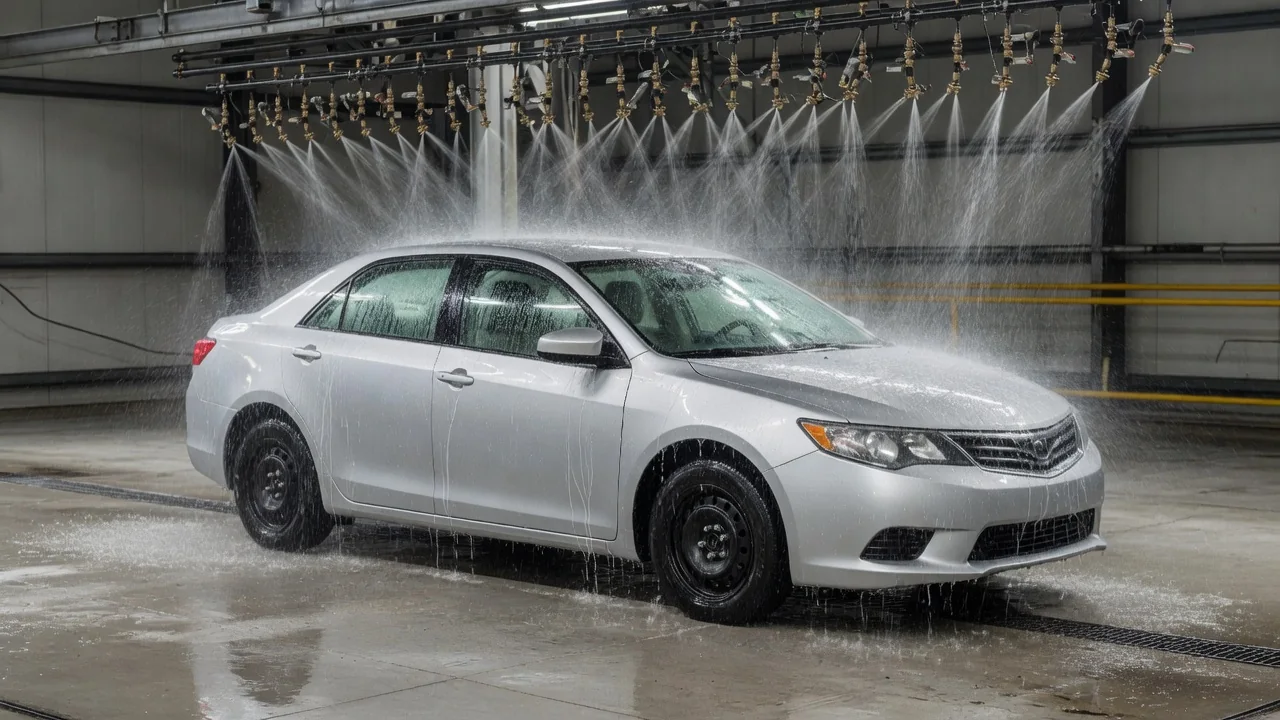
A car body is built from stamped panels, bonded glass, rubber seals and plugged holes. Any gap between these parts can let water reach the cabin, the electronics or the structure. That is why new cars are tested for water leaks before they leave the plant. A factory vehicle water leak test sprays the finished body with simulated rain and checks that water entering the designed channels drains away. Any car that leaks goes for diagnosis and repair before a customer ever finds moisture inside.
Spray conditions: simulating rain inside the plant
Most factory leak testing happens in an enclosed spray booth, sometimes called a rain or monsoon booth, near the end of the assembly line. The finished vehicle rides through on a conveyor or is driven in. Banks of nozzles then aim water at the roof, windshield, side glass, doors and tailgate, and often at the underbody as well. The goal is not to copy one particular storm. It is to create conditions that are harsher and more consistent than ordinary rain, so a weak seal shows up in minutes instead of months. Each manufacturer sets its own water pressure, flow rate, nozzle angles and exposure time, and these differ between plants and vehicle types.
The direction of the spray matters as much as the amount of water. Wind drives rain into a moving car from the front and sides, and the tires throw water up at the floor pan, wheel arches and lower door seams. Nozzles aimed from several directions put load on every sealing line. That includes the joints along the roof rails, the base of the windshield and the seams where body panels overlap. After the spray cycle, inspectors usually check the interior, the footwells, the trunk and the areas behind trim panels for drips or damp spots. Depending on the plant, they may look for water by eye, press absorbent material against suspect areas, use moisture-detecting tools, or add dye to the water so its path is easier to see.
Drainage: where water is supposed to go
A watertight car does not keep every drop outside its outer skin. Many areas are designed to get wet: Door shells catch water that runs past the window seals, so each door has drain holes along its bottom edge. The cowl area below the windshield collects rain and steers it away from the ventilation intake. Sunroof frames sit in a tray with drain tubes that carry water down through the pillars and out of the body. Tailgates, sills and some other body cavities rely on openings or one-way valves to let water escape.
The leak test therefore checks two things at once. It confirms that the seals keep water out of the passenger compartment, and that the drainage paths behind those seals actually work. A seal can look perfect while one of these faults still sends water toward the cabin: a drain tube pinched during assembly; a missing grommet; a misplaced vapor barrier inside a door; a cowl drain blocked by a stray part; Water that pools in a cavity instead of draining away can also reach wiring harnesses, connectors and control modules mounted low in the body, and over time it can promote corrosion in the seams. Heavy spray exposes these routing faults while the car is still at the plant, where the fix is simplest.
Repair: tracing and fixing a factory leak
When a vehicle shows moisture after the spray cycle, it is normally pulled off the line for diagnosis rather than shipped. The first job is finding the real entry point, which is often not where the water shows up. Water can enter at the roof edge, travel along the headliner or a pillar, and appear in a footwell. Technicians work backward from the wet spot. They often remove trim and spray small areas one at a time until they isolate the source.
The repair depends on the cause. Common factory fixes include: reseating or replacing a weatherstrip that was not fully pressed onto its flange; adjusting a door, hatch or window so it presses evenly on its seal; adding or replacing seam sealer; installing a missing body plug or grommet; reconnecting a sunroof drain tube; repairing the urethane bead that holds bonded glass in place; After the repair, the vehicle is normally run through the leak test again, because a fix that has not been rechecked proves nothing. Records of these repairs also help the plant trace repeat faults back to a specific workstation, part or process, which makes the same leak less likely on the next cars.
Practical implications and limits
For an owner, a passed factory test means the car was sealed when it left the plant, under controlled conditions. It does not mean the car will stay leak-free for life: Rubber seals harden and shrink with age and with repeated heating and cooling. Drains clog with leaves, pollen and grit. When a sunroof or cowl drain backs up, water the car was built to shed can overflow into the cabin. Collision repair, windshield replacement and add-ons such as roof racks, antennas or remote starters can disturb seals or create new holes that the original test never covered.
It also helps to understand what the test does not cover. Practices vary between manufacturers and plants. Some test every vehicle, while others combine full testing on certain lines with spot checks on a sample of cars, and procedures differ by model and market. A spray booth also cannot recreate every real-world situation, such as a car parked nose-down on a slope for days, deep standing water, or a pressure washer aimed straight at a door seal. Signs of a leak worth taking seriously: damp carpet; windows that keep fogging up; a musty smell; water in the spare tire well; unexplained electrical faults; On a newer vehicle, start with the owner's manual and the warranty terms. Water leaks may be treated as body or workmanship issues, but coverage depends on the specific vehicle and the cause of the leak.