Which Ignition Sources Are Associated With a Class D Fire? A Driver's Guide to Combustible Metal Fires
A Class D fire is a fire involving combustible metals. In the US classification system, these include magnesium, titanium, zirconium, sodium, potassium and lithium in its metallic form. The ignition sources most associated with a Class D fire are those that deliver intense, concentrated heat to the metal or break it into fine particles: high heat from a fire already burning nearby, friction and grinding, welding or cutting, electrical arcing, and, for certain reactive metals, contact with water or moisture. For drivers, the key qualification is that Class D fires are uncommon in ordinary vehicles. When they do occur, they usually develop after a fuel, electrical or interior fire has already heated metal components.
What Is a Class D (Type D) Fire?
People searching for a "type D fire" usually mean the same thing as a Class D fire. The letter refers to the fuel that is burning, not to the size or cause of the fire. Fire classes exist because different fuels respond differently to extinguishing agents. Water that puts out burning wood can make burning metal far more dangerous.
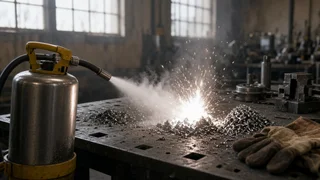
In a Class D fire, the combustible material is the metal itself. Burning metals reach very high temperatures, often produce a brilliant white light, and can keep burning in conditions that would smother most other fires. Some metals can pull oxygen from water or carbon dioxide, which is why common extinguishing agents can feed the fire instead of stopping it.
Class | Fuel type | Typical vehicle-related examples; A | Ordinary combustibles | Seats, carpet, headliner, cargo, tires; B | Flammable liquids and gases | Gasoline, diesel, oil, brake fluid, some coolants; C | Energized electrical equipment | Wiring harnesses, alternators, battery cables, aftermarket electronics; D | Combustible metals | Magnesium alloy components, titanium parts, lithium metal cells; K | Cooking oils and fats | Generally not relevant to vehicles, except food trucks and RV kitchens
Classification letters differ between regions. For example, the cooking-oil class is K in the US but F in Europe and Australia. Class D is used for combustible metals in most major systems, so the meaning carries over fairly consistently.
Ignition Sources Associated With Class D Fires
Solid blocks of most structural metals are hard to ignite. Their mass conducts heat away from any hot spot, so a casting or wheel usually needs sustained, intense heating before it will burn. Thin sections, shavings, turnings, powder and dust ignite far more easily because they have a large surface area and little mass. That difference explains why the ignition sources below matter.
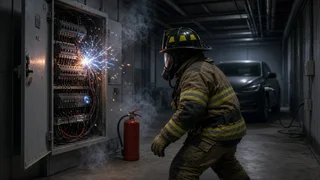
Sustained heat from an existing fire: in vehicles, this is the most common route. A fuel or interior fire can heat magnesium or other reactive alloy parts until they ignite. Friction and grinding: grinding, sanding or machining metal produces hot sparks and fine particles that can ignite or settle as combustible dust. Welding, cutting and torch work: open flames and arcs during repair work can ignite metal parts, shavings or dust in the work area. Electrical arcing and short circuits: a sustained arc carries enough localized energy to ignite thin metal sections or fine particles. In vehicles, damaged high-current wiring is a possible arc source. Collision and impact: a crash can scrape, tear or shred metal components and create sparks and fragments while also starting a fuel fire that supplies heat. Contact with water or moisture: alkali metals such as sodium and potassium, and lithium metal, react with water. That reaction releases heat and flammable hydrogen gas and can lead to ignition. Chemical reactions and contamination: some metal powders react with oxidizers, acids or other chemicals and can self-heat to ignition.
The first category, an ignition source that heats a part already exposed to fire, is the one most relevant to vehicle fire response. A car rarely starts as a metal fire. More often, a fuel leak, electrical fault or interior fire burns long enough to involve metal components.
Where Combustible Metals Appear in Vehicles
Manufacturers use lightweight metals to reduce mass, so whether a given vehicle contains significant combustible metal depends on the model, generation and trim. Alloy wheels marketed as "mag wheels" are often aluminum rather than true magnesium. A part's appearance does not reliably tell you what it is made of.
Magnesium alloys: some vehicles have used magnesium for components such as steering-wheel frames, seat frames, instrument panel supports, transmission or engine housings, and certain wheels. Use varies widely by manufacturer and era. Titanium: found mainly in performance, motorsport and aftermarket parts such as exhaust systems, fasteners and valvetrain components. Lithium metal: present in some small primary (non-rechargeable) cells used in electronics and accessories. This is different from the lithium-ion chemistry used in electric-vehicle traction batteries. Aluminum: widely used in engines, bodies and wheels. Solid aluminum parts are generally not treated as a Class D hazard, although fine aluminum powder or dust can burn as a combustible metal.
Are Electric-Vehicle Battery Fires Class D?
This is a common point of confusion. EV and hybrid traction batteries use lithium-ion cells, which contain lithium compounds rather than significant amounts of metallic lithium. Lithium-ion battery fires are generally not handled as classic Class D fires. They involve thermal runaway, where damaged or overheated cells generate their own heat, release flammable gases and can reignite hours or even days later. Fire services typically manage them with large volumes of water for cooling and with specialized procedures. Responders, not bystanders, should handle any battery fire in an electric or hybrid vehicle.
Why Ordinary Extinguishers Are a Problem
A fire extinguisher rating tells you which fire classes the unit is listed for. The common multipurpose ABC dry chemical extinguisher found in many cars and garages is not designed for burning metals. Water can react violently with some burning metals, scattering molten material or releasing hydrogen. Carbon dioxide and some other agents may be ineffective or may react with the metal.
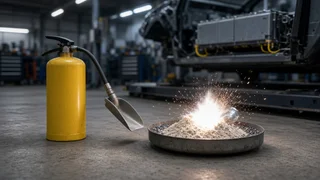
Class D extinguishers use dry powder agents, such as sodium chloride, graphite or copper-based compounds, applied gently to blanket the metal and cut it off from oxygen. Unlike Class A and B extinguishers, they generally don't carry a numerical size rating. Instead, they are labeled for the specific metals they are listed to control, and no single Class D agent suits every metal. These extinguishers are mostly found in machine shops, labs and industrial sites, not in passenger vehicles.
What a Driver Should Do if Metal Is Burning
Signs that metal may be involved include an unusually bright white flame, showers of sparks, flaring or popping when water reaches the fire, and a fire that keeps burning despite extinguishing efforts. In that situation, the priority shifts entirely to safe evacuation.
Stop in a safe place away from traffic, buildings and dry vegetation if the vehicle can still be moved. Turn off the ignition. This helps with electrical isolation and stops the fuel pump on many vehicles, but only do it if it takes a moment and is safe. Get everyone out and move well away, upwind if possible. Don't go back for belongings. Call 911 and tell the dispatcher that the vehicle is on fire. Mention whether it is electric or hybrid and whether you saw signs of burning metal, so emergency services can prepare. Don't open the hood, spray water on the fire or use a standard extinguisher on what appears to be burning metal. Stay clear after the flames die down. Metal and battery fires can reignite.
A small extinguisher can be useful against an early Class A, B or C fire before it spreads, and only if you have a clear escape path. Once burning metal is involved, the fire is beyond what a driver should try to fight. Fighting combustible metal fires takes specific agents, protective equipment and training that professional responders have.
Key Takeaway
Class D fires are fueled by combustible metals. They are associated with intense heat, friction, sparks from grinding or welding, electrical arcing and, for reactive metals, contact with water. In everyday driving, they usually happen only after another fire has heated magnesium, titanium or similar components. Understanding that sequence explains why the right response is to get clear, isolate electrical power if safe, and leave suppression to emergency services.