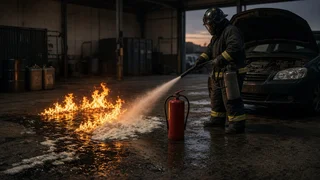
Which class of fire involves energized electrical equipment
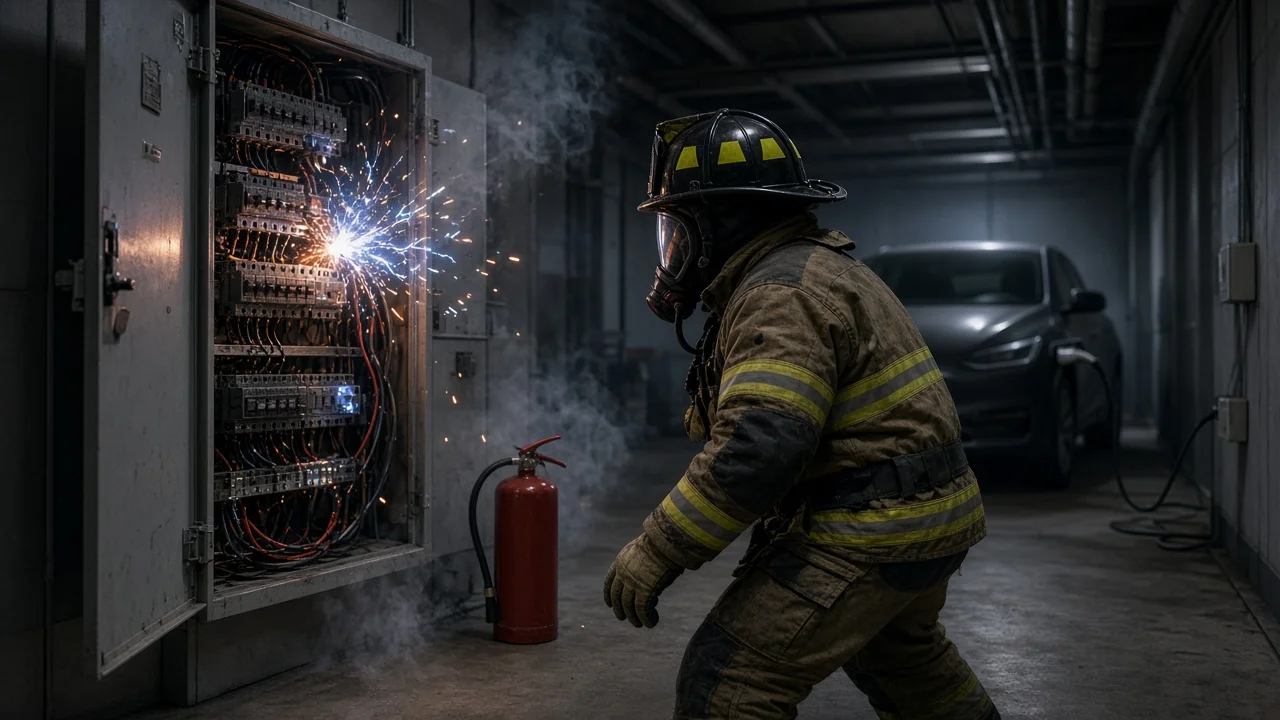
The short answer: Class C
Under the US fire classification system used for portable extinguishers, a fire involving energized electrical equipment is a Class C fire. "Energized" is the key qualifier. The equipment is still connected to a power source, so anyone fighting the fire faces a risk of electric shock in addition to the flames.
The classification describes the hazard rather than the material that is burning. Once the power source is reliably disconnected, the fire is treated by its fuel. Burning wire insulation, plastics and upholstery behave like a Class A fire, while burning fuel, oil or other flammable liquids behave like a Class B fire.
Why the letter depends on where you are
Fire class letters are not universal. The Class C meaning described here applies to the US system. In many European and other national systems, Class C refers to flammable gases instead. Electrical fires in those systems are either not given a class of their own or are assigned a different letter, such as E. Readers who use non-US terminology or extinguisher labels should check the local classification before relying on the letter alone.
How Class C fits with the other US fire classes
Class | What it involves; A | Ordinary combustibles such as wood, paper, cloth, rubber and many plastics; B | Flammable liquids and gases such as gasoline, diesel, oil and grease; C | Energized electrical equipment; D | Combustible metals; K | Cooking oils and fats in commercial kitchen appliances
A vehicle fire can involve several classes at the same time. An electrical fault can ignite insulation (Class A), which can then spread to leaking fuel or oil (Class B). The Class C label applies for as long as the electrical equipment remains energized.
What the C rating on an extinguisher means
An extinguisher with a C rating uses an agent that does not conduct electricity, so it can be used on energized equipment without creating a path for current back to the user. Common examples are carbon dioxide and certain dry chemical agents, often sold as BC or ABC units.
Unlike Class A and Class B ratings, a Class C rating carries no number. It confirms that the agent is non-conductive but says nothing about how much fire the unit can put out. The fire-fighting capacity of a multi-class extinguisher comes from its A and B ratings.
Water and water-based agents that are not rated for Class C should not be used on energized equipment, because they can conduct electricity.
Ignition sources associated with Class C fires
Class C fires start where electrical energy produces enough heat or arcing to ignite nearby material. In vehicles and in electrical equipment generally, typical sources include:
Short circuits, where damaged or chafed wiring lets current bypass its intended path; Overloaded circuits that carry more current than the wiring or fuse rating allows; Arcing from loose, corroded or poorly made connections, including battery terminals; Deteriorated or damaged wire insulation, from heat, age, vibration or rodent damage; Overheating components such as alternators, starter motors, blower motors and their wiring; Aftermarket accessories or modifications that are wired incorrectly or not fused properly; Damage to the battery or electrical system in a collision
No model-specific failure data or incident statistics were available for this article, so it does not rank these sources by frequency or link them to particular vehicles.
What this means at the roadside
Personal safety comes before saving the vehicle. General guidance for an electrical fire in a vehicle is:
Stop in a safe place, switch off the ignition and get everyone out and well away from the vehicle; Call emergency services; Use a portable extinguisher only on a small fire, only if it is rated for Class C, and only if you have a clear escape route; Disconnect power only if you can do so safely and without leaning into the fire; Do not use water or an extinguisher without a C rating while the electrical system may still be live
A caution for hybrid and electric vehicles
Hybrid and battery-electric vehicles carry high-voltage systems that are separate from the conventional low-voltage battery. Turning off the vehicle or disconnecting the 12-volt battery may not de-energize the high-voltage components.
A fire inside a high-voltage traction battery can also involve thermal runaway, a self-sustaining chemical reaction that a portable extinguisher is generally not designed to stop. Occupants should leave the vehicle, keep their distance and let emergency responders handle it. Responders typically follow manufacturer-specific emergency response information, which varies by make, model and model year. That model-specific detail was not part of the evidence for this article.
Limits of this overview
This article explains the general US classification and widely accepted principles. It does not cover specific extinguisher products, sizes, prices or vehicle-specific procedures, because no verified data on those was supplied. For a particular vehicle, the owner's manual and the manufacturer's emergency information are the authoritative sources. For extinguisher selection, check the rating printed on the unit's label.