Where Is the Brake Proportioning Valve Located?
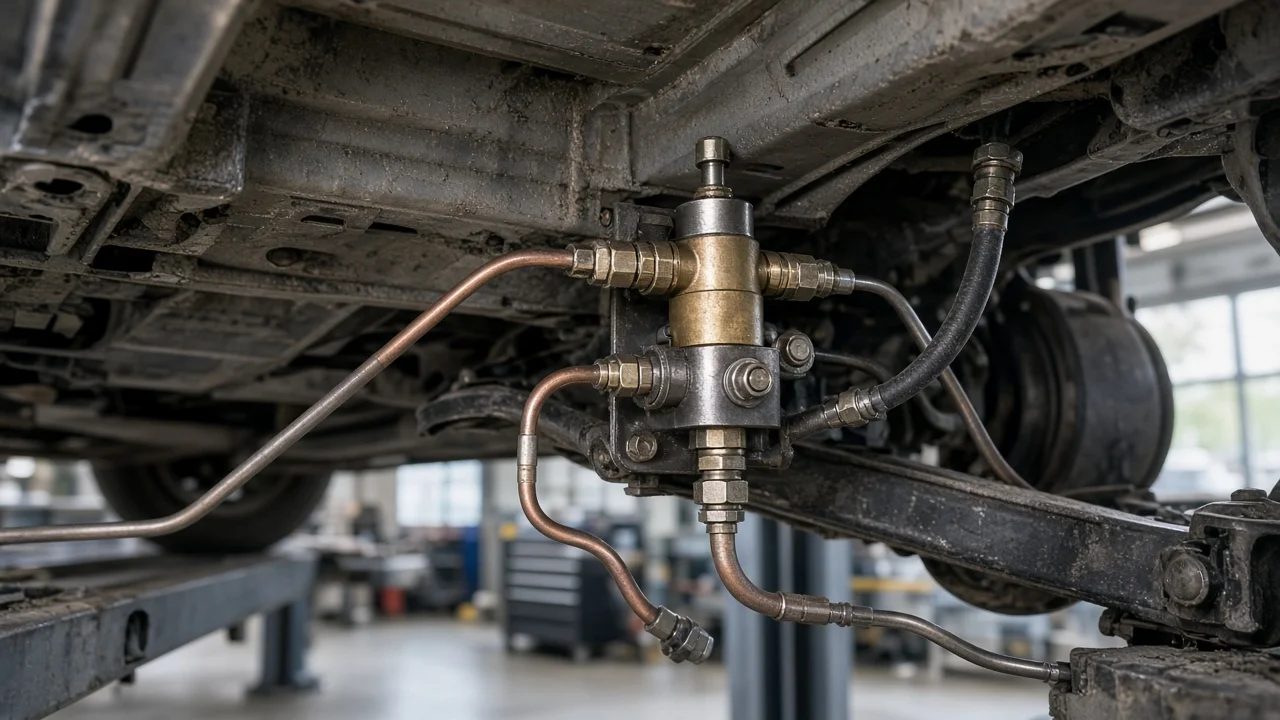
Finding the proportioning valve is simple once you know which hydraulic design your vehicle uses. Some valves sit in plain view near the master cylinder. Others are built into the master cylinder, hidden under the rear of the chassis, or missing entirely because the ABS unit does the same job electronically. This guide explains where each type is usually mounted, how it works, and what you can safely check before deciding whether the valve is involved in a braking complaint.
Where the Proportioning Valve Is Usually Found
On many rear-wheel-drive cars and trucks built before electronic brake distribution became common, the proportioning valve is part of a combination valve. This is a metal block mounted just below or beside the master cylinder, usually on the inner fender, the firewall, or the driver-side frame rail. Several steel brake lines run into and out of it, and many units have a single-wire electrical connector for the pressure differential switch that turns on the brake warning light. The same block may also contain a metering valve that delays front disc brake application slightly.
Many front-wheel-drive cars, especially those with diagonally split hydraulic circuits, use two separate proportioning valves threaded directly into the master cylinder outlet ports. They look like oversized fittings where the brake lines attach. Some designs place the valves inline along the lines instead. Pickups, vans and some SUVs often use a load-sensing, or height-sensing, valve mounted on the frame near the rear axle, connected to the axle or suspension by a lever and spring linkage.
If you cannot find any of these, the vehicle most likely relies on electronic brake force distribution built into the ABS system. In that case the function lives inside the ABS hydraulic control unit, a block with multiple brake lines, an electrical connector and often a pump motor, usually located in the engine bay. There is no separate valve to locate or adjust.
How a Proportioning Valve Works
When you brake, weight shifts toward the front of the vehicle. The front tires gain grip while the rear tires lose load, which makes the rear wheels easier to lock. A rear wheel that locks first can make the vehicle unstable. The proportioning valve passes full pressure to the rear brakes during light stops, then, above a set point, allows rear pressure to rise more slowly than front pressure. This keeps the rear brakes working without letting them overpower the available rear traction.
A load-sensing valve changes that set point according to ride height. When the bed or cargo area is loaded, the rear suspension compresses, the linkage moves, and the valve permits more rear pressure because the rear tires can now handle it. Electronic brake force distribution reaches the same goal by using wheel speed sensors and the ABS unit to modulate rear pressure in real time rather than relying on a fixed mechanical setting.
What Changes the Answer for Your Vehicle
Brake proportioning valve location depends mainly on hydraulic layout, model year and equipment. A front and rear split system tends to use a single valve or combination valve for the rear circuit, while a diagonal split usually needs two valves, one for each rear wheel. Vehicles that gained ABS with electronic distribution often dropped the mechanical valve, sometimes partway through a model run.
Vehicle fitment matters even within one model. Trim level, ABS option, drivetrain and payload rating can all change which parts are installed, so a parts listing or diagram should be matched to your exact vehicle. Modified vehicles are another exception: rear disc conversions, custom builds and some race setups use an aftermarket adjustable valve, typically installed in the rear brake line under the floor or within reach of the driver. Lift kits, lowering kits and heavy-duty springs can also change how a load-sensing valve behaves, because they alter the ride height it reads.
How to Find and Inspect It Yourself
With the engine off and the vehicle cool, locate the master cylinder, the component with the brake fluid reservoir, usually on the driver side of the firewall. Follow the steel lines leaving it with a flashlight. A block where lines branch, or one with a wire plugged into it, is likely the combination valve. If nothing appears there, check the master cylinder outlets for valve-style fittings. On trucks and vans, look under the rear near the axle for a small valve with an arm linked to the axle housing. Do not loosen any fittings during this inspection.
Look for wetness, crusty residue or seepage around fittings, which indicates a brake fluid leak. Check for heavy corrosion and a damaged or disconnected warning switch connector. On a load-sensing valve, inspect the linkage for bending, rust, seizure or a missing connection, since any of these can leave the rear brakes too weak or too strong.
Symptoms that may point to the valve include rear wheels locking during moderate stops, especially on wet pavement, or rear brakes that seem to do very little while the front brake pads wear unusually fast. These signs overlap with more common faults, including worn pads, glazed friction material, a sticking caliper, contaminated or damaged brake rotors and air in the fluid. Rule those out first and compare pad and rotor measurements with the wear limits in your service information before suspecting the valve.
Limitations and When to Get Professional Help
The locations above describe common patterns, not every design. A factory service manual or parts diagram for your exact vehicle will confirm where the valve is mounted and, for load-sensing types, give the adjustment procedure and specifications. Adjusting a load-sensing valve by guesswork can cause premature rear lockup or weak rear braking, so leave the setting alone unless you have the correct procedure.
Stop driving and arrange professional service if the pedal feels soft or sinks, fluid is leaking, the red brake warning light stays on, or the vehicle pulls or the rear slides under braking. Replacing a proportioning valve means opening the hydraulic system and bleeding it afterward, and vehicles with ABS may need a scan tool for proper bleeding. A qualified brake technician can diagnose the cause and confirm the system works correctly before the vehicle returns to the road.