When to Replace Car Tires and How to Choose Replacements
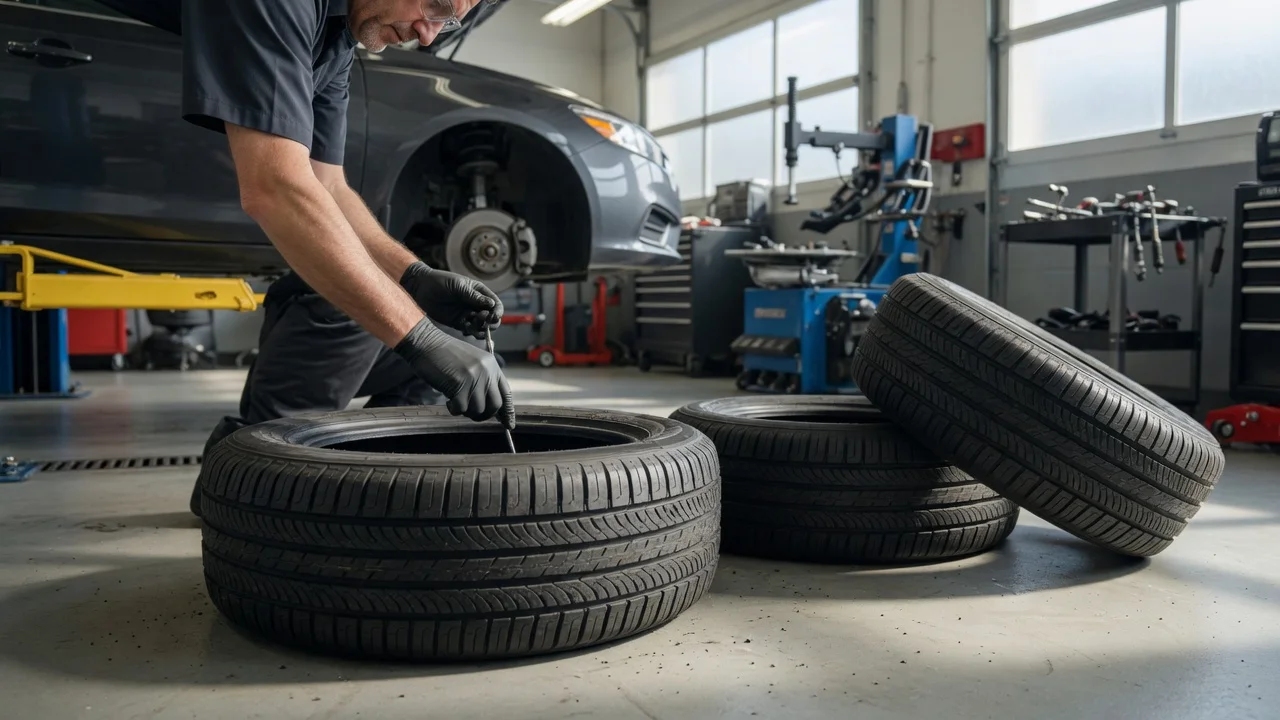
The essential answer
Replace a car tire when its tread is worn to the legal or manufacturer minimum, when the tire is too old, or when it shows damage that cannot be safely repaired. Tread wear is the most common trigger. In many jurisdictions, the legal minimum tread depth for passenger cars is 2/32 inch, measured in the United States, or 1.6 mm in markets using metric standards. A tire should also be replaced if its internal structure has been compromised, if it has bulges, deep cracks, exposed cords, or punctures outside the repairable area.
A replacement tire is any tire installed in place of a worn, aged, or damaged tire. It does not need to be an identical brand, but it must match the load capacity, speed rating, size, and intended use required for the vehicle and its other tires. Mismatched tires can reduce grip, alter handling, and strain drivetrain components, especially on all-wheel drive vehicles.
Recognize when a tire has worn out
Check tread depth with a tread depth gauge rather than relying on appearance alone. The penny test is a common visual guide: insert a penny into a tread groove with Lincoln's head facing down. If the top of Lincoln's head remains visible, the tread is near or below 2/32 inch and the tire should be replaced. Wear bars are molded into many tire tread grooves; when the tread surface becomes flush with these bars, the tire has reached its service limit.
Uneven wear can create replacement before the entire tread reaches the minimum. Cupping, feathering, or excessive wear on one shoulder may indicate alignment, inflation, or suspension problems. Replacing the tire resolves the worn-tire risk, but the underlying cause should also be corrected to prevent rapid wear of the new tire.
Age and damage replace tires even with tread remaining
Tires degrade with exposure to heat, sunlight, and ozone, not only with mileage. A tire with deep rubber cracking, hardened sidewalls, or visible deterioration should be replaced even if some tread remains. Tire age is shown in the DOT code on the sidewall. The final four digits indicate the week and year of manufacture; for example, 3223 means the thirty-second week of 2023.
A bulge or bubble in the sidewall means the internal casing has failed and the tire must be replaced immediately; it cannot be repaired. Cuts, cracks, or punctures that reach the cords also require replacement. A puncture in the tread may sometimes be repaired by a qualified service if it is small and located away from the shoulder, but sidewall punctures and large or multiple punctures generally require replacement. When damage is present, stop driving or limit speed to reach service safely.
Match the replacement tire to the vehicle
Use the tire size printed on the sidewall of the existing tires or listed on the vehicle's tire information placard, usually located in the driver's door jamb, glovebox, or fuel filler area. The full size code combines width, aspect ratio, construction type, and wheel diameter, such as 225/55R17. A replacement must also meet or exceed the vehicle manufacturer's specified load index and speed rating. Lower values are not acceptable.
For all-wheel drive vehicles, matching is more restrictive. Significant differences in circumference between tires can overwork the drivetrain. The vehicle manufacturer may require all four tires to be replaced together or require a replacement tire to stay within a narrow tread-depth difference from the others.
Choosing among replacement tire types
The main choice is usually between all-season, winter, performance, all-terrain, or touring tires. The best fit depends on the vehicle type and the conditions the driver normally encounters.
All-season tires: balanced dry, wet, and light winter performance; a common default for passenger cars and light SUVs. Winter tires: superior traction on snow and ice at low temperatures; typically used as a seasonal set in colder climates. Performance tires: sharper dry and wet grip and higher speed capability; often trade away ride comfort and tread life. All-terrain tires: stronger traction on gravel, dirt, and moderate off-road surfaces for trucks and SUVs; may be noisier on pavement. Touring tires: emphasis on quiet ride, comfort, and long wear for highway use.
Trade-offs are specific to each tire model. A winter tire will generally not suit year-round use in a hot climate, while a high-performance summer tire may lose compliance and grip in cold weather. If the driver does not compare replacement models directly, the safe default is a tire in the same category as the original equipment and matching the size, load, and speed specifications from the vehicle placard or owner's manual.
Steps for a correct replacement
Confirm the vehicle's required size, load index, and speed rating from the placard or owner's manual before choosing a tire. Inspect all four tires and note the spare, because replacing only the most worn tire can leave another tire near its limit.
Write down or photograph the required size and service description. Confirm whether the vehicle requires matching of all four tires, especially for all-wheel drive. Select a replacement tire that meets or exceeds the required size, load index, speed rating, and intended use. Have the new tire mounted and balanced by qualified tire service equipment. Set the correct inflation pressure after installation. Recheck the replacement after a short period for pressure loss, vibration, or loose wheel hardware.
Tire mounting, balancing, and repair involve pressurized assemblies and require proper equipment and training. A blowout, bead failure, or compressed inflation error can cause serious injury. Work that requires removing a tire from its wheel or repairing a puncture should be left to qualified service unless the operator has appropriate tire equipment and training.
After replacement, pressure should be checked when the tires are cold and set to the vehicle manufacturer's specified value. The completion check is simple: the replacement size, load, and speed markings match the vehicle requirement, the tread depth is new and uniform, and there is no vibration or pressure warning during normal driving.
Limits of this guide
Vehicle-specific load indexes, speed ratings, allowable tread-depth differences, and all-wheel drive replacement rules vary by model year, market, and equipment. This guide gives general passenger-car and light-truck practice, not a replacement for the exact values in the owner's manual or tire placard. Where a manufacturer or local regulation imposes a stricter requirement, that stricter requirement applies. Inspection of uncertain damage or obscure tire markings should be performed by a qualified tire service.