When Should a Timing Chain Be Replaced? Lifespan and Service Intervals
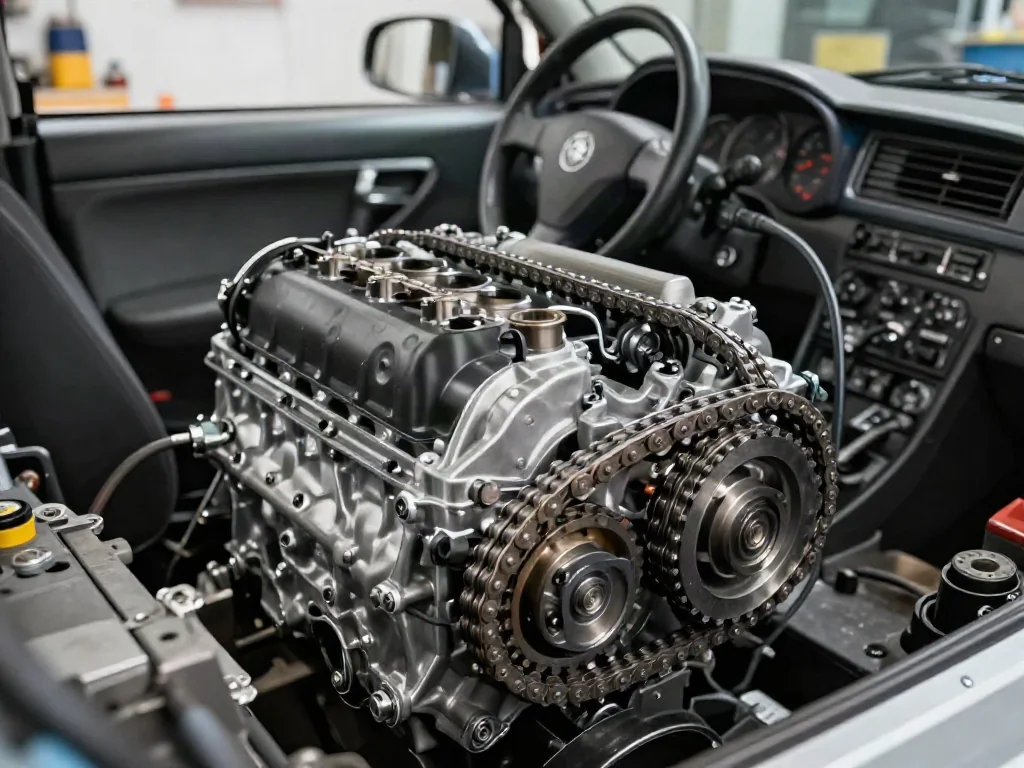
A timing chain is not always treated as a scheduled wear item, so the question of whether a timing chain needs to be replaced depends on condition, lubrication, and the engine's service information. Chains can last a long time when oil maintenance is consistent, yet chain wear, a failing tensioner, or damaged guides can still force replacement. Knowing when to change the timing chain starts with the maintenance schedule, oil history, and symptoms rather than a single mileage number.
Do Timing Chains Need Replacement During an Engine’s Life?
Does a timing chain need to be replaced during an engine's life? It can, but replacement is not automatically scheduled for every design. The chain keeps crankshaft and camshaft timing in step so valves open and close in the correct relationship to piston travel. It runs with sprockets, timing chain guides, and a timing chain tensioner that take up slack. When those parts remain in specification, many engines are intended to keep the original chain for the engine's service life, which is why owners often ask whether the timing chain needs to be replaced at all.
A chain intended to last the engine's service life is still a mechanical assembly subject to wear and component failure. Stretch, worn sprocket teeth, a weak tensioner, or broken guides can alter camshaft timing even without a routine chain interval. That distinction matters: routine maintenance is the oil specification, oil level checks, and the published service schedule, while chain replacement is condition-based. How often a timing chain needs to be replaced is therefore not a calendar ritual for every vehicle; it is a response to confirmed wear or damage that affects operation.
Check the Engine’s Maintenance Schedule Before Choosing an Interval
When to change the timing chain should begin with the maintenance information for the exact model year and engine, not a generic rule. Some manufacturers publish an inspection or replacement interval; many treat the chain as a life-of-engine part unless a bulletin or service campaign says otherwise. There is no universal timing chain replacement mileage or calendar interval that applies across engines. Timing chain lifespan depends on design, lubrication quality, operating conditions, and maintenance history, so a neighbor's interval is not evidence for your engine.
High mileage warrants attention, but it does not by itself establish that the timing chain should be replaced. Documented oil changes and the correct oil specification can leave a chain serviceable at a figure another engine would not survive, while neglected lubrication can shorten life much earlier. When does a timing chain need to be replaced on a high-mileage engine? After the schedule is checked and the chain system is assessed, not because an odometer crossed an unsupported round number. Typical-mileage talk is only a starting expectation, not a due date.
How Oil Maintenance Affects Timing Chain Life
Engine oil lubricates the chain, sprockets, and guides, and it also supplies many oil-operated timing chain tensioners. Low engine oil level, degraded oil, or lubrication problems that starve the tensioner can allow slack and accelerated chain wear. A timing chain oil change is not a special extra service; it is ordinary oil service done with the vehicle's specified oil requirements and the applicable oil-change schedule. Using the wrong viscosity or skipping changes does not prove a chain is failing, but it is one of the few owner-controlled factors that strongly influence timing chain lifespan.
Fresh oil cannot reverse existing mechanical wear. If guides are scored, the chain has elongated, or the tensioner no longer holds camshaft timing, an oil change will not restore those parts. A quiet interval after service also does not prove a noisy chain system is healthy; noise can return as oil thins. Follow the published oil specification and change schedule, keep engine oil level in the range shown in the owner's manual, and treat lubrication as preservation rather than a cure.
Symptoms That Warrant a Timing Chain Inspection
Unusual startup rattling or a persistent mechanical noise from the front of the engine is a reason to have the timing system assessed, not a diagnosis by itself. Many parts can rattle: a timing chain tensioner, worn guides, a chain with slack, or unrelated accessories. Noise alone cannot identify the faulty component. When to change the timing chain after a rattle is a question for inspection, because replacing the chain without confirming wear can miss the actual source. Note when the sound occurs, whether it fades after oil pressure builds, and whether it changes with temperature.
Rough running, hard starting, loss of power, and warning lights can appear when camshaft timing has drifted, yet ignition, fuel, and sensor faults can cause the same complaints. Record when symptoms occur and, with the vehicle safely parked, check engine oil level only as the owner's manual describes. An oil-pressure warning, severe mechanical noise, or a sudden major running problem is a reason to stop safely and arrange assistance rather than keep cranking. Repeated starting attempts can add damage if the chain has jumped.
What Evidence Supports Replacing the Chain?
Replacement should follow vehicle-specific inspection findings, not a guess from mileage. Confirmed chain wear, damaged timing chain guides, a tensioning fault, or camshaft timing outside specification for that engine are the evidence that supports work. A technician assesses mechanical timing, lubrication, and related components using procedures for the exact vehicle. That evaluation interprets measured slack, guide condition, and timing correlation without treating every noise as a failed chain, and it should not be improvised as a driveway repair.
A stored trouble code is evidence to interpret, not proof a part has failed. Manufacturer-dependent codes that mention camshaft correlation must be confirmed for the exact vehicle and engine, because sensors, oil control valves, and wiring can set the same codes. When inspection findings and manufacturer procedures support it, the repair scope may include the tensioner, guides, sprockets, or related seals rather than the chain alone. That combination is not universal; it depends on what is worn and what service information requires for that engine.
Deciding What to Do With an Unknown Service History
When maintenance history is missing, start by gathering whatever oil-service records exist, any prior timing-system repair documentation, and the exact engine identification. Those details show whether oil specification was followed and whether a chain, tensioner, or guides were already replaced. Missing records create uncertainty about timing chain lifespan, but they do not independently establish that the timing chain should be changed. An unknown oil history is a reason to inspect when symptoms or manufacturer guidance justify it, not a standing order to replace the chain.
Ask practical questions before authorizing work. What evidence supports replacement, and was it measured on this engine? Were lubrication problems evaluated, including engine oil level and whether an oil-operated tensioner could have been starved? Which findings determine the proposed repair, and will related parts be replaced only because inspection and manufacturer procedures require them? A professional assessment is appropriate when symptoms, documented concerns, or service information justify it, not because a blank service file sounds urgent on its own.