Timing Chain Tensioner: Function, Failure Symptoms and Replacement Cost
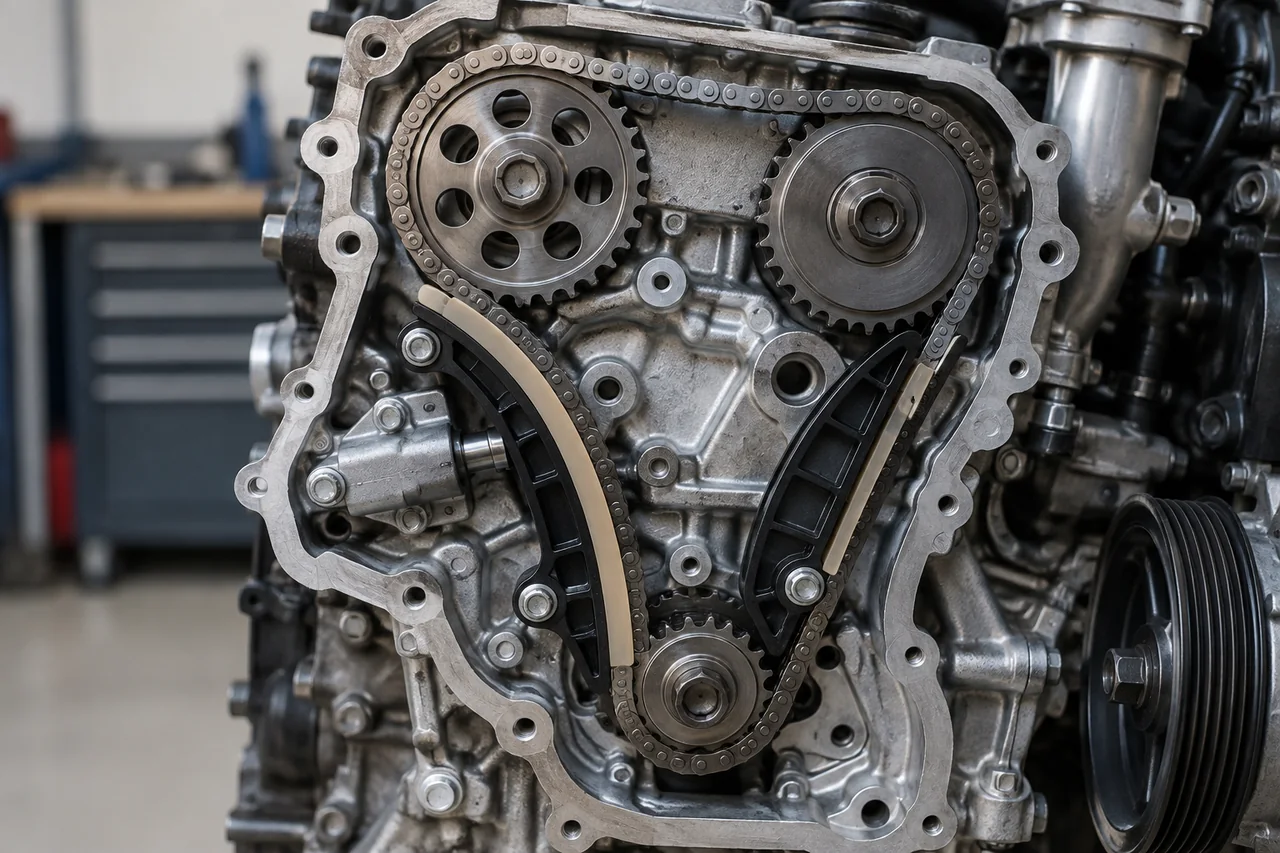
A tensioner for timing chain systems keeps the chain linking the crankshaft and camshafts taut, so valve timing stays steady and the assembly runs quietly. When a timing chain tensioner weakens, the first clue is often a startup rattle, but that sound can come from several parts. This guide covers how tensioners work, the signs of a bad timing chain tensioner, how technicians confirm the cause, and what drives replacement cost.
How the Tensioner Controls Timing Chain Slack
The timing chain wraps around the crankshaft sprocket and one or more camshaft sprockets, and on the slack side of that loop the chain wants to whip and flap. The tensioner pushes against it, usually through a pivoting guide with a wear-resistant face rather than directly on the links, taking up chain slack as the engine accelerates, decelerates, and heats. Keeping the chain snug holds camshaft timing stable relative to the crankshaft, so valves open and close when the engine expects, and it limits the slapping movement that becomes noise.
Many engines use a hydraulic tensioner, in which oil pressure pushes a plunger outward while an internal spring and check valve help hold position; some designs add a ratchet or retaining mechanism so the plunger cannot collapse when pressure drops at shutdown. A mechanical tensioner relies mainly on spring force. Either way, the tensioner has limited travel. It cannot restore stretched chain links or rebuild a grooved guide, and the number and placement of timing chain tensioners depends entirely on the engine's design.
Rattling and Other Possible Tensioner Symptoms
The most familiar timing chain tensioner noise is a metallic rattle or chatter from the area behind the timing cover. It often appears for a second or two at a cold start, before oil pressure builds and a hydraulic tensioner fully extends, but it may also show up at idle or persist while driving. A timing chain tensioner sound that lasts longer, grows louder over weeks, or returns on warm restarts suggests the chain may not be held as firmly as it should be.
Duration and operating conditions are clues, not a verdict. When chain slack becomes severe, the chain can jump a tooth or let cam and crank signals drift apart, which may cause rough running, hard starting, reduced power, or a check engine light. Those symptoms overlap with ignition, fuel, and sensor faults, though. Likewise, a phone recording or the spot where the noise seems to originate cannot reliably separate a failing tensioner from a worn chain, broken guide, or unrelated valvetrain or accessory-drive component.
Safe Observations and Signs to Stop Driving
If you notice a rattle, write down when it happens, whether at cold start only, warm idle, under load, or constantly, along with roughly how many seconds it lasts and whether any warning light or change in engine behavior accompanies it. With the engine off and the vehicle parked safely, check the oil level as the owner's manual describes. A low level is worth reporting, but a correct dipstick reading does not prove the engine is producing adequate oil pressure for the tensioner and bearings.
Some signs mean you should stop driving. If the oil-pressure warning lights up, the rattle turns loud and persistent, or the engine suddenly runs rough while making mechanical noise, pull over where it is safe, shut the engine off, and arrange professional help or a tow. Avoid restarting repeatedly or revving the engine to reproduce the sound, keep hands away from belts and fans, and skip additives marketed to quiet engine noise, since masking the symptom lets damage progress unnoticed.
How a Technician Confirms the Cause
A technician starts with the exact engine, its service history, oil change habits, and the oil's current condition, because sludge, incorrect viscosity, or overdue changes can starve a hydraulic tensioner. They will also try to reproduce the noise under the conditions you recorded. Checks may include localizing the sound with a mechanic's stethoscope, reviewing stored codes and cam-to-crank correlation data with a scan tool, measuring actual oil pressure with a gauge, and inspecting whatever timing components the design makes accessible.
Any fault code must be looked up for that specific vehicle, because definitions and test procedures vary by manufacturer, and a timing correlation code is evidence to interpret rather than proof that a part failed. Chain stretch, worn guides, low oil pressure, a faulty variable valve timing component, or a sensor problem can all produce overlapping readings. For that reason, neither a code nor a rattle alone justifies a timing chain tensioner replacement without supporting inspection results and measurements.
When Replacement Includes the Chain and Guides
Replacing a timing chain tensioner by itself can be reasonable when the manufacturer's procedure allows it and inspection shows the chain, guides, and sprockets remain serviceable. On some engines the tensioner is reachable without removing the timing cover, which makes that approach more practical. Other findings push the job toward a complete timing chain kit, including measurable chain stretch, cracked or grooved guides, plastic fragments in the oil pan, or evidence that camshaft timing has already shifted.
Root cause matters as much as parts. If low oil pressure, a restricted passage, or neglected oil changes starved the tensioner, replacing it alone may leave the underlying problem in place, so the oil-supply fault may need correcting as part of the repair. Timing chain and tensioner work also requires keeping the crankshaft and camshafts precisely aligned and setting the new tensioner correctly, often with special tools. Mistakes can cause poor running or engine damage, so this job belongs with a qualified technician.
Parts, Labor, and the Replacement Estimate
As a rough budgeting guide only, not a quote or universal price, the timing chain tensioner price for the part alone often lands somewhere around $20 to $200, depending on the engine and brand. Labor is the bigger variable. When the tensioner is externally accessible, replacing timing chain tensioner hardware might cost a few hundred dollars, but engines requiring timing cover removal can push the total well past $1,000. Engine layout, access, shop labor rates, and diagnostic labor all shape the final figure.
Scope also drives the final bill for any timing chain tensioner repair. Opening the timing cover usually calls for new gaskets or seals plus fresh oil and, on some engines, coolant, while a full kit adds the chain, guides, and sometimes sprockets. Request an itemized estimate that names the confirmed fault, lists each included component, separates labor from diagnostic charges, shows taxes, and states the repair warranty. If inspection reveals internal engine damage such as bent valves, treat that as a separate scope with its own estimate.