How Long Does a Timing Chain Last and When Should You Replace It?
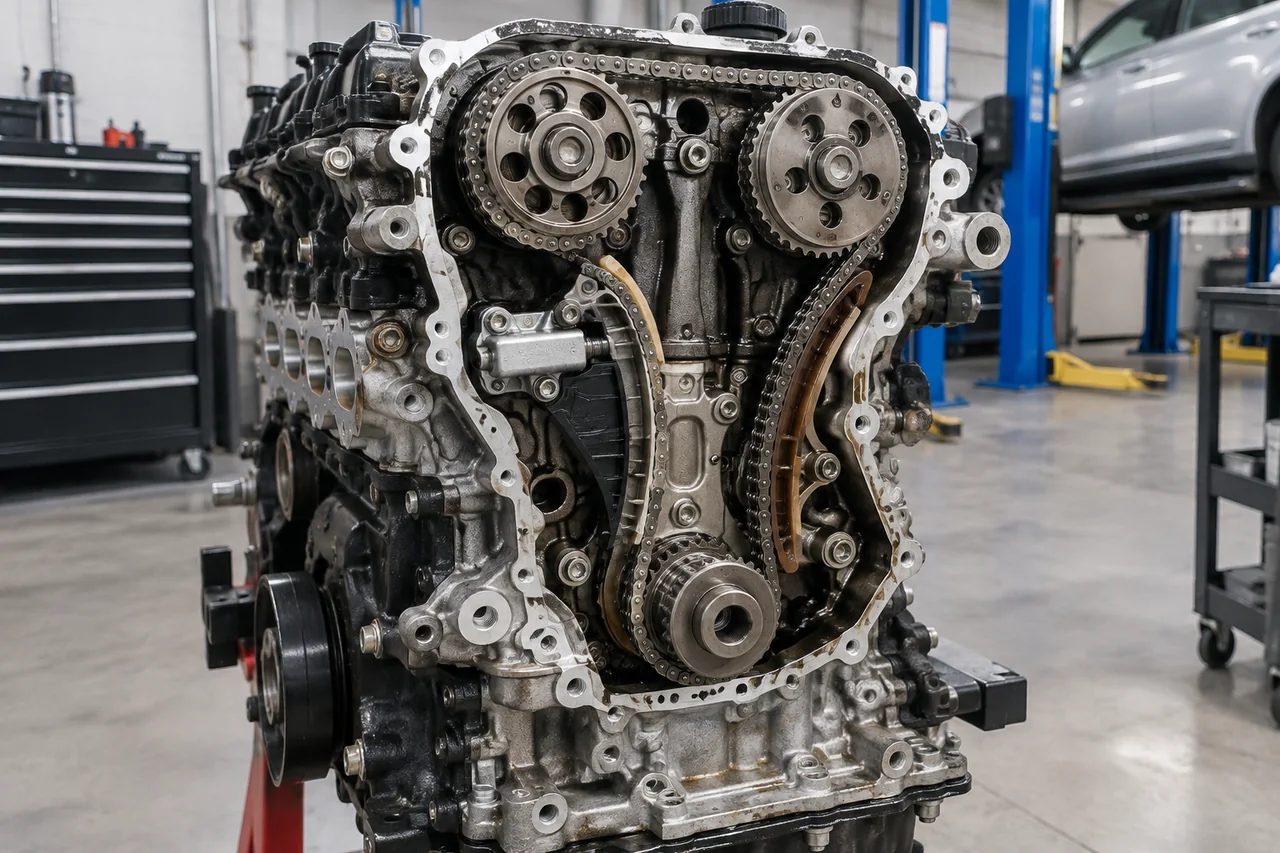
Timing chains have a reputation for lasting as long as the engine, and many do. Lasting a long time is not the same as lasting forever, though. It helps to know how long a chain may last, where to find any scheduled interval, and which symptoms need a professional check. That way you can avoid unnecessary repairs and also avoid the expensive results of ignoring a real timing-system fault.
How Long a Timing Chain Can Last
A rubber timing belt normally has a replacement interval. A metal timing chain is usually designed to run for a long time without routine attention. Even so, there is no single mileage or age at which every chain wears out. Some engines reach very high mileage on the original chain, guides, and tensioner, while others develop timing-system problems much earlier. Think of a lifetime chain as what the designers intended, not as a promise. How long it actually lasts depends on how that particular engine was built and cared for.
The odometer tells you how far the engine has traveled, not how much the chain has stretched or how worn the guides are. Two engines with the same mileage can be in very different shape if one got regular changes with the correct oil and the other ran long intervals or low oil levels. Engine design matters too, because chain routing, tensioner type, and guide materials vary. So a sensible replacement decision looks at design, lubrication, maintenance history, and symptoms together instead of relying on one number.
Where to Check for a Scheduled Replacement Interval
Start with the maintenance schedule in the owner's manual or the manufacturer's service information for your exact model year and engine. Vehicles with the same name can use different engines with different requirements, so match the engine, not just the model. Many timing chains have no scheduled replacement interval at all, but check that for your vehicle rather than assuming it. A dealer service department can also look up the requirements using your vehicle identification number, which avoids confusion between similar engine versions.
If no interval is listed, the manufacturer simply doesn't require replacement at a set time or mileage. The chain can still wear or stretch, and a failing guide or tensioner can still cause trouble, so replacement based on condition may still become necessary. If you bought a used vehicle without records, the unknown oil-change history is a good reason to have the engine checked and to start a careful maintenance routine from then on. Missing paperwork alone, however, is not evidence that the chain or its related parts need replacing.
What Affects Chain, Guide, and Tensioner Life
Engine oil is the timing chain's main protection. The chain, sprockets, and guides need a steady supply of clean oil. Using the oil specification listed for your engine, keeping the level within the marked range, and following the manufacturer's service requirements all help the chain system last. Many engines use a hydraulic tensioner that relies on engine oil pressure to keep the chain tight. If pressure is low at startup or while driving, or the oil has broken down, that kind of tensioner may not hold the chain properly, which can allow slack and noise.
The chain doesn't work alone. Plastic or composite guides steer it along its path, and a tensioner takes up slack as parts wear. A cracked guide or weak tensioner can cause rattling or timing variation even when the chain itself isn't the main problem, so diagnosis should cover the whole system. It also helps to be realistic about oil changes. Fresh oil supports healthy operation, but it can't undo wear on links, pins, or guide surfaces, and it won't necessarily make an existing noise go away.
Symptoms That Call for Timing System Diagnosis
A rattle lasting a second or two on a cold start, or an ongoing metallic slapping or ticking from the front of the engine, is a good reason to book an inspection. Sound alone doesn't prove the chain is worn, though. Valve-train parts, accessory drives, exhaust heat shields, and other components can make similar noises. Likewise, rough running, hard starting, reduced power, or a check-engine light can come from ignition, fuel, sensor, or air-intake problems. These symptoms call for diagnosis, not a particular repair.
Timing correlation codes mean the engine computer sees a mismatch between camshaft and crankshaft position. They are a reason to test the timing system, but they don't prove the chain has stretched. Sensor, wiring, variable valve timing, or oil-related faults can set similar codes, and code meanings can vary by manufacturer. Before the appointment, note when symptoms happen, such as on cold starts, at idle, or under acceleration, and write down any warning lights or stored codes. Don't keep starting or revving the engine to reproduce the sound, because that can add wear if something is wrong.
What Confirms That Replacement Is Due
Replacement is justified when the manufacturer's guidance for your engine calls for it or when a technician confirms a timing-system fault. A proper assessment usually includes reading fault codes and live data, checking oil level, condition, and pressure where appropriate, and checking how camshaft timing lines up with crankshaft timing using procedures for that engine. Depending on the design, the technician may also inspect the chain, guides, and tensioner directly or look for signs of chain stretch. The goal is to trace symptoms to a confirmed cause instead of replacing parts on suspicion.
A useful repair recommendation explains what evidence was found and which parts are affected. That might be the chain, guides, tensioner, sprockets, or related parts such as variable timing hardware. If a shop can't describe its findings clearly, ask for more detail before you approve the job. The reverse also applies. A chain that looks fine, an engine that runs quietly, or one clean scan can't guarantee any particular amount of remaining life. Those results show current condition, not future life, so keep up maintenance and watch for new symptoms.
When to Stop Driving and How to Plan the Repair
Some situations call for stopping right away. If an oil-pressure warning appears, a severe mechanical rattle or clatter develops, or the engine suddenly runs very poorly, pull over when it's safe, shut off the engine, and arrange professional help or a tow. If you suspect timing failure, don't try to restart the engine until it has been checked. Each extra start or short drive can make the damage worse if the chain has jumped teeth, a guide has broken, or the tensioner is no longer controlling the chain.
Losing valve timing can be serious. In many engines, pistons and valves move through some of the same space at different moments. If timing slips far enough, they may hit each other and bend valves or damage other parts. Whether that happens depends on the engine design and how the failure occurred. When planning the repair, ask for a written diagnosis and a repair plan specific to your engine. It should list the confirmed faults, the parts to be replaced, and any checks for resulting damage, such as compression or leak-down testing.