Wheel Horse 3-Speed Transmission Oil: Selection, Capacity and Service Guide
Direct answer
The essential answer is that most Wheel Horse 3-speed transaxles are designed to run on a heavy-grade gear oil rather than common engine oil. The commonly accepted specification in owner and service literature for these gear-drive units is SAE 90 or SAE 80W-90 gear oil, with some later or rebuilt units tolerating SAE 85W-140 in hot or high-load use. This guide covers the gear-drive Wheel Horse 3-speed transaxle; it does not apply to hydrostatic drive models, which use a different fluid altogether.
Why the fluid choice matters
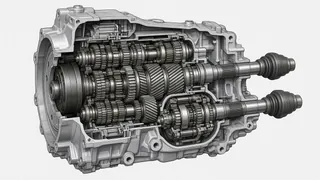
A 3-speed transaxle relies on splash lubrication from the rotating gears and shafts to carry oil to bushings, bearings and shift collars. A fluid that is too thin may not maintain a sufficient film under load, while a fluid that is far too thick can make cold-weather shifting stiff and increase drag. The recommended gear-oil viscosity is chosen to balance film strength, flow at low temperatures and compatibility with the yellow-metal bushings used in many older Wheel Horse transaxles.
Identifying the correct transaxle
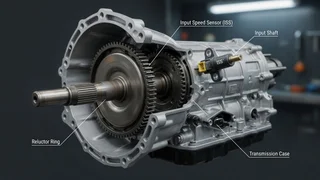
Before buying oil, confirm that the tractor has a gear-drive 3-speed transaxle rather than a hydrostatic unit. Gear-drive Wheel Horse tractors with a 3-speed typically have a shift lever moving through a visible H-pattern or inline gate. Hydrostatic models use a forward/reverse pedal or lever and a separate hydraulic fluid requirement. If the transaxle tag or model number is legible, use it to confirm the exact unit before service.
Recommended oil specifications
SAE 90 gear oil: the baseline recommendation for most gear-drive 3-speed Wheel Horse transaxles in moderate temperatures; SAE 80W-90 gear oil: a common multi-grade alternative that improves cold-flow during startup while retaining warm operating viscosity; SAE 85W-140 gear oil: occasionally cited for hot climates, sustained heavy pulling or older transaxles with measurable wear; it may make shifting slower in cold weather; API GL-4 gear oil: generally preferred over GL-5 in older gearboxes because GL-4 formulations are less likely to attack yellow-metal components; GL-5 caution: many modern GL-5 gear oils are buffered for yellow metals, but unless the label explicitly states compatibility, GL-4 remains the safer default for vintage Wheel Horse units
Capacity expectations
Documented capacities for Wheel Horse 3-speed transaxles vary by model and transaxle design, but many common units fall in the range of roughly 2 to 4 quarts. Do not rely on a universal capacity figure. The fill point is normally a pipe plug on the side of the case, and the correct level is reached when oil just begins to run from the hole with the tractor on level ground. Because exact factory figures are not consistently published across all model years, filling to the level plug is the more reliable service method.
Service steps for a drain and refill
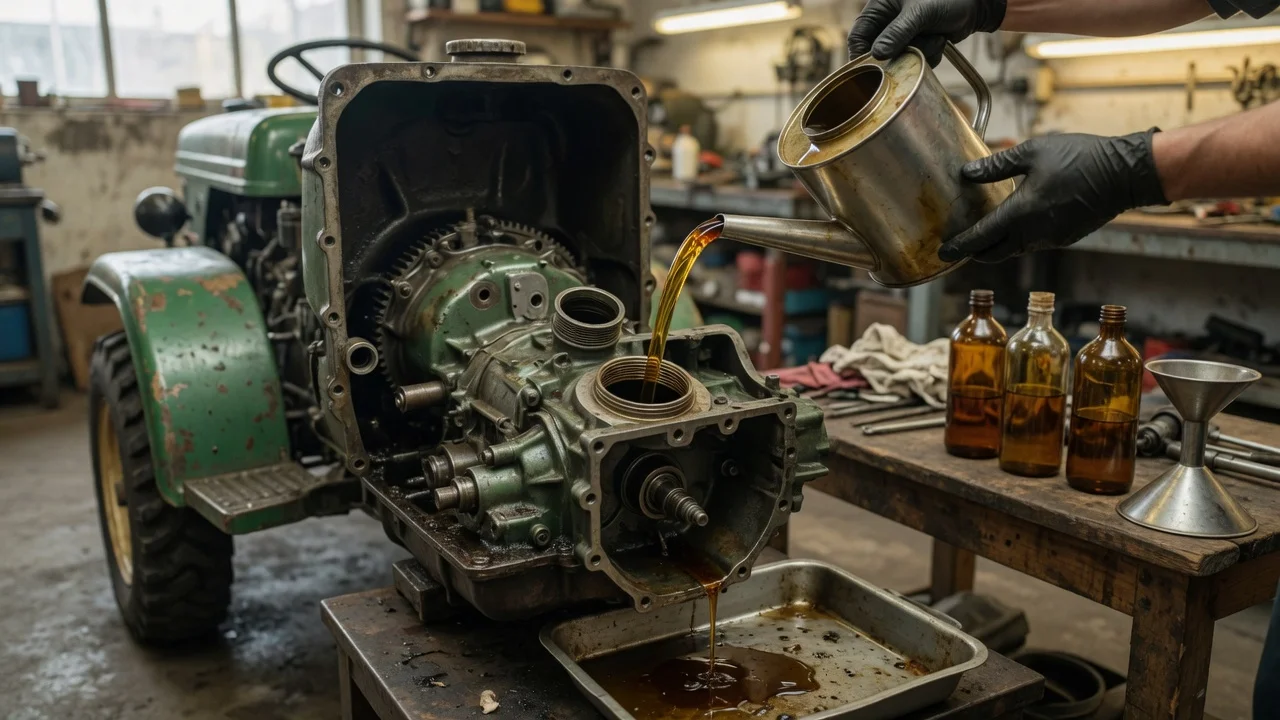
Run the transaxle briefly to warm the oil and suspend contaminants, then shut the engine off and set the parking brake; Place a drain pan under the transaxle and remove the drain plug if equipped; some units require removing the bottom cover or loosening the case to drain fully; Clean the drain plug and inspect the drained oil for water, excessive metal particles or a milky appearance; Reinstall the drain plug and remove the side fill/level plug; Add gear oil slowly until it begins to seep from the fill/level hole; Stop filling, let the level settle, then reinstall the fill plug and wipe the case clean; Operate the tractor briefly and recheck the level after shutdown
Signs that the oil needs attention
Hard shifting, noisy operation that changes with oil temperature, leaks at axle seals, or oil that appears tan or milky after water ingress are all reasons to inspect and change the transaxle oil. Gear oil can darken with use, so color alone is not a definitive failure indicator, but a burnt odor, gritty texture or visible metallic sheen calls for closer inspection.
Qualification by model and year
Wheel Horse produced 3-speed tractors across many series and years, and the exact transaxle supplier, fill volume and plug location changed over time. The guidance here applies to the common gear-drive 3-speed units, but a specific model or serial-number lookup should override these general notes where a conflict exists. If the original operator’s manual is available, follow its published specification.
Material uncertainty
No single factory fluid specification applies to every Wheel Horse 3-speed transaxle ever built, and published capacity data is incomplete across all model years in open documentation. The safe course is to use a GL-4 gear oil in the 80W-90 to 90 range, fill to the level plug on level ground, and consult the exact model documentation when available.