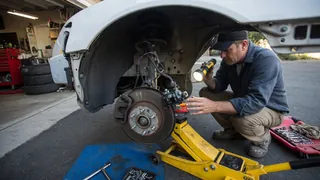
Car wheel speed sensor
A car wheel speed sensor is a compact electronic pickup that reports how quickly each individual road wheel is rotating. This data becomes a critical control input for anti-lock braking, traction control, and stability systems. The sensor position at the hub or axle places it close to a toothed tone ring, letting it generate a signal path from mechanical rotation to the control module. Understanding this component helps a driver interpret warning lights, uneven brake behavior, or diagnostic fault codes before replacing parts blindly.
Essential answer
At its core, the wheel speed sensor in a car converts the rotational motion of a tone ring or magnetic encoder into an electrical signal. The module reads that signal many times per second and compares the sensor position and pulse rate across all four wheels. This operating range lets the system detect when one wheel is slowing too quickly or spinning faster than the others, which is the essential foundation for anti-lock brake intervention.
The same sensor information also feeds stability and traction systems, where wheel-speed differences help the controller decide whether to reduce torque or pulse a brake. Because the signal path relies on a precise air gap and clean magnetic field, corrosion, damaged tone-ring teeth, or a disturbed harness can distort the output. That distortion can set a diagnostic fault code, so the fault points toward an electrical or mechanical issue but does not by itself prove the sensor has failed. Confirming the circuit and mounting condition before replacement avoids guessing.