What to Do When You Find a New Fluid Spot Under Your Car
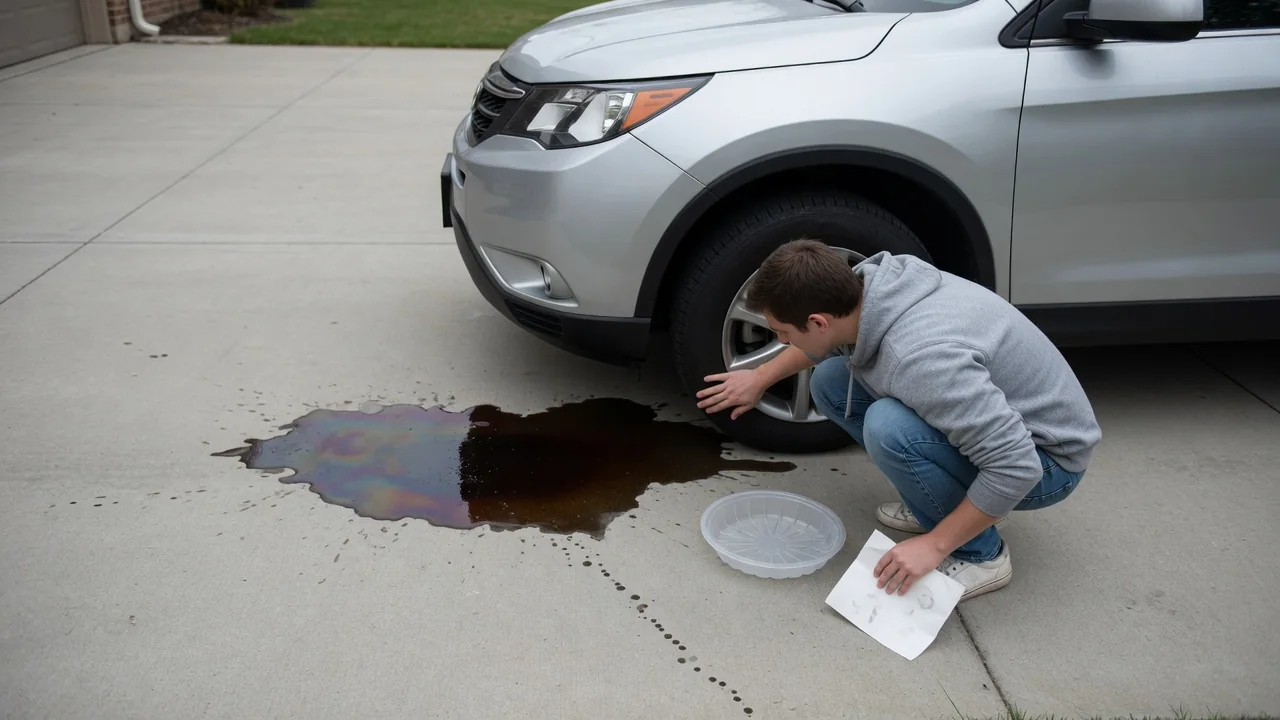
A fresh stain on the driveway raises an immediate question, and the honest answer is that a puddle alone rarely tells the whole story. Knowing what to do when you find a new fluid spot under your car means working through a calm sequence: note where it sits, judge how much there is, check levels and warning lights, and let a technician confirm the source.
Location and amount
Start by noting where the spot sits relative to the vehicle before moving it. A drip near the front bumper, one beneath the engine bay, another under the middle of the floor and one near a wheel each point toward different systems, but only loosely. Airflow and undertray panels can carry fluid well away from its origin, and engine, transmission and cooling layouts differ between front-, rear- and all-wheel-drive vehicles. Treat position as a clue that narrows the search, not a verdict.
Amount matters as much as position. A few drops the size of a coin suggest a slow seep, while a spreading pool or an active drip signals something more urgent. Sliding a sheet of clean cardboard under the car overnight gives a clear record of size and placement, and a photo with a familiar object for scale helps later. Clear, odorless water beneath the front passenger area after running the air conditioning is commonly condensation, though that assumption deserves confirmation if the puddle looks or feels different.
Check levels and warnings
With the engine off and cool and the car parked on level ground, look at the reservoirs and dipsticks the owner's manual describes. Many vehicles have translucent tanks for coolant, brake fluid and washer fluid with minimum and maximum marks, and a dipstick for engine oil. Some transmissions and electric power steering systems have no owner-serviceable check at all. Never open a hot cooling system cap, since pressurized coolant can cause severe burns. A level sitting noticeably below its mark is more telling than the color of the stain.
Dashboard warnings add another layer of evidence. An oil pressure light, a rising temperature gauge, a brake warning lamp or a low-fluid message should be taken seriously, especially alongside a new spot. A stored fault code, if one appears, is a pointer for investigation rather than proof that a specific part has failed, and many codes are manufacturer-dependent and need vehicle-specific confirmation. Color alone is unreliable here too, because coolants, transmission fluids and oils come in several shades and darken or change with age and contamination.
Seek diagnosis
A professional inspection turns clues into a confirmed source. On a lift, a technician can trace wet trails upward to the highest point of the leak, which is often far from where the drip lands. Shops may clean the area and recheck after a short drive, add an ultraviolet dye, or pressure-test the cooling system to reveal a seep that only appears under load or heat. These methods separate an actual leaking gasket, hose or seal from residue left behind by an earlier spill or service.
Urgency depends on what the checks showed. A brake pedal that feels soft or sinks, a low brake fluid level, a red oil pressure warning, an overheating engine or any smell of fuel are reasons not to drive; arranging a tow is the safer choice. A small, slow seep with stable levels and no warnings can usually wait for a scheduled appointment. Bring the notes, photos and cardboard record along, since describing when the spot appeared and how quickly it grows shortens the diagnostic time.
Everyday Use and Observations
Daily habits make a new spot easier to interpret. Parking in the same place lets you distinguish a fresh mark from an old stain, and it helps rule out drips left by another vehicle that used the space. Notice whether the spot appears after a long highway run, a short cold trip or an overnight rest, because some leaks only show when components are hot and pressurized, while others drip as seals contract in the cold. Recent service, such as an oil change, may leave harmless residual drips.
How the car behaves on the road is equally informative. Changes in steering effort, delayed or harsh gear engagement, a sweet smell from the vents, a burning odor after parking or smoke from under the hood all connect a puddle to a system in a way appearance cannot. Rechecking the affected level every few days shows the rate of loss. Pets and children are drawn to puddles, and coolant in particular is toxic, so clean drips promptly and keep any absorbent material out of reach.
Limits and Next Steps
Home observation has clear limits. Texture, smell and color can suggest possibilities, yet several fluids look alike, and a mixed or dirty sample can mislead even experienced owners. Hybrid and electric vehicles add battery and electronics cooling circuits that are not always visible or owner-serviceable, and components near high-voltage parts should be left to trained technicians. Avoid crawling under a car supported only by a jack, and avoid touching hot exhaust or moving parts while looking for the source.
Topping up a low reservoir with the fluid type specified in the owner's manual can protect the system for a short trip to a shop, but it does not fix the leak, and the wrong fluid can cause damage. Stop-leak additives may mask symptoms and complicate later repairs. The sensible next step is to keep monitoring, record what changes and book an inspection, giving the repairer your vehicle's details so they can confirm the cause against the manufacturer's information for that specific model.