What to Check Before Using a Tire Inflator in a Car
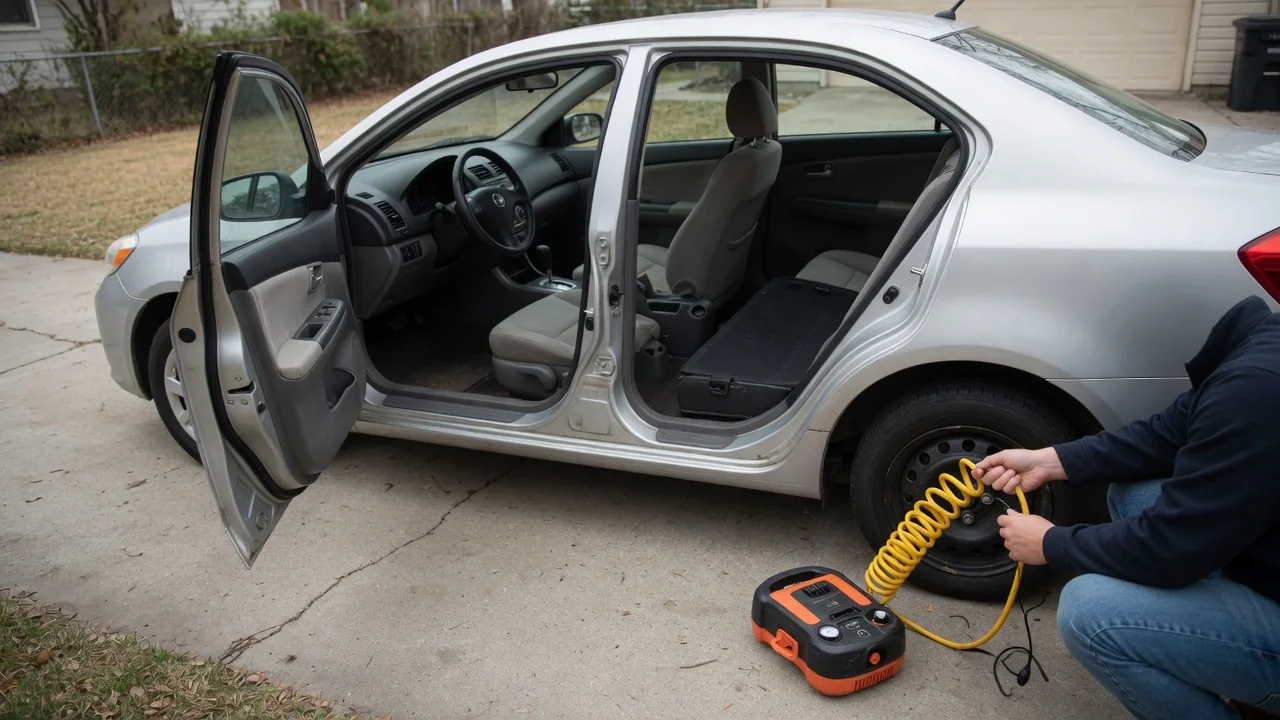
Knowing what to check before using a tire inflator in a car comes down to two things: the correct pressure target and a safe setup. A portable compressor is only as useful as the number you aim for and the condition of the tire it feeds. A few minutes of preparation helps prevent overinflation, a drained battery and overlooked damage.
Read placard
The tire and loading information placard is usually found on the driver's door jamb or door edge, though some vehicles place it inside the fuel filler door or glovebox, and the owner's manual repeats the same figures. It lists the recommended cold inflation pressure for the front and rear tires, which may differ from each other, and often a separate value for a compact spare. That recommendation is the target. The number molded into the tire sidewall is the maximum the tire is rated to hold, not the pressure the vehicle needs.
Cold means the tires have sat for several hours or been driven only a short distance, because heat from rolling raises the reading. Confirm that the units on the inflator display match the placard, since many units switch among psi, bar and kPa, and a mismatched setting can produce a badly wrong fill. Some vehicles list a higher pressure for full loads or towing. If the tires are not the original size, the factory label may no longer apply, so ask a tire professional for the right figure.
Inspect tire
Before connecting the hose, look over the tread and as much of both sidewalls as you can see. A nail or screw in the tread, a bulge, a cut that exposes cords, or a tire that has pulled away from the rim edge changes the plan entirely. Adding air to a tire with sidewall damage can be hazardous. A tire that was driven while flat may also have internal damage that cannot be seen from outside, even if it appears to hold air afterward.
The valve stem deserves the same attention. A rubber stem that is cracked or hisses when gently flexed will not hold the pressure you add, and a missing cap lets grit reach the valve core. Wipe dirt away before attaching the chuck. Then take a baseline reading with a gauge you trust, because the gap between that reading and the target helps separate normal gradual loss from a leak. One tire sitting far lower than the other three is a reason for suspicion rather than a simple top-up.
Inflate and recheck
Safe setup starts with where the car is parked: level, firm ground away from traffic, with the parking brake applied. Next, check how the inflator is powered. Some plug into a 12-volt accessory socket, some clamp to the battery and others are cordless. The inflator's instructions will say whether the engine should be running to protect the battery, and that should only happen outdoors, never in a closed garage. Make sure the cord and hose reach each wheel without strain, and note any run-time limit the maker specifies.
Seat the chuck squarely so the hissing stops, and if the unit has an automatic shutoff, set it to the placard value before starting. Stay with the inflator while it runs. Built-in gauges can read differently while air is flowing, so pause and confirm with a separate gauge. If the tire ends up over target, pressing the valve core briefly releases air in small steps. Tires that are warm from driving will read higher than cold ones, so avoid bleeding them down to the cold figure. Recheck them later and refit the cap.
Everyday Use and Observations
Tires lose a little pressure over time, and falling temperatures reduce it further, which is why a warning light on the first cold morning of the season is a familiar experience. A regular check with the inflator kept in the trunk catches this before handling, braking and tread wear suffer. After a top-up, a tire pressure monitoring light may stay on until the car has been driven for a while, and some vehicles need a reset through a button or menu. The owner's manual describes which applies.
In regular use, expect the compressor to be noisy, to vibrate and to get hot, especially at the hose fitting near the valve. Large tires on trucks and SUVs take noticeably longer to fill than those on a compact car, and a small unit may need rest periods along the way. It also helps to remember which tire needed air last time. If the same corner keeps running low, the pattern is more informative than any single reading. The spare, if fitted, is easily forgotten and worth including.
Limits and Next Steps
An inflator restores pressure but does not repair anything. If the reading will not climb, or air can be heard escaping as fast as it goes in, stop rather than letting the compressor run on. A tire that has come off its bead seat is generally beyond what a small portable unit can fix. Some vehicles carry a sealant and compressor kit instead of a spare. That is a temporary measure with its own instructions and driving restrictions, and the tire shop should be told sealant was used.
A tire that goes low again within days needs professional inspection, since the cause could be a puncture, a leaking valve or corrosion where the tire seals against the wheel. A monitoring light that behaves unusually, such as flashing before staying on, may indicate a system fault rather than low pressure, though the meaning varies by manufacturer and should be confirmed for the specific vehicle. It is also worth comparing the inflator's rated maximum with the target pressure, because heavier vehicles may ask more than a compact unit can deliver.