What Is Overall Vehicle Width?
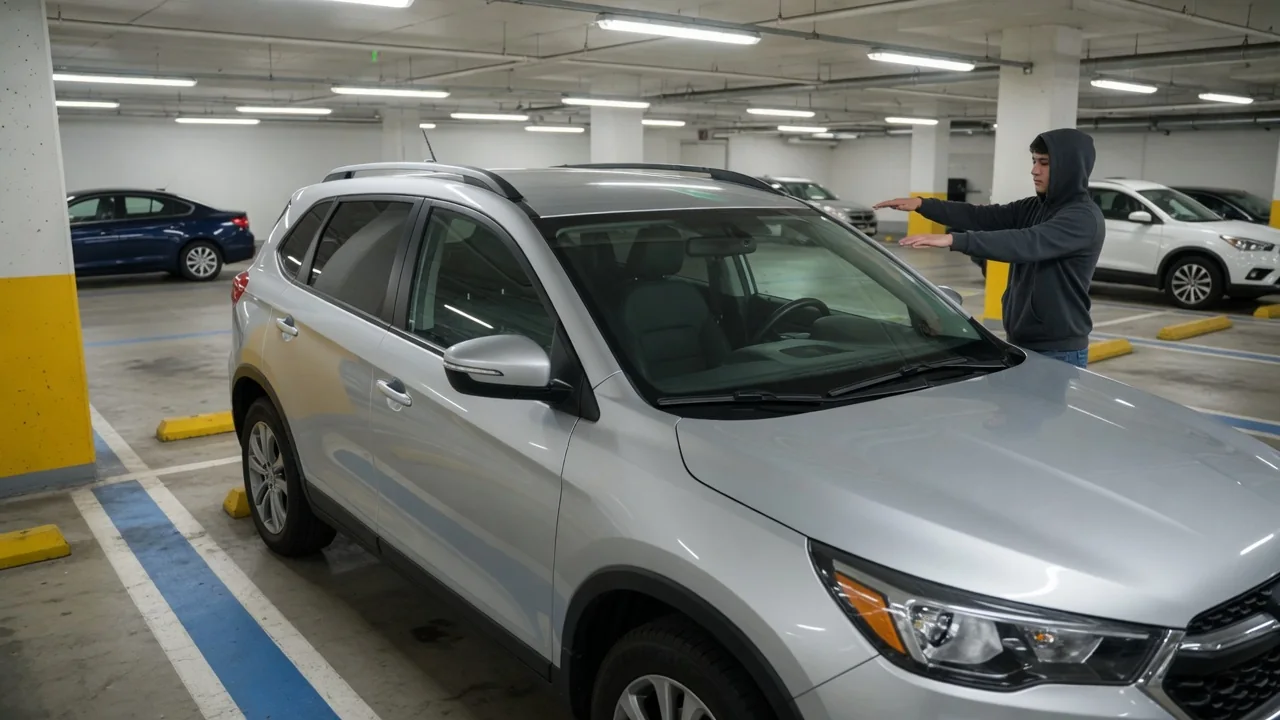
What is overall vehicle width? It is the side-to-side measurement of a vehicle at its widest point, but the figure can be published with or without the exterior mirrors. That distinction matters whenever a car, truck, or SUV has to pass through a garage opening, sit in a marked parking space, or leave enough room for doors to swing open.
Body versus mirrors
Manufacturers commonly publish width in more than one way. The body figure is measured across the widest sheet metal or trim, usually at the fender flares or door panels, and leaves the mirrors out. A second figure includes the mirrors in their extended driving position, and some brochures add a third with the mirrors folded. Because the mirror housings stick out well beyond the doors on each side, the difference between these numbers can be large enough to decide whether a vehicle clears a tight opening.
The gap between the two figures varies by vehicle type. A compact sedan with small, close-mounted mirrors adds relatively little, while a pickup with extendable towing mirrors can gain considerably more when they are slid outward. Owners can see this by standing at the front bumper and sighting along the side: the mirror tip is nearly always the outermost point. When a specification sheet lists only one width, check the footnotes or the owner's manual to confirm which measurement it represents.
Garage fit
For garage fit, the width with mirrors is the number that matters at the door opening, because the mirrors pass through the frame at roughly the height where tracks, weather seals, and trim narrow the gap. Measure the clear opening between the narrowest points of the door frame rather than the wall-to-wall interior, then compare it with the mirror-inclusive figure. A vehicle that looks comfortable on paper using the body width alone may leave only a hand's breadth at each mirror once it is actually driven in.
Inside the garage, the usable width is often smaller than the walls suggest. Shelving, a water heater, steps into the house, bicycles, and trash bins all take up space along the sides, and a two-car garage must hold both vehicles plus a walkway between them. Power-folding mirrors help with entry, though they must be folded before the approach and not every trim level has them. Taping the vehicle's outline on the floor is a simple way to see how much room really remains.
Door opening
Overall width describes a vehicle with its doors shut, so it says nothing about the room needed to get in and out. A door swings in an arc, and its outer edge can travel well beyond the mirror at full opening. Long coupe doors need more side clearance than the shorter front doors of a four-door sedan, while sliding doors on a minivan need almost none. Published specifications rarely list door swing, so this is a dimension owners usually have to measure themselves.
A practical check is to park in an open area, open the driver's door to the first detent, and measure from the body side to the door's outer edge. The detent is the position where the door holds itself partway, and it is usually enough for an adult to step out. Add that distance to the body width on the side where people enter, and more where a child seat, a wheelchair transfer, or bulky cargo requires the door opened fully against a wall or neighboring car.
Everyday Use and Observations
In daily driving, width shows up in parking spaces, drive-through lanes, automatic car washes, and narrow streets with parked cars on both sides. Marked spaces vary between lots and older parking structures tend to be tighter, so a wide SUV or full-size truck may sit close to both lines even when centered. Drivers can judge this by glancing in each mirror after parking: equal strips of pavement visible beside the rear tires indicate the vehicle is centered and the neighbors have room.
Mirrors are also the part most likely to make contact, which is why scuffed housings are common on vehicles kept in tight spaces. Many mirrors are designed to fold on impact, limiting damage, but painted caps, turn signal lenses, and camera modules built into them can still be costly to replace. Accessories change the picture too. Wider aftermarket wheels, fender flares, running boards, and clip-on towing mirror extensions all push the true width beyond the published number for the stock vehicle.
Limits and Next Steps
A published width is a starting point rather than a guarantee. It reflects a particular trim and equipment level, and it may not match a vehicle with different mirrors, tires, or body cladding. Markets and manufacturers also follow different conventions about whether mirrors are counted, so two vehicles compared by a single number may not have been measured the same way. Car wash guide rails, lift platforms, and trailer or ferry lanes add another complication, since some are limited by tire track width instead of body width.
The most dependable next step is to measure the actual vehicle. With it parked on level ground, hold a straightedge vertically against each mirror tip, mark the floor below, and measure between the marks; repeat at the widest body point with the mirrors folded. Compare both results with the narrowest opening the vehicle must pass, leaving a margin for steering error on the approach. When shopping, ask the dealer which width the listing uses, or bring a tape measure to the test drive.